There is something undeniably magical about the combination of sweet, juicy pineapple and savory, umami-rich sticky chicken. If you are looking for a meal that feels like a restaurant-quality treat but comes together quickly in your own kitchen, these Pineapple Teriyaki Chicken Bowls are exactly what you need. Perfect for busy weeknights, meal prep Sunday, or a casual weekend dinner, this recipe balances ease with incredible depth of flavor.
In this comprehensive guide, we will walk you through everything you need to know to master this dish. From achieving the perfect sear on your chicken to balancing the sweet and salty notes of your homemade glaze, you’ll find all the tips, tricks, and variations required to make this recipe a staple in your household.
Why You Will Love This Recipe
Let’s face it: we all have those evenings where we want something deeply satisfying but lack the energy to spend hours over a hot stove. This recipe is the ultimate solution to that very common dilemma. Here is why this dish will quickly become a favorite:
- Incredible Flavor Balance: The natural sweetness and slight acidity of the pineapple cut perfectly through the rich, salty, and savory teriyaki-style glaze. The addition of fresh ginger and garlic brings a subtle heat and aromatic depth that bottled sauces simply cannot match.
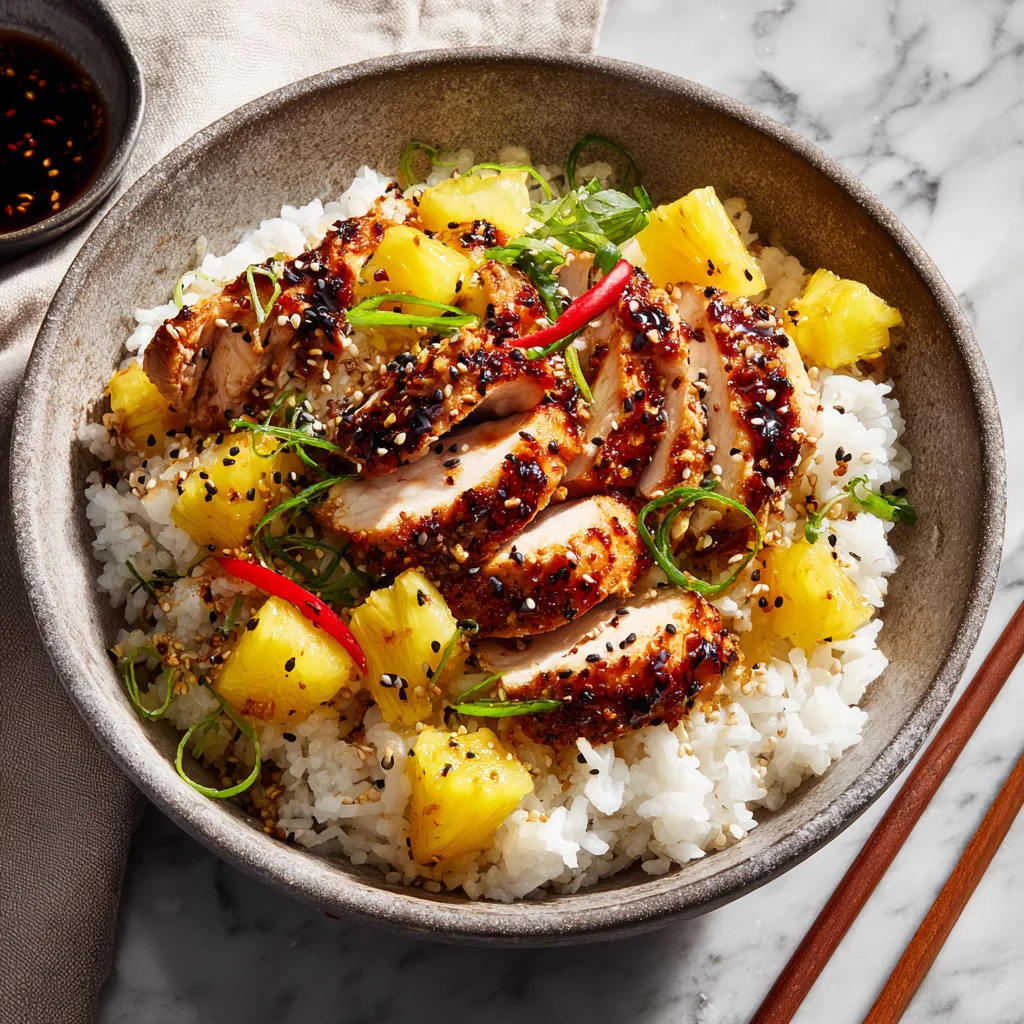
- Textural Harmony: Every bite offers a contrast. You have the tender, slightly caramelized chicken, the juicy burst of pineapple, the soft and fluffy bed of white rice, and the delicate crunch of toasted sesame seeds and fresh scallions.
- Quick and Accessible: You do not need hard-to-find ingredients to make this happen. Most of the components are likely already sitting in your pantry or fridge.
- Highly Customizable: Whether you want to add a spicy kick, swap the protein, or load it up with extra vegetables, this bowl serves as a brilliant blank canvas for your culinary creativity.
Deep Dive: The Ingredients That Make the Magic
Creating a stellar dish is all about understanding your ingredients. Let’s break down the components that bring these Pineapple Teriyaki Chicken Bowls to life.
The Protein: Chicken
For this recipe, boneless, skinless chicken thighs are highly recommended. Thigh meat is inherently juicier and more forgiving than breast meat, meaning it stays tender even if you accidentally cook it a minute or two too long. The slightly higher fat content also helps in developing a beautiful crust when seared. However, if you prefer leaner cuts, boneless, skinless chicken breasts work perfectly fine—just be mindful not to overcook them.
The Fruit: Pineapple
Fresh pineapple is the absolute best choice here. It provides a bright, vibrant acidity and holds its shape well when briefly warmed in the pan. When you use fresh pineapple, you also benefit from its natural enzymes, which help to tenderize the meat slightly if you choose to marinate it beforehand. If fresh is out of season or unavailable, canned pineapple chunks in 100% juice (not syrup) are a highly acceptable substitute. Just make sure to drain them well!
The Sauce: A Homemade Masterpiece
Do not be intimidated by making your own sauce; it takes less than five minutes and completely elevates the dish. The foundation is a good quality soy sauce (use low-sodium if you prefer to control the saltiness). To this, we add brown sugar for deep molasses-like sweetness, fresh minced garlic, and freshly grated ginger. A splash of rice vinegar balances the sweetness, while a simple cornstarch slurry ensures the sauce thickens to a glorious, glossy consistency that clings beautifully to the chicken.
The Base and Garnishes
A bed of steamed short-grain or jasmine white rice is traditional and ideal for soaking up the extra sauce. For garnishes, sliced scallions (green onions) provide a fresh, oniony bite, while toasted sesame seeds—both black and white—add a nutty flavor and visual appeal. A few slices of fresh red chili pepper offer a beautiful pop of color and a welcome touch of heat for those who like it spicy.
Ingredients List
Gather the following items before you begin cooking:
For the Chicken and Bowls:
- – 1.5 lbs boneless, skinless chicken thighs (or breasts), cut into bite-sized pieces
- – 1 tbsp vegetable oil or canola oil
- – 1.5 cups fresh pineapple chunks
- – 3 cups cooked white rice (jasmine or sushi rice preferred)
- – 2 scallions, thinly sliced (green and white parts)
- – 1 tbsp sesame seeds (mixed black and white)
- – 1 small fresh red chili pepper, thinly sliced (optional)
For the Glaze/Sauce:
- – 1/2 cup low-sodium soy sauce
- – 1/3 cup packed light brown sugar
- – 1 tbsp rice vinegar
- – 2 cloves garlic, minced
- – 1 tbsp fresh ginger, finely grated
- – 1 tbsp cornstarch
- – 2 tbsp cold water
Step-by-Step Instructions
Follow these simple steps for perfect sticky chicken every time:
- Prepare the Sauce Base: In a small mixing bowl, whisk together the soy sauce, brown sugar, rice vinegar, minced garlic, and grated ginger until the sugar has mostly dissolved. Set this mixture aside.
- Make the Slurry: In a separate, very small bowl, whisk the cornstarch and cold water together until completely smooth. Set aside. (Note: Always use cold water for cornstarch to prevent clumping).
- Cook the Chicken: Heat the vegetable oil in a large skillet or wok over medium-high heat. Once the oil is shimmering and hot, add the chicken pieces in a single layer. Cook without moving them for about 3-4 minutes to develop a nice golden-brown sear. Stir and continue cooking for another 3-4 minutes until the chicken is cooked through and browned on all sides.
- Thicken the Sauce: Lower the heat to medium. Pour the prepared soy sauce mixture over the chicken in the skillet. Give the cornstarch slurry a quick stir (as it may have settled) and pour it into the pan as well.
- Glaze and Gloss: Stir everything together constantly. The sauce will begin to bubble and thicken very quickly, usually within 1 to 2 minutes. Let it simmer until it turns into a thick, glossy glaze that beautifully coats the chicken pieces.
- Add the Pineapple: Fold the pineapple chunks into the skillet. Toss them gently in the sauce just until they are warmed through (about 1 minute). You want them to remain juicy and hold their texture, not turn to mush.
- Assemble the Bowls: Divide the warm cooked rice among your serving bowls. Generously spoon the sticky chicken, pineapple, and plenty of extra sauce over the top of the rice.
- Garnish and Serve: Finish the dish by sprinkling toasted sesame seeds, sliced scallions, and fresh red chili slices over the top. Serve immediately while hot!
Expert Tips for Recipe Success
While this recipe is straightforward, a few professional tricks can elevate your cooking from good to spectacular:
- Dry Your Chicken: Before cutting and cooking your chicken, pat it dry with paper towels. Removing excess moisture ensures the chicken sears and browns in the pan rather than steaming in its own juices.
- Don’t Crowd the Pan: If your skillet isn’t large enough to hold all the chicken in a single layer with some space between the pieces, cook the meat in two batches. Overcrowding drops the pan’s temperature and prevents that crucial caramelization.
- Grate Your Ginger Easily: Keep a knob of fresh ginger in a ziplock bag in your freezer. Grating frozen ginger on a microplane is incredibly easy, yields a finer texture, and you never have to worry about your ginger going bad in the crisper drawer again!
- Toast Your Seeds: If your sesame seeds are raw, toast them lightly in a dry skillet over medium-low heat for a few minutes until fragrant. This simple step magnifies their nutty flavor exponentially.
Variations and Substitutions
One of the best things about rice bowls is how adaptable they are. Here are a few ways to customize this dish to suit your dietary needs or whatever happens to be in your fridge:
- Vegetarian/Vegan Option: Swap the chicken for extra-firm tofu or tempeh. Press the tofu well to remove moisture, cut it into cubes, and pan-fry it until crispy before adding the sauce. Ensure your sugar is vegan-certified if that is a strict dietary requirement.
- Add More Veggies: Boost the nutritional profile by tossing in some vegetables. Broccoli florets, snap peas, bell pepper chunks, or sliced carrots are fantastic additions. Blanch them quickly or stir-fry them alongside the chicken.
- Grain Swaps: Not a fan of white rice? Serve this delicious sticky chicken and pineapple over brown rice, quinoa, cauliflower rice, or even rice noodles.
- Spice It Up: If the fresh chili garnish isn’t enough heat for you, add a teaspoon of sriracha or half a teaspoon of crushed red pepper flakes directly into the sauce mixture before cooking.
A Brief Culinary Context: Hawaiian and Japanese Influences
This dish is a beautiful example of fusion cooking, heavily inspired by the culinary melting pot of Hawaii. The term “teriyaki” originally refers to a Japanese cooking technique (“teri” meaning luster or gleam, and “yaki” meaning grilled or broiled). Traditional Japanese teriyaki relies heavily on soy sauce, sake, and mirin.
When Japanese immigrants moved to Hawaii to work on the sugar and pineapple plantations, they adapted their traditional recipes to include the local ingredients abundantly available to them. The introduction of pineapple juice and brown sugar (or honey) created a sweeter, fruitier profile that is now highly characteristic of “Hawaiian-style” teriyaki and BBQ. This bowl pays homage to that rich, cross-cultural culinary history, combining the glossy, savory glaze of Japanese technique with the bright, tropical sweetness of Hawaiian produce.
Meal Prep and Storage Guidelines
These Pineapple Teriyaki Chicken Bowls are an absolute dream for meal prepping. The flavors actually meld and deepen after a day in the fridge.
To Store: Allow the chicken, pineapple, and rice to cool completely. Store them together in airtight meal prep containers in the refrigerator for up to 4 days.
To Reheat: Microwave the containers on high for 1.5 to 2 minutes, stirring halfway through to ensure even heating. If the sauce has thickened too much in the fridge, a tiny splash of water before microwaving will loosen it right back up into a glossy glaze.
To Freeze: You can freeze the cooked chicken and sauce (without the rice and pineapple) in an airtight, freezer-safe container for up to 3 months. Thaw overnight in the fridge before reheating. It is best to make fresh rice and add fresh pineapple upon serving, as frozen pineapple can become mushy when thawed.
Frequently Asked Questions (FAQ)
Can I use bottled teriyaki sauce instead of making my own?
You certainly can, but making the sauce from scratch is highly recommended! Homemade sauce lacks the artificial preservatives found in many store-bought brands, and you can easily adjust the sweetness, saltiness, and garlic/ginger levels to your exact preference. If you must use bottled, you can skip the soy sauce, sugar, vinegar, garlic, ginger, and cornstarch slurry steps.
Is the sauce gluten-free?
Traditional soy sauce contains wheat, so the recipe as written is not gluten-free. However, making it gluten-free is incredibly easy—simply substitute the soy sauce with an equal amount of Tamari or coconut aminos. Ensure your cornstarch brand is certified gluten-free (most are, but it is always best to check).
Can I make this in a slow cooker?
Yes! To make this in a slow cooker, place the chicken breasts or thighs at the bottom of the pot. Whisk the sauce ingredients (except the cornstarch and water) and pour over the chicken. Cook on LOW for 3-4 hours or until the chicken is tender. Remove the chicken and shred or slice it. Whisk the cornstarch slurry into the slow cooker liquid, turn to HIGH, and let it bubble and thicken for 15 minutes. Add the chicken back in along with the fresh pineapple to warm through before serving.
Why did my sauce become jelly-like?
If your sauce becomes too thick or gelatinous, it usually means there was a bit too much cornstarch or it was boiled for too long. Don’t panic! Simply whisk in warm water, one tablespoon at a time, over low heat until it reaches your desired silky, pourable consistency.
Conclusion
These Pineapple Teriyaki Chicken Bowls prove that you don’t need a myriad of complicated steps or hours in the kitchen to produce a vibrant, intensely flavorful, and satisfying meal. By taking advantage of high-impact ingredients like fresh ginger, garlic, and bright pineapple, you can create a sticky, savory glaze that rivals any takeout spot. Grab your skillet, start your rice cooker, and enjoy the wonderful aromas that are about to fill your kitchen. Happy cooking!
Gochujang Teriyaki Pineapple Chicken Bowls
Ingredients
Equipment
Method
- Prepare and cook the rice to fluffy perfection. While cooking, prepare the fresh pineapple, garnishes, and toast the sesame seeds in a dry pan over low heat for maximum aroma.
- Whisk together the soy sauce, brown sugar, honey, gochujang, ginger, garlic, rice vinegar, and toasted sesame oil until the sauce is smooth and well-integrated.
- Reserve half of the sauce. Toss the cubed chicken in the remaining half and marinate for 15 minutes at room temperature (or up to 2 hours in the fridge).
- Heat 2 tablespoons of oil in a large pan over medium-high heat. Sear the chicken in batches for 8–10 minutes, tossing until cooked through and deeply caramelized.
- Wipe the pan. Add the cubed pineapple and cook for 3–5 minutes until the edges are golden, then remove from the pan.
- Simmer the reserved sauce. Whisk in the cornstarch slurry and cook for 1–2 minutes until a rich, glossy glaze forms. Return the chicken and pineapple, tossing to coat.
- Assemble the bowls with hot rice, the glossy teriyaki chicken and pineapple mixture, and garnish generously with sliced green onions, mixed toasted sesame seeds, and extra red chilies if desired.
- Serve immediately, perhaps with an extra side of the thick sauce from the pan.