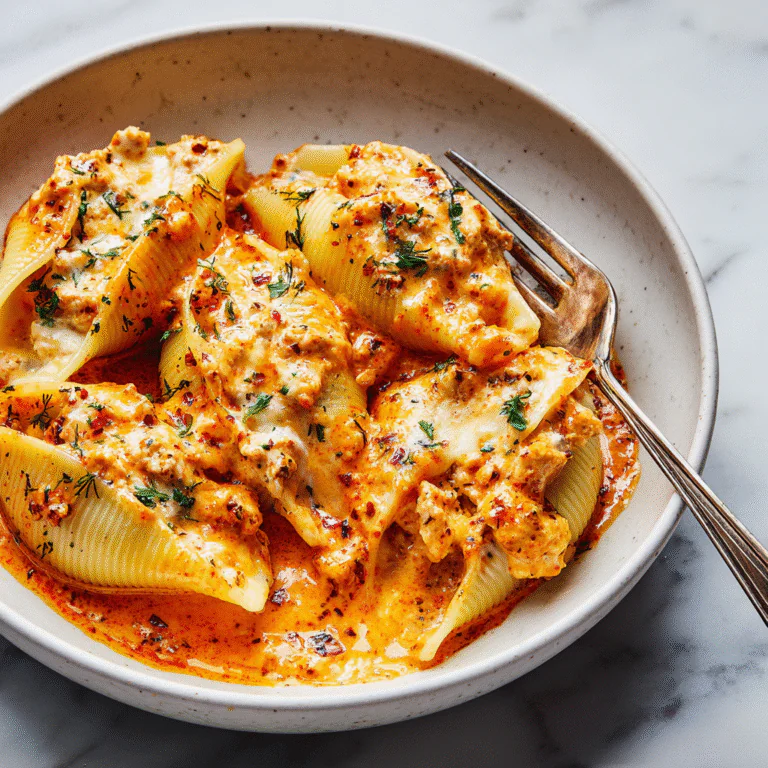
Creamy Stuffed Pasta Shells with Sage: The Ultimate Italian Comfort Food 🍝
There’s something undeniably magical about pasta shells filled with creamy ricotta and bathed in a luscious sage-infused sauce. This recipe for Creamy Stuffed Pasta Shells with Sage brings together the best of Italian comfort food with sophisticated flavors that will impress both family and dinner guests. Whether you’re looking for a show-stopping vegetarian main course or a cozy weekend dinner, these stuffed shells deliver on every level. The combination of velvety ricotta filling, aromatic sage, and golden baked cheese creates a dish that’s both elegant and deeply satisfying.
Why You’ll Fall in Love with This Recipe 😍
Stuffed pasta shells are a classic Italian-American dish that never goes out of style, and for good reason. This particular version elevates the traditional recipe with the addition of fresh sage, which adds an earthy, slightly peppery flavor that perfectly complements the rich ricotta filling. Unlike heavier meat-based stuffed pastas, these shells are lighter yet still incredibly satisfying, making them perfect for any season.
What makes this recipe truly special is the creamy sage sauce that envelops each shell. Instead of a traditional tomato-based marinara, we’re using a butter and cream sauce infused with fresh sage leaves. This creates a luxurious coating that seeps into every crevice of the pasta, ensuring each bite is packed with flavor. The finishing touch of melted cheese on top adds a golden, bubbly crust that provides textural contrast to the creamy interior.
This dish is also remarkably versatile. You can prepare it ahead of time, making it ideal for entertaining or meal prep. The shells can be stuffed and refrigerated up to a day in advance, then baked when you’re ready to serve. It’s also easily customizable – add spinach to the filling for extra nutrients, swap herbs based on what you have available, or adjust the cheese varieties to suit your preferences.
Understanding the Key Ingredients 🧀
The beauty of stuffed pasta shells lies in the quality and balance of ingredients. Large pasta shells, also called conchiglioni, are specifically designed for stuffing. Their curved shape and sturdy texture hold up beautifully during baking while creating the perfect vessel for the creamy filling. When shopping, look for shells that are labeled “jumbo” or “for stuffing” to ensure they’re the right size.
The filling is where this recipe truly shines. Ricotta cheese forms the base, providing a mild, creamy foundation that pairs wonderfully with herbs. Whole milk ricotta is preferred for its rich texture, but part-skim works well too if you’re looking for a lighter option. The addition of Parmesan cheese adds a sharp, salty dimension that prevents the filling from tasting bland. Fresh herbs, particularly sage, bring aromatic complexity that transforms the dish from simple to sublime.
The sauce combines butter, cream, and sage in a way that’s reminiscent of traditional brown butter sage sauce but with added richness. Fresh sage is essential here – dried sage simply cannot replicate the bright, earthy flavor of fresh leaves. When the sage is briefly fried in butter, it releases its essential oils and becomes crispy, adding both flavor and a delightful garnish. The cream mellows the butter and helps the sauce cling to each shell without being too heavy.
Cheese for topping is the final layer that brings everything together. A combination of mozzarella and Parmesan creates the ideal balance – mozzarella melts beautifully and provides that classic cheese pull, while Parmesan adds flavor and helps achieve a golden-brown crust. Some recipes also include Gruyère or fontina for even more depth, which are excellent additions if you want to take the dish to the next level.
Mastering the Technique for Perfect Shells 👨🍳
Success with stuffed pasta shells starts with properly cooking the pasta. You want the shells to be al dente – firm enough to hold their shape during stuffing and baking, but cooked enough that they’re pliable. Undercooking slightly is better than overcooking, as the pasta will continue to cook in the oven. Adding salt to the boiling water is crucial for flavoring the pasta from the inside out. After draining, rinse the shells briefly with cold water to stop the cooking process and make them easier to handle.
Preparing the filling requires a gentle hand. Over-mixing can make the ricotta watery and dense. Simply fold the ingredients together until just combined, ensuring the herbs and cheeses are evenly distributed. Taste the filling before stuffing – it should be well-seasoned with salt, pepper, and herbs. Remember that the flavors will mellow slightly during baking, so don’t be afraid to season generously.
Stuffing the shells is straightforward but requires patience. A small spoon or piping bag works well for filling each shell without tearing. Fill them generously but not so much that they overflow – you want a nice mound of filling that will hold its shape during baking. Arrange the stuffed shells in a single layer in your baking dish, placing them close together but not touching. This helps them maintain their shape and ensures even cooking.
The sauce should be prepared while the shells are baking or just before assembly. Melting butter and frying sage leaves until crispy infuses the butter with incredible flavor. Adding cream creates a sauce that’s luxurious but not overwhelmingly heavy. Pour this sauce over the stuffed shells just before adding the final cheese topping. The sauce will sink down into the dish and mingle with the filling, creating pockets of flavor throughout.
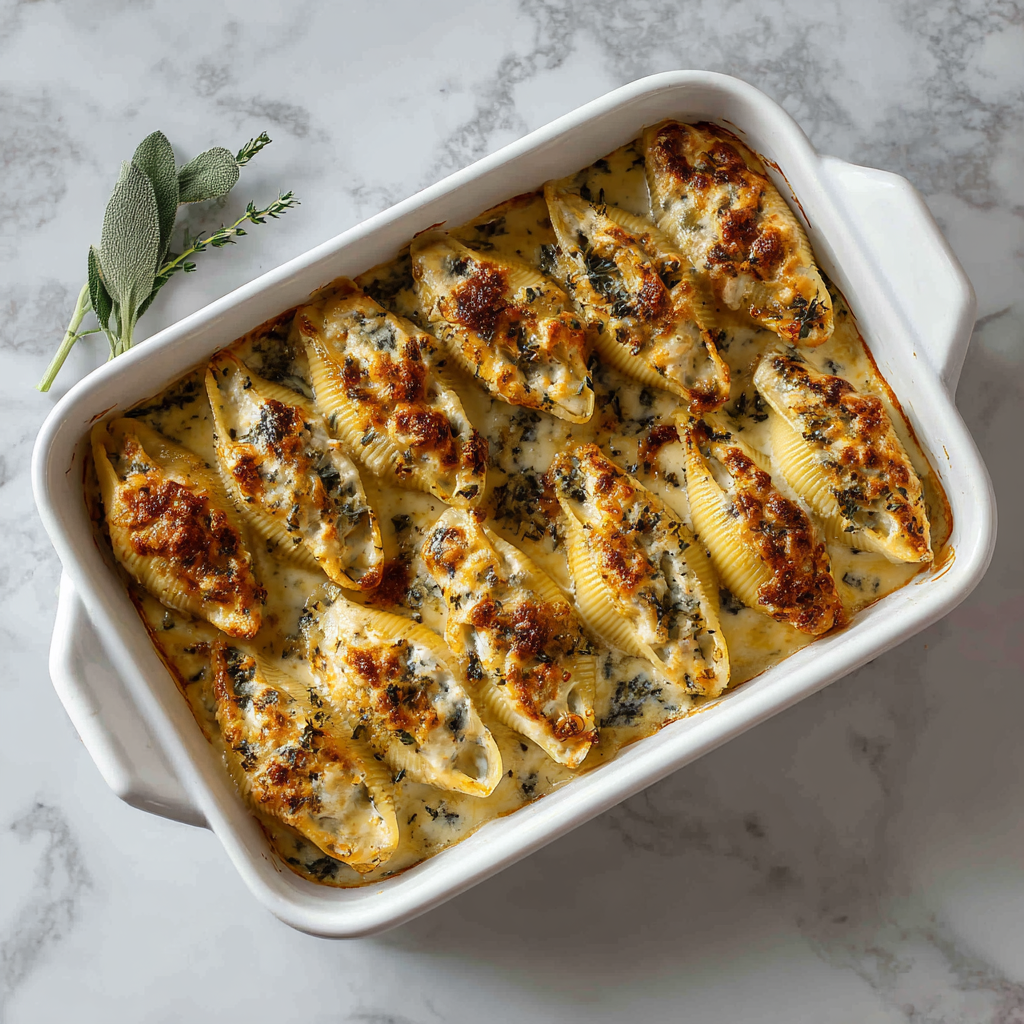
Baking temperature and time are critical for achieving the perfect texture. A moderate oven temperature around 375°F allows the shells to heat through without drying out while giving the cheese topping time to melt and brown. Covering the dish with foil for the first portion of baking prevents the top from browning too quickly, while removing the foil at the end allows for that desirable golden crust.
Ingredients 🛒
For the Pasta and Filling:
- 24 jumbo pasta shells
- 2 cups whole milk ricotta cheese
- 1 cup grated Parmesan cheese, divided
- 1 cup shredded mozzarella cheese, divided
- 1 large egg
- 3 tablespoons fresh sage, finely chopped
- 2 cloves garlic, minced
- 1/2 teaspoon salt
- 1/4 teaspoon black pepper
- 1/4 teaspoon nutmeg
For the Sage Cream Sauce:
- 6 tablespoons unsalted butter
- 12-15 fresh sage leaves
- 1 cup heavy cream
- 1/2 cup pasta cooking water
- Salt and pepper to taste
For Topping:
- 1 cup shredded mozzarella cheese
- 1/2 cup grated Parmesan cheese
- Fresh sage leaves for garnish
Instructions 📝
- Bring a large pot of salted water to boil and cook pasta shells according to package directions until al dente, about 9-10 minutes. Drain and rinse with cold water, then set aside.
- Preheat your oven to 375°F (190°C). Lightly grease a 9×13 inch baking dish with butter or cooking spray.
- In a large mixing bowl, combine ricotta cheese, 3/4 cup Parmesan, 1/2 cup mozzarella, egg, chopped sage, minced garlic, salt, pepper, and nutmeg. Mix gently until all ingredients are well incorporated but not overmixed.
- Using a small spoon or piping bag, carefully fill each cooked pasta shell with the ricotta mixture, about 2-3 tablespoons per shell. Place stuffed shells in the prepared baking dish in a single layer.
- In a medium saucepan, melt butter over medium heat. Add whole sage leaves and cook for 2-3 minutes until leaves are crispy and butter is fragrant. Remove sage leaves and set aside for garnish.
- Add heavy cream to the sage butter and stir to combine. Add pasta cooking water to thin the sauce slightly. Season with salt and pepper. Bring to a gentle simmer, then remove from heat.
- Pour the sage cream sauce evenly over the stuffed shells in the baking dish, making sure to coat all shells.
- Combine remaining mozzarella and Parmesan cheese, then sprinkle evenly over the shells.
- Cover the baking dish with aluminum foil and bake for 25 minutes. Remove foil and bake for an additional 10-15 minutes until cheese is melted, bubbly, and golden brown on top.
- Remove from oven and let rest for 5 minutes before serving. Garnish with reserved crispy sage leaves and additional Parmesan if desired.
Tips for Restaurant-Quality Results 💡
The difference between good stuffed shells and extraordinary ones often comes down to small details. First, don’t skip the step of reserving pasta cooking water. This starchy water helps the sauce adhere to the pasta and adds body without making it too thick. Just a splash can transform the consistency of your sauce.
Temperature control is another key factor. Taking the filling and shells out of the refrigerator 20 minutes before baking helps them cook more evenly. Similarly, letting the baked dish rest for 5-10 minutes before serving allows the sauce to thicken slightly and the flavors to settle, making it easier to serve neat portions.
For the crispiest sage leaves, make sure they’re completely dry before frying. Moisture causes splattering and prevents them from crisping properly. Fry them in batches if needed, and don’t crowd the pan. Once crispy, drain them on paper towels immediately to keep them crunchy.
If you want to make this dish ahead, assemble everything up to the point of baking, then cover tightly and refrigerate for up to 24 hours. When ready to serve, add an extra 10 minutes to the covered baking time to account for the cold start. You can also freeze unbaked stuffed shells for up to 3 months – just thaw overnight in the refrigerator before baking.
Serving Suggestions and Variations 🍷
These creamy stuffed shells are substantial enough to serve as a main course, but they pair beautifully with a few carefully chosen sides. A simple arugula salad with lemon vinaigrette provides a peppery, acidic contrast to the rich pasta. Roasted vegetables like asparagus, broccolini, or Brussels sprouts add color and nutritional balance to the plate. Crusty Italian bread is perfect for soaking up any extra sauce left on the plate.
For wine pairing, consider a medium-bodied white wine like Pinot Grigio or a light red such as Chianti. The acidity in these wines cuts through the richness of the cream and cheese while complementing the sage. If you prefer white wine, an oaked Chardonnay with buttery notes echoes the sauce beautifully.
Variations on this recipe are endless. For a protein boost, add cooked Italian sausage or shredded chicken to the filling. Vegetarians might enjoy adding sautéed mushrooms, wilted spinach, or roasted butternut squash. You can also play with different herb combinations – thyme and rosemary work wonderfully with sage, while basil and oregano give the dish a more traditional Italian flavor profile.
For a lighter version, substitute Greek yogurt for half the ricotta and use half-and-half instead of heavy cream. The dish will be less rich but still delicious. Alternatively, make it more decadent by adding a layer of béchamel sauce under the stuffed shells before adding the sage cream sauce.
Storing and Reheating Your Masterpiece 🔄
Proper storage ensures your stuffed shells taste just as good as leftovers. Transfer cooled shells to an airtight container and refrigerate for up to 4 days. The shells will absorb some of the sauce as they sit, becoming even more flavorful over time. When reheating, add a splash of cream or milk to loosen the sauce and prevent drying out.
To reheat in the oven, place shells in a baking dish, cover with foil, and warm at 350°F for about 20 minutes. Remove the foil for the last 5 minutes to re-crisp the cheese topping. For individual portions, microwave on medium power in 1-minute intervals, stirring the sauce around the shells between intervals to ensure even heating.
Freezing is an excellent option for meal prep. Freeze unbaked shells in a freezer-safe container for up to 3 months. When ready to eat, thaw in the refrigerator overnight, then bake as directed, adding 10-15 extra minutes to account for the chill. You can also freeze baked shells, though the texture of the pasta may soften slightly upon reheating.
The Cultural Heritage Behind the Dish 🇮🇹
While stuffed pasta shells are often considered Italian-American rather than authentically Italian, they draw inspiration from centuries-old Italian pasta traditions. In Italy, stuffed pasta takes many forms – from ravioli to tortellini to cannelloni. The concept of filling pasta with cheese and herbs dates back to medieval times when these dishes were served at banquets and special occasions.
The addition of sage has deep roots in Italian cuisine, particularly in Northern Italy. Sage butter sauce, or burro e salvia, is a classic preparation served with stuffed pastas like ravioli and agnolotti. The herb grows abundantly throughout Italy and has been used in cooking since ancient Roman times, valued not only for its flavor but also for its medicinal properties.
Italian-American immigrants adapted traditional recipes to ingredients available in America, leading to dishes like baked stuffed shells. Large pasta shells became commercially available in the mid-20th century, making this style of stuffed pasta more accessible to home cooks. The result is a dish that honors Italian tradition while embracing American convenience and abundance.
Nutritional Considerations and Modifications ⚖️
While this dish is undeniably indulgent, it does offer some nutritional benefits. Ricotta cheese is a good source of protein and calcium, and using whole milk ricotta provides healthy fats that help with nutrient absorption. The herbs add antioxidants and anti-inflammatory compounds, particularly sage, which has been studied for its potential cognitive benefits.
For those watching their calorie intake, several modifications can lighten the dish without sacrificing too much flavor. Use part-skim ricotta and mozzarella, reduce the cream sauce or substitute with a lighter béchamel made with milk, and increase the proportion of herbs and vegetables in the filling. Adding spinach or kale to the filling boosts fiber and nutrients while reducing the calorie density.
This recipe can be adapted for various dietary needs. For gluten-free diets, use gluten-free pasta shells, which work surprisingly well in this application. The dish is naturally vegetarian, but it can be made more nutritious by incorporating plant-based protein sources like white beans or tofu into the filling. Those following a low-carb diet might use zucchini boats instead of pasta shells for a vegetable-based alternative.
Conclusion: Your New Signature Dish Awaits 🌟
Creamy Stuffed Pasta Shells with Sage represents the perfect intersection of comfort food and elegant dining. This dish proves that simple, quality ingredients prepared with care can create something truly special. Whether you’re cooking for a weeknight family dinner or preparing a dish to impress guests, these stuffed shells deliver on flavor, presentation, and satisfaction.
The beauty of this recipe lies in its flexibility – you can make it your own while still honoring the classic combination of creamy ricotta, aromatic sage, and perfectly cooked pasta. As you become more comfortable with the technique, you’ll find yourself experimenting with different fillings, sauces, and presentations, each variation becoming a reflection of your personal taste and creativity.
Don’t be intimidated by the multiple components – once you’ve made this dish a few times, the process becomes second nature. The reward is a restaurant-quality meal that brings people together around the table, creating memories and satisfying appetites in equal measure. So gather your ingredients, preheat your oven, and prepare to create a dish that will become a cherished part of your cooking repertoire. Buon appetito!
Creamy Stuffed Pasta Shells with Sage
Ingredients
Equipment
Method
- Bring a large pot of salted water to boil and cook pasta shells according to package directions until al dente, about 9-10 minutes. Drain and rinse with cold water, then set aside.
- Preheat your oven to 375°F (190°C). Lightly grease a 9×13 inch baking dish with butter or cooking spray.
- In a large mixing bowl, combine ricotta cheese, 3/4 cup Parmesan, 1/2 cup mozzarella, egg, chopped sage, minced garlic, salt, pepper, and nutmeg. Mix gently until all ingredients are well incorporated.
- Using a small spoon or piping bag, carefully fill each cooked pasta shell with the ricotta mixture, about 2-3 tablespoons per shell. Place stuffed shells in the prepared baking dish in a single layer.
- In a medium saucepan, melt butter over medium heat. Add whole sage leaves and cook for 2-3 minutes until leaves are crispy and butter is fragrant. Remove sage leaves and set aside for garnish.
- Add heavy cream to the sage butter and stir to combine. Add pasta cooking water to thin the sauce slightly. Season with salt and pepper. Bring to a gentle simmer, then remove from heat.
- Pour the sage cream sauce evenly over the stuffed shells in the baking dish, making sure to coat all shells.
- Combine remaining mozzarella and Parmesan cheese, then sprinkle evenly over the shells.
- Cover the baking dish with aluminum foil and bake for 25 minutes. Remove foil and bake for an additional 10-15 minutes until cheese is melted, bubbly, and golden brown on top.
- Remove from oven and let rest for 5 minutes before serving. Garnish with reserved crispy sage leaves and additional Parmesan if desired.