Crispy Herb Crusted Baked Salmon: A Restaurant-Quality Dinner at Home 🍋
When it comes to weeknight dinners that feel luxurious without requiring hours in the kitchen, baked salmon is an undisputed champion. It’s healthy, it cooks quickly, and it acts as a blank canvas for a myriad of flavors. However, plain baked salmon can sometimes feel a bit uninspired. If you are looking to elevate your seafood game and achieve that perfect textural contrast—tender, flaky fish underneath a shatteringly crisp, golden topping—then this **Crispy Herb Crusted Baked Salmon** is the answer to your culinary prayers.
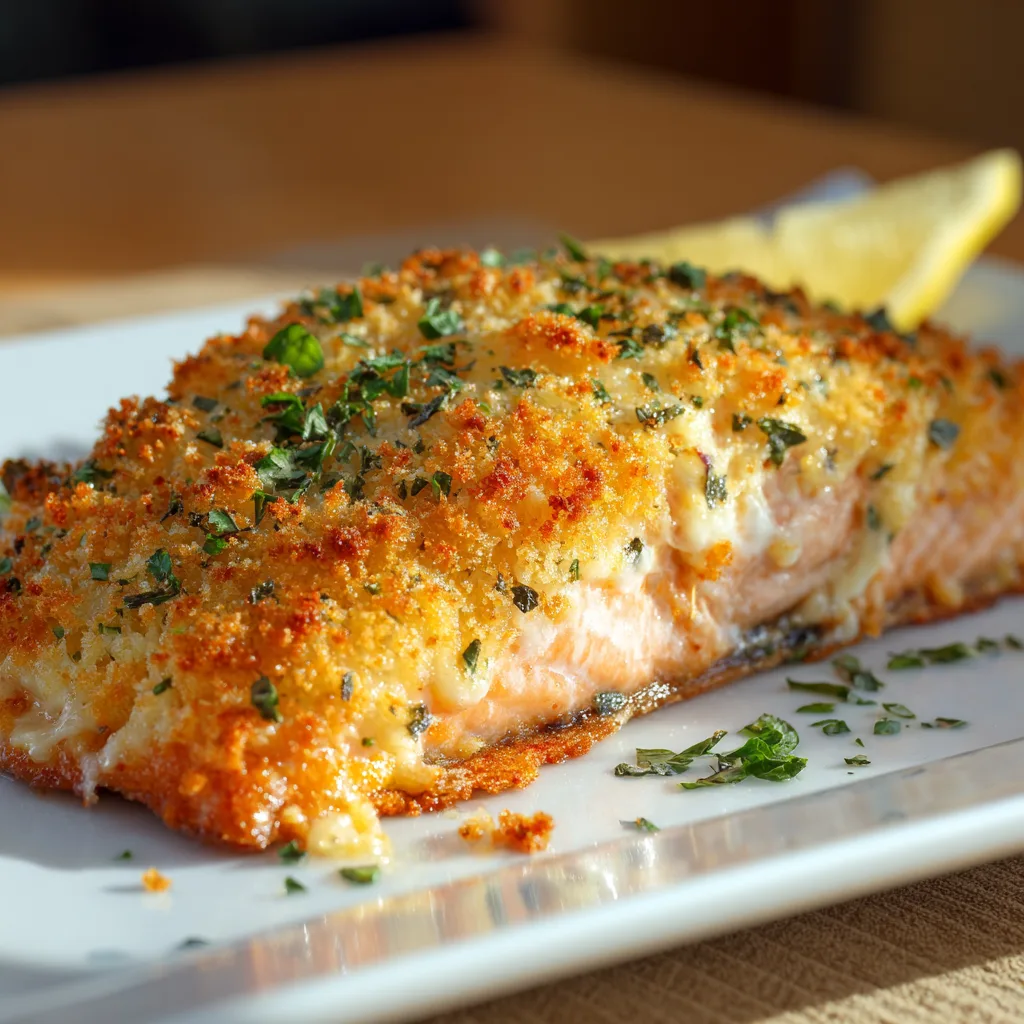
This dish is all about the balance of textures and flavors. The salmon itself remains moist and succulent, rich with its natural healthy fats. The topping, a mixture of panko breadcrumbs, savory Parmesan cheese, garlic, and fresh herbs, provides an addictive crunch and a punch of savory flavor that complements the richness of the fish perfectly. A final squeeze of fresh lemon juice brightens the entire dish, making it taste fresh and vibrant.
In this detailed guide, we’re diving deep into the art of making the perfect crusted salmon. We will cover how to select the best fish, the science behind getting that crust to stick (and stay crispy!), and how to ensure you never overcook your salmon again. Get ready to impress your family—or just yourself—with a meal that looks and tastes like it came from a high-end bistro.
Why This Recipe Works (The Science of the Crust) 🧬
The magic of this dish lies in the topping. Many home cooks struggle with breadcrumb toppings that either slide right off the fish or turn soggy during baking. This recipe solves both problems with a few smart ingredient choices.
First, we use **Panko breadcrumbs** instead of traditional Italian-style breadcrumbs. Panko is a Japanese-style breadcrumb made from crustless bread that is coarsely ground and dried. The flakes are larger, airier, and sliver-shaped. This unique structure means they absorb less oil and stay crispier for longer, creating a distinct “crunch” rather than a dense coating.
Second, we need a binder. You can’t just pile dry crumbs onto raw fish and expect them to stay put. We use a thin layer of Dijon mustard (or mayonnaise, if you prefer) brushed onto the salmon before adding the topping. This acts as edible glue, securing the crust to the fillet. Furthermore, the fat in the binder helps shield the surface of the fish from direct heat, keeping the flesh moist while the topping browns.
Finally, mixing melted butter and Parmesan cheese into the Panko helps the topping brown evenly and become golden and rigid in the oven, rather than just drying out.
Crispy Herb Crusted Baked Salmon
Ingredients
Equipment
Method
- Preheat oven to 400°F (200°C). Line a baking sheet with parchment paper.
- Pat salmon fillets dry with paper towels. Place on baking sheet and season generously with salt and pepper.
- In a small bowl, combine Panko, Parmesan, melted butter, parsley, garlic powder, and onion powder. Mix well.
- Brush a thin layer of Dijon mustard (or mayonnaise) over the top of each salmon fillet.
- Spoon the breadcrumb mixture evenly over the fillets, pressing gently so it adheres to the binder.
- Bake for 12-15 minutes, or until the fish flakes easily and the crust is golden brown.
- Let rest for 5 minutes before serving with lemon wedges.
Notes
Selecting Your Salmon 🐟
The quality of your finished dish starts with the quality of your ingredients. When shopping for salmon for this recipe, here are a few things to keep in mind:
Wild-Caught vs. Farm-Raised
Wild-caught salmon generally has a stronger, more complex “fish” flavor, a deeper red color, and a leaner texture. Farm-raised salmon is usually milder in flavor, fattier, and has a softer, richer texture that is very forgiving if slightly overcooked. Both work beautifully here; choose based on your flavor preference and budget.
Skin On vs. Skin Off
For baking, skin-on fillets are often preferred. The skin acts as an insulator between the delicate flesh and the hot baking sheet, preventing the fish from drying out. You can easily slide a spatula between the skin and the flesh once it’s cooked. However, since we are coating the top, skin-off fillets work perfectly fine too.
The Smell Test
Regardless of the type, fresh salmon should smell like the ocean, not “fishy” or ammonia-like. The flesh should be firm and spring back when pressed gently.
Ingredients
Gather these fresh ingredients for a spectacular meal:
The Fish and Binder
- – 4 (6-ounce) salmon fillets, skin-on or off
- – 2 tablespoons Dijon mustard (or mayonnaise)
- – Salt and freshly ground black pepper, to taste
The Crispy Crust
- – 1/2 cup Panko breadcrumbs
- – 1/4 cup grated Parmesan cheese
- – 2 tablespoons unsalted butter, melted
- – 1 tablespoon fresh parsley, finely chopped (plus extra for garnish)
- – 1/2 teaspoon garlic powder
- – 1/4 teaspoon onion powder
Serving
- – 1 lemon, cut into wedges
Instructions
Follow these steps for perfectly crispy salmon:
- Preheat your oven to 400°F (200°C). Line a baking sheet with parchment paper or aluminum foil for easy cleanup. If using foil, lightly grease it with cooking spray.
- Pat the salmon fillets dry on both sides with paper towels. This is crucial; if the fish is wet, the binder won’t stick, and the fish will steam instead of baking. Place them on the prepared baking sheet, skin-side down (if applicable), spacing them apart.
- Season the salmon fillets generously with salt and freshly ground black pepper.
- In a small bowl, combine the Panko breadcrumbs, grated Parmesan cheese, melted butter, chopped parsley, garlic powder, and onion powder. Stir with a fork until the mixture is evenly combined and looks like wet sand.
- Using a pastry brush or the back of a spoon, brush a thin, even layer of Dijon mustard (or mayonnaise) over the top surface of each salmon fillet.
- Spoon the breadcrumb mixture generously over each fillet, pressing down gently with your fingers or a spoon to adhere the crust to the mustard binder. Ensure the top is completely covered.
- Bake for 12-15 minutes. The exact time will depend on the thickness of your salmon. The salmon is done when it flakes easily with a fork, and the crust is golden brown. The FDA recommends an internal temperature of 145°F (63°C), but many chefs prefer taking it out around 130°F-135°F (54°C-57°C) for a medium-rare to medium texture, as it will continue cooking slightly while resting.
- If the fish is cooked but the crust isn’t as brown as you’d like, you can switch the oven to broil for the last 1-2 minutes. Watch it very closely so it doesn’t burn.
- Remove from the oven and let the salmon rest on the baking sheet for 5 minutes before serving. Garnish with extra fresh parsley and serve with lemon wedges for squeezing.
Pro Tips for Perfectly Cooked Salmon 🧑🍳
Overcooking is the most common mistake made with salmon. It turns a luxurious fish into something dry and chalky.
- Don’t trust the clock blindly: Salmon fillet thickness varies wildly. A thin tail piece might cook in 10 minutes, while a thick center-cut piece needs 15 or more. Check the fish early.
- Use a thermometer: An instant-read meat thermometer inserted into the thickest part of the fillet is the only foolproof way to know when it’s done.
- The Flake Test: If you don’t have a thermometer, use a fork to gently pull at the thickest part of the fish. If it flakes easily and is opaque pink nearly all the way through (a little translucence in the very center is okay), it’s ready.
Serving Suggestions and Pairings 🍽️
This rich, crispy salmon pairs beautifully with lighter sides that cut through the savory flavors.
- Roasted Vegetables: Asparagus, broccoli, or green beans roasted on the same pan as the salmon (add them about 5 minutes before putting the salmon in) make for an easy cleanup dinner.
- Carbohydrates: Serve over a bed of fluffy quinoa, rice pilaf, or alongside creamy roasted garlic mashed potatoes.
- Salad: A crisp green salad with a sharp vinaigrette (like a lemon-Dijon dressing) provides a refreshing contrast.
- Wine Pairing: A crisp, dry white wine with good acidity is ideal. Try a Sauvignon Blanc, Pinot Grigio, or an unoaked Chardonnay to balance the richness of the fish and Parmesan.
Storing and Reheating Leftovers 🥡
Ideally, this dish is best enjoyed fresh out of the oven when the crust is at its peak crispiness. However, leftovers can still be delicious.
Store leftover salmon in an airtight container in the refrigerator for up to 3 days.
To reheat: Do not use the microwave, as it will make the crust soggy and rubbery. Instead, place the salmon on a baking sheet and reheat in a 350°F (175°C) oven or toaster oven for about 10-12 minutes, or until heated through. This helps re-crisp the topping slightly.
Variations on the Crust 🌿
Feel free to customize the crust mixture to suit your tastes!
- Make it Spicy: Add a pinch of cayenne pepper or red pepper flakes to the Panko mixture for a kick of heat.
- Swap the Herbs: Substitute parsley with fresh dill, chives, or tarragon, all of which pair wonderfully with salmon.
- Gluten-Free: Use gluten-free Panko breadcrumbs to make this recipe accessible to those with dietary restrictions.
- Citrus Zest: Add a teaspoon of lemon or orange zest directly into the breadcrumb mixture for an extra burst of citrus flavor that’s baked right in.
Final Thoughts on This Elegant Dish
Mastering this **Crispy Herb Crusted Baked Salmon** recipe is a game-changer for your culinary repertoire. It proves that elegant, flavorful meals don’t require complicated techniques or hours over a stove. With just a handful of ingredients and about 20 minutes of active time, you can create a dish that looks impressive enough for a dinner party but is simple enough for a Tuesday night. The satisfying crunch of the savory crust against the tender fish is a combination that will have you coming back to this recipe time and time again.
So heat up your oven, grab your Panko, and get ready to enjoy one of the best salmon dinners you’ve ever had.