Introduction: The Magic of Caramelized Onions and Melted Cheese ✨
There is arguably no soup in the culinary world that evokes the same level of deep, soul-warming comfort as a classic French Onion Soup. Originating from the bustling markets of Paris, specifically around Les Halles, this dish has transformed from a humble, working-class breakfast into a globally beloved delicacy. The beauty of this soup lies in its astonishing simplicity. It is a masterful demonstration of how time, heat, and a few basic pantry staples can be alchemized into something profoundly flavorful.
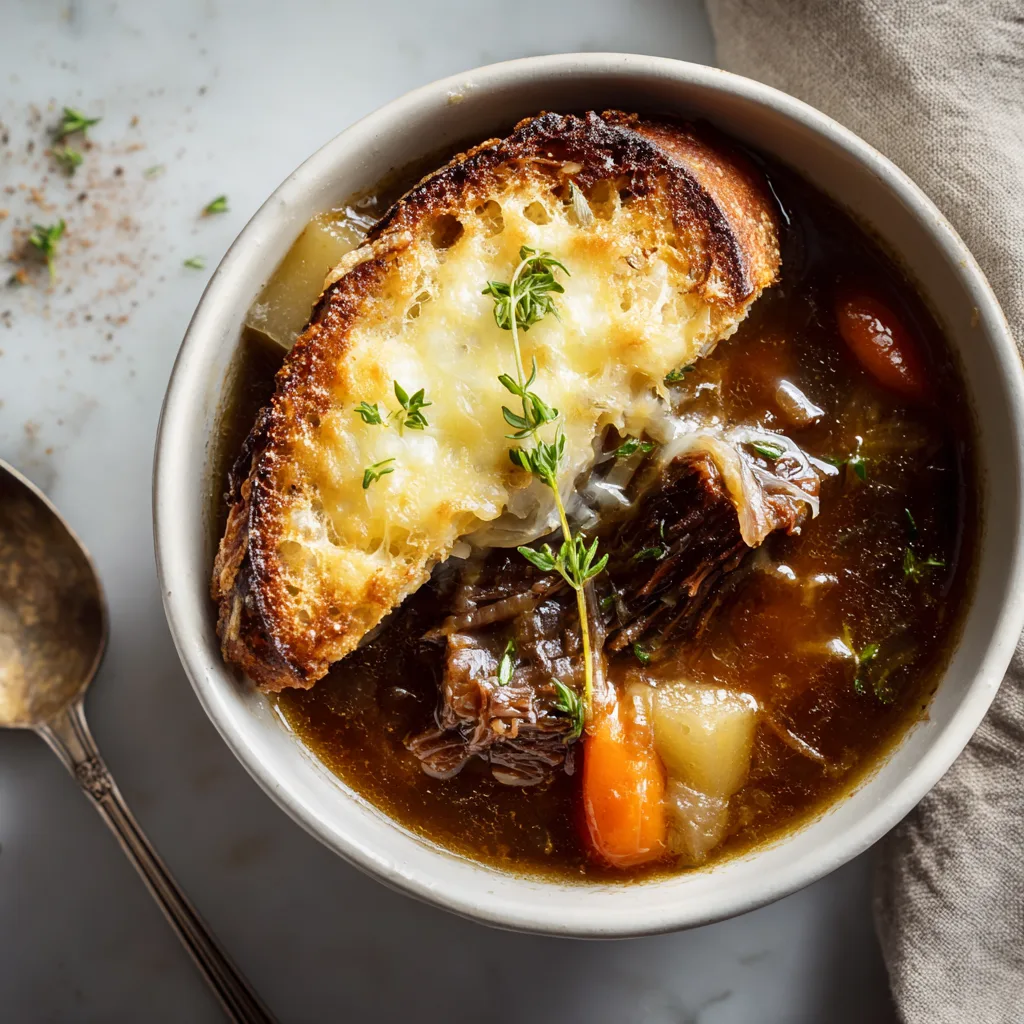
At its core, French Onion Soup is an exercise in patience. It requires you to coax the natural, hidden sugars out of sharp, pungent onions until they collapse into a sweet, jammy, deeply savory base. When this rich onion marmalade is combined with a robust, high-quality beef broth, a splash of wine, and earthy herbs, the result is a liquid symphony. But, as any true aficionado knows, the soup itself is only half the experience. The crowning glory—a thick, toasted slice of baguette submerged in the broth and entombed under a thick, blistering layer of melted Gruyère cheese—is what makes this dish legendary. Whether you are hosting an elegant dinner party or simply seeking a cozy night in on a chilly autumn evening, this Ultimate Classic French Onion Soup is guaranteed to satisfy.
Why This French Onion Soup Recipe Stands Out from the Rest 🥇
You might be wondering, with thousands of French Onion Soup recipes circulating the internet, what makes this specific version the one you should choose? The answer lies in our unwavering commitment to traditional techniques balanced with modern home-kitchen sensibilities. We don’t take shortcuts when it comes to flavor development, but we also ensure the process is accessible for cooks of all skill levels.
First, we focus heavily on the Maillard reaction—the chemical process that gives browned food its distinctive flavor. By cooking the onions low and slow, we achieve a depth of flavor that simply cannot be replicated by rushing. Second, we emphasize the importance of deglazing. Using a crisp, dry white wine to lift the glorious browned bits (the fond) from the bottom of your pot ensures no flavor is left behind. Finally, our ratio of broth to onions guarantees a thick, hearty spoonful every single time, rather than a thin, watery liquid. This is a restaurant-quality recipe designed for your home dining table.
The Secret to Perfect Caramelized Onions 🧅
If there is one absolute truth about making French Onion Soup, it is this: you cannot rush the onions. Caramelization is a labor of love. Many recipes claim you can caramelize onions in 15 or 20 minutes, but this is a culinary myth. True caramelization takes anywhere from 45 minutes to a full hour of gentle, attentive cooking.
You want to start with a mix of yellow onions. While sweet onions (like Vidalia) might seem like a good idea, they often lack the sharp bite needed to balance the deep, savory beef broth, resulting in a soup that is cloyingly sweet. Yellow onions hit the perfect middle ground. Slice them uniformly so they cook at an even rate. Melt your butter and olive oil together in a heavy-bottomed Dutch oven—the oil raises the smoke point, while the butter provides rich flavor. Add the onions, a generous pinch of salt (which draws out moisture and aids the breakdown process), and let them sweat. Stir them occasionally, scraping the bottom of the pot. As the water evaporates, the onions will transition from translucent to blonde, then to a rich, deep mahogany. This is the heart and soul of your soup. Treat this step with the respect it deserves, and your palate will thank you.
Choosing the Right Broth and Wine for Deep Flavor 🍷
Once your onions are perfectly jammed and browned, it is time to build the liquid foundation of your soup. Because French Onion Soup relies on so few ingredients, the quality of your broth is paramount. In a professional French kitchen, chefs use a homemade veal or beef stock that has simmered for days. For the home cook, a high-quality, store-bought beef broth or bone broth is perfectly acceptable, but we highly recommend choosing a low-sodium option. As the soup simmers and reduces, the flavors concentrate, and a standard broth can quickly become overly salty. By using low-sodium broth, you retain complete control over the final seasoning of the dish.
Before the broth goes in, however, we must deglaze the pot. This is where the wine comes into play. A dry white wine—such as a Sauvignon Blanc, Pinot Grigio, or an un-oaked Chardonnay—is traditional and provides a necessary hit of acidity to cut through the richness of the beef and the sweetness of the onions. As you pour the wine into the hot pot, it will sizzle and steam. Use a wooden spoon to aggressively scrape the bottom of the pot, releasing all the caramelized sugars stuck to the enamel. Let the wine reduce until it is almost entirely evaporated. This step layers complex, fruity, and acidic notes into the soup, elevating it from good to truly gourmet.
The Bread and Cheese: Building the Perfect Gratinée 🥖🧀
The term “gratinée” refers to the iconic, crusty, cheesy top of the soup. This is often the most anticipated part of the meal! To achieve structural integrity, you need the right bread. A standard slice of sandwich bread will disintegrate into a mushy, unappetizing mess the second it hits the hot broth. You need a crusty, rustic French baguette. Slice it thick, at least an inch, and toast it in the oven until it is completely dried out, almost like a giant crouton. This hard texture allows the bread to act as a buoyant raft for the cheese, slowly absorbing the savory broth without completely falling apart.
Now, let’s talk cheese. While you could technically use Mozzarella or Provolone, authentic French Onion Soup demands Gruyère. Gruyère is a traditional Swiss cheese known for its exceptional melting qualities and its complex, nutty, slightly sweet flavor profile. It melts perfectly without becoming overly greasy or separating. Grate it fresh from the block—pre-shredded cheeses are coated in anti-caking agents (like cellulose) that prevent them from melting smoothly. Mound the cheese generously over the toasted baguette slice, letting it spill over the edges of the crock. When placed under a hot broiler, the cheese will bubble, blister, and form a gorgeous, golden-brown crust that seals in the heat of the soup.
Essential Ingredients – What You Will Need 🛒
Gather these high-quality ingredients before you begin your culinary adventure:
- 3 pounds large yellow onions (about 5-6 onions), peeled and thinly sliced
- 4 tablespoons unsalted butter
- 2 tablespoons olive oil
- 1 teaspoon granulated sugar (to help caramelization)
- 3 cloves garlic, finely minced
- 1/2 cup dry white wine (Sauvignon Blanc or Pinot Grigio)
- 6 cups high-quality, low-sodium beef broth
- 1 tablespoon fresh thyme leaves (plus sprigs for garnish)
- 1 bay leaf
- Salt and freshly ground black pepper, to taste
- 1 crusty French baguette, cut into 1-inch thick slices
- 2 cups freshly grated Gruyère cheese
- 1/2 cup freshly grated Parmesan cheese (optional, for extra umami)
Step-by-Step Instructions: Crafting Your Masterpiece 👩🍳
Follow these meticulously detailed steps to ensure soup perfection:
- Caramelize the Onions: Heat the butter and olive oil in a large, heavy-bottomed pot or Dutch oven over medium heat. Add the sliced onions and toss them to coat in the fats. Cook uncovered for about 10 minutes until they soften.
- Deepen the Color: Reduce the heat to medium-low. Add the sugar and a generous pinch of salt. Cook slowly, stirring every 5-10 minutes, for about 45 to 55 minutes. The onions should become deep golden brown, sweet, and sticky. If they seem to be catching or burning, add a tablespoon of water and scrape the pot.
- Add Aromatics: Once the onions are fully caramelized, add the minced garlic and cook for 1 minute until fragrant.
- Deglaze the Pot: Pour in the dry white wine to deglaze the pot. Use a wooden spoon to scrape up all the flavorful browned bits stuck to the bottom. Simmer for 3-4 minutes until the wine has mostly evaporated.
- Simmer the Soup: Pour in the beef broth. Add the fresh thyme leaves and the bay leaf. Bring the soup to a gentle boil, then reduce the heat to low, cover partially, and let it simmer for 30 minutes to allow the flavors to meld beautifully. Taste and adjust seasoning with salt and pepper. Discard the bay leaf.
- Toast the Bread: While the soup is simmering, preheat your oven to 400°F (200°C). Place the baguette slices on a baking sheet and toast for 5-7 minutes per side until dry, crisp, and lightly browned. Remove from the oven and set aside. Switch the oven to the “Broil” setting.
- Assemble the Bowls: Place oven-safe soup crocks or bowls onto a sturdy, rimmed baking sheet. Ladle the hot soup into the bowls, filling them about 3/4 of the way to the top.
- Add the Gratinée: Place 1 or 2 toasted baguette slices on top of the soup in each bowl. Generously cover the bread and the surface of the soup with the grated Gruyère (and Parmesan, if using). Let the cheese drape over the edges slightly.
- Broil to Perfection: Carefully transfer the baking sheet with the bowls into the oven, placing them about 6 inches below the broiler. Broil for 2 to 4 minutes. Keep a very close eye on them! You want the cheese melted, bubbly, and golden-brown in spots.
- Garnish and Serve: Carefully remove the hot bowls from the oven. Garnish with a sprig of fresh thyme. Serve immediately, reminding your guests that the bowls will be extremely hot.
Expert Tips for the Best French Onion Soup Ever 💡
To truly elevate your cooking, keep these chef-approved secrets in mind:
Don’t skimp on the scraping: The dark residue that forms on the bottom of your pot during caramelization is called the “fond.” It is pure, concentrated flavor. Make sure you use your wooden spoon to scrape it up completely when you add the wine. That is what gives the broth its rich, dark color.
Rub the toast with garlic: For an extra punch of flavor, take a raw garlic clove, cut it in half, and rub the cut side over the toasted baguette slices right before placing them in the soup. The rough texture of the bread acts like a grater, leaving behind a subtle, spicy garlic essence.
Use room temperature cheese: Cold cheese takes longer to melt and can sometimes separate under the intense heat of the broiler. Grate your cheese while the soup simmers and let it sit at room temperature for 20 minutes before assembling the bowls.
Variations and Dietary Substitutions 🌱
Food should be inclusive, and this recipe can be easily adapted to suit various dietary needs without sacrificing flavor.
Vegetarian French Onion Soup: Swap the beef broth for a high-quality, rich vegetable stock or a mushroom-based broth. Mushroom broth, in particular, offers a fantastic umami flavor that mimics the depth of beef broth remarkably well. Ensure your cheese uses vegetable rennet.
Gluten-Free: Simply substitute the traditional French baguette with your favorite sturdy, gluten-free artisan bread. Be sure to toast it thoroughly so it holds up in the liquid.
Alcohol-Free: If you prefer not to use wine, you can deglaze the pot with an equal amount of additional beef broth mixed with a tablespoon of apple cider vinegar or white wine vinegar to provide the necessary acidic balance.
What to Serve with French Onion Soup 🥗
Because French Onion Soup is incredibly rich, hearty, and filling, it can easily stand alone as a main course. However, if you are looking to build a multi-course menu, balance is key. Serve it alongside a light, crisp, and acidic salad. A simple arugula salad dressed with a sharp lemon vinaigrette and shaved parmesan cuts through the heavy cheese beautifully. If you are serving it as an appetizer, follow it with a lighter protein, such as a roast chicken, seared scallops, or a delicate white fish.
How to Store, Freeze, and Reheat Leftovers ❄️
French Onion Soup is one of those rare dishes that actually tastes better the next day, as the flavors have more time to marry in the refrigerator.
Storing: Store the soup and the toasted bread separately. Keep the soup in an airtight container in the refrigerator for up to 4 days. Keep the toasted bread in a zip-top bag at room temperature.
Freezing: The soup base (without the bread and cheese) freezes wonderfully. Allow it to cool completely, then transfer it to freezer-safe containers or heavy-duty freezer bags. It will keep for up to 3 months. Thaw overnight in the refrigerator before reheating.
Reheating: Reheat the soup in a pot on the stove over medium heat until gently simmering. Transfer to oven-safe bowls, top with the reserved toasted bread, add fresh cheese, and broil as instructed in the original recipe.
Frequently Asked Questions (FAQs) About French Onion Soup ❓
Can I use red wine instead of white?
Yes, you can! While white wine is traditional and offers a brighter acidity, red wine will give the soup a deeper, more robust, and slightly sweeter flavor profile. A dry red like Pinot Noir or Cabernet Sauvignon works beautifully.
Why is my French Onion Soup bitter?
Bitterness usually occurs if the onions are burned rather than caramelized. Caramelization is a slow browning process; burning turns the sugars to carbon. If the pot gets too hot, the onions will scorch. Always cook them low and slow, and add a splash of water if they look like they are drying out too fast.
Can I make this in a slow cooker or crockpot?
You can certainly caramelize the onions in a slow cooker (which takes 10-12 hours on low), but to get the best flavor, we recommend finishing the soup on the stovetop to properly deglaze and simmer. The final broiling step must always be done in the oven.
What bowls are safe for the broiler?
You must use bowls clearly labeled “oven-safe” or “broiler-safe.” Traditional French onion soup crocks are made from thick ceramic or stoneware designed to withstand high temperatures. Never put standard glass or delicate porcelain under a broiler, as they will shatter.
Conclusion: Bringing the French Bistro to Your Kitchen 🇫🇷
Mastering this Classic French Onion Soup recipe is a rite of passage for any home cook. It teaches the fundamental culinary lessons of patience, flavor layering, and temperature control. While it takes a bit of time at the stove, the result—a steaming, fragrant bowl of savory broth topped with a decadent mountain of melted cheese—is worth every single minute. So pour yourself a glass of that leftover white wine, put on some relaxing music, and enjoy the meditative process of caramelizing onions. Bon appétit!
Classic French Onion Soup
Ingredients
Equipment
Method
- Melt butter and olive oil in a large Dutch oven over medium heat. Add sliced onions and cook until softened.
- Reduce heat to medium-low. Cook onions slowly for 45-55 minutes, stirring occasionally, until deeply caramelized and dark golden brown.
- Add minced garlic and cook for 1 minute. Pour in the white wine to deglaze, scraping up the browned bits from the bottom.
- Add beef broth and thyme. Simmer gently for 30 minutes. Season with salt and pepper to taste.
- Preheat oven to 400°F (200°C). Toast baguette slices on a baking sheet until dry and crisp.
- Ladle soup into oven-safe crocks. Top each with a toasted baguette slice and a generous handful of grated Gruyère cheese.
- Broil on high for 2-4 minutes until the cheese is melted, bubbly, and golden-brown. Garnish with fresh thyme and serve hot.