
If you could capture the essence of a cozy autumn evening in a single dish, it would be this Creamy Apple Cider Chicken Skillet. It’s a meal that bridges the gap between savory and sweet, rustic and refined, all while being prepared entirely in one vessel. There is something profoundly comforting about cooking with a cast-iron skillet; it imparts a depth of flavor and a gorgeous sear that few other pans can achieve.
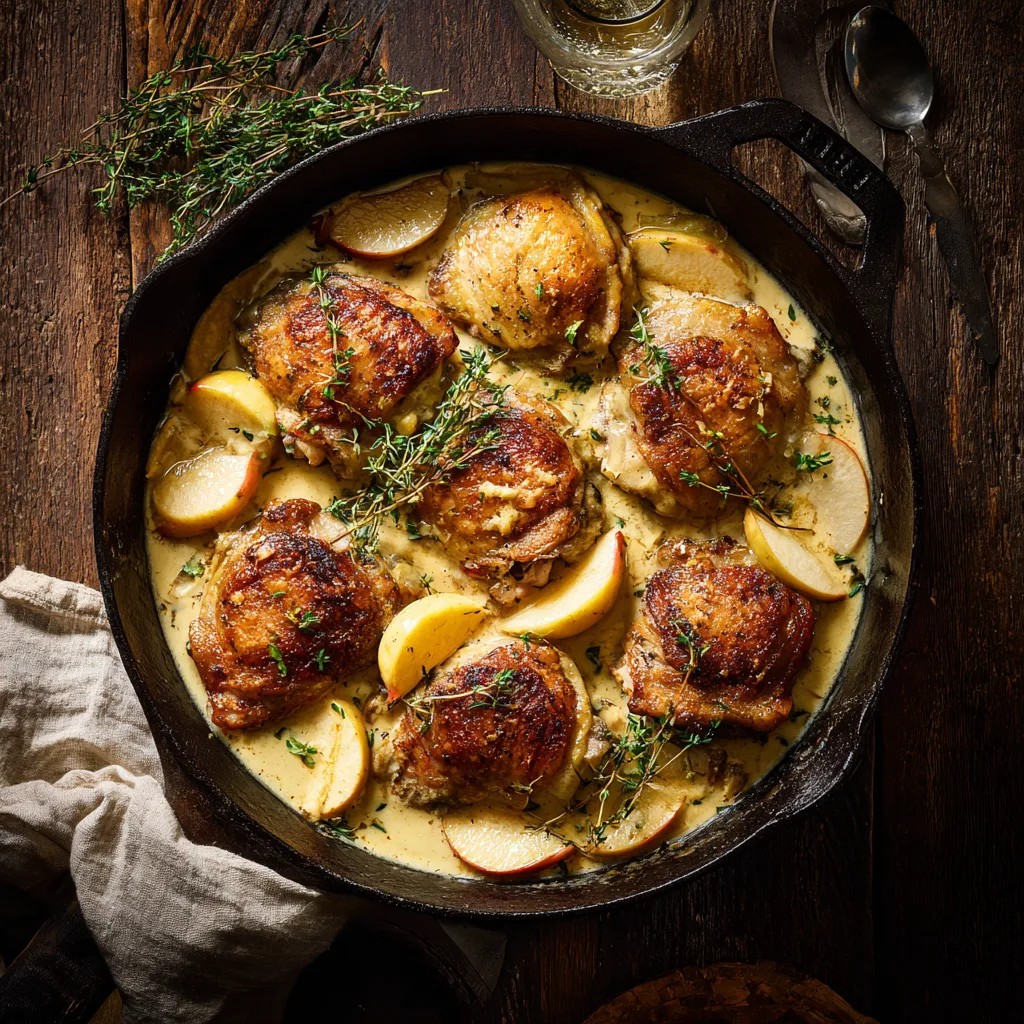
This recipe features crispy-skinned chicken thighs nestled in a luscious, velvety sauce made from apple cider, cream, and aromatic herbs, studded with tender, caramelized apples. It’s the kind of dinner that makes your whole house smell incredible and feels like a warm hug on a chilly night. Whether you are looking for an impressive Sunday supper or a comforting weeknight meal that doesn’t leave you with a mountain of dishes, this skillet chicken is pure magic.
Why This Recipe Will Become a New Favorite
The brilliance of this dish lies in its balance. Chicken thighs, known for their richness, need a counterpoint. The sweet tartness of apples and apple cider cuts through that richness perfectly, while the heavy cream ties everything together into a luxurious sauce.
Furthermore, it’s a textural delight. You have the crispy, salty skin of the chicken, the tender meat underneath, the soft bite of the cooked apples, and the silky smooth sauce. It’s a restaurant-quality meal that is surprisingly simple to execute at home. It also utilizes seasonal ingredients that are likely already sitting on your counter during the fall and winter months.
The Importance of Using Chicken Thighs
While many people gravitate toward chicken breasts for their lean profile, this recipe absolutely thrives with chicken thighs.
Flavor and Moisture: Bone-in, skin-on chicken thighs are inherently juicier and more flavorful than breasts. They are more forgiving during the cooking process, making it harder to overcook them and dry them out. The bone adds flavor to the sauce as it simmers, and the skin renders down into glorious fat that we use to sauté the aromatics.
The Crispy Skin Factor: The initial step of searing the chicken skin-side down in the hot cast iron skillet is crucial. This renders out the fat, creating a cracker-thin, golden-brown crust that stays relatively crisp even after being nestled back into the sauce. If you must use breasts, be aware they will cook faster and lack the depth of flavor that thighs provide here.
Choosing the Perfect Apples for Cooking
Not all apples are created equal when it comes to applying heat. For a skillet dish like this, you want an apple that will soften but hold its shape, rather than disintegrating into applesauce.
- The Best Choices: Honeycrisp, Fuji, Braeburn, or Pink Lady apples are excellent options. They have a good balance of sweet and tart, and their firm flesh stands up well to sautéing and simmering.
- Apples to Avoid: Avoid varieties like McIntosh or Red Delicious, which tend to get mealy or mushy very quickly when cooked.
We leave the skin on the apples for this recipe; it adds a lovely pop of red color to the creamy sauce and provides additional nutrients and texture.
- ingredients as dashes
- numbered instructions
Creamy Apple Cider Chicken Skillet
Ingredients
Equipment
Method
- Pat the chicken thighs completely dry with paper towels. Season generously on both sides with salt and black pepper.
- Heat olive oil in a large cast-iron skillet over medium-high heat. Once shimmering, add chicken thighs skin-side down. Cook undisturbed for 5-8 minutes until the skin is deep golden brown and crispy. Flip and cook for 2 more minutes on the other side. Remove chicken from the skillet and set aside on a plate (they will not be cooked through yet).
- Drain all but about 2 tablespoons of the rendered fat from the skillet. Reduce heat to medium. Add the butter and apple wedges. Sauté for 4-5 minutes until apples are lightly browned and just starting to soften.
- Add minced garlic and fresh thyme leaves; cook for 30 seconds until fragrant.
- Pour in the apple cider (or broth). Use a wooden spoon to scrape up the browned bits (fond) from the bottom of the pan. Bring to a simmer and let reduce slightly for 2 minutes.
- Stir in the heavy cream. Nestle the seared chicken thighs back into the skillet, skin-side up, along with any juices gathered on the plate.
- Reduce heat to low, maintain a gentle simmer, and cook for 15-20 minutes, or until the chicken reaches an internal temperature of 165°F (74°C) and the sauce has thickened slightly.
- Garnish with fresh thyme sprigs and serve hot directly from the skillet.
Notes
***
Mastering the One-Pan Technique
The beauty of a one-pan meal is that every step builds upon the previous flavor layer. Nothing is wasted.
- The Sear: We start by searing the seasoned chicken thighs. The goal here isn’t to cook them all the way through, but to develop that irresistible golden crust and render the fat. Patience is key—let them undisturbed for 5-7 minutes until they release naturally from the pan.
- The Fond: Once the chicken is removed, you’ll notice browned bits stuck to the bottom of the skillet. This is called fond, and it’s pure flavor gold. Don’t scrub it out!
- The Aromatics and Apples: We use the rendered chicken fat left in the pan to sauté the apple slices, garlic, and thyme. They pick up that savory, chicken-y goodness.
- The Deglaze: Pouring in the apple cider (or broth) and scraping up the fond with a wooden spoon releases those caramelized sugars back into the liquid, creating the foundation of our sauce.
- The Simmer: The cream is added, and the chicken is returned to the pan to finish cooking gently in the liquid. This braising technique ensures the meat is fall-off-the-bone tender while thickening the sauce simultaneously.
Serving Suggestions
This rich, saucy dish begs for a starchy side to soak up every last drop of that incredible apple cream sauce.
- Mashed Potatoes: A classic pairing. Creamy buttery mashed potatoes are the perfect bed for the chicken and sauce.
- Crusty Bread: A simpler approach. A loaf of warm, rustic sourdough or a baguette is perfect for scarpetta (the Italian tradition of wiping the plate clean with bread).
- Wild Rice or Farro: For a nuttier, heartier texture that complements the autumn vibes, serve this over a bed of cooked wild rice or farro.
- Greens: Balance the richness of the dish with some simple sautéed spinach, kale with garlic, or a crisp green salad with a sharp vinaigrette.
Conclusion
This Creamy Apple Cider Chicken Skillet is more than just dinner; it’s an experience in cozy, rustic cooking. It transforms humble ingredients like chicken thighs and apples into something truly spectacular through the magic of a cast-iron skillet and a little patience. It’s savory, sweet, creamy, and deeply satisfying—the perfect dish to gather around as the evenings get cooler. Give this one-pan wonder a try, and it is sure to earn a permanent spot in your seasonal recipe rotation.