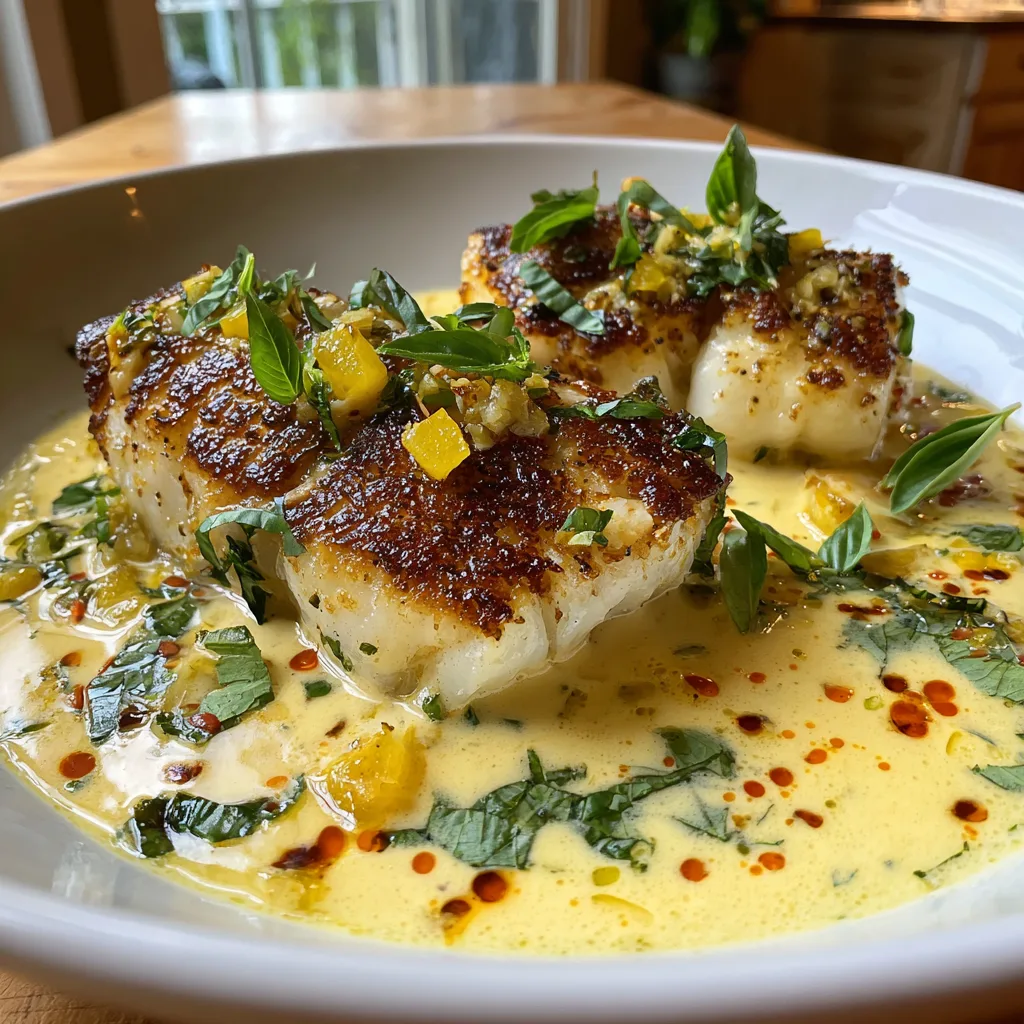
There is a misconception that restaurant-quality seafood is difficult to replicate at home. We often reserve dishes like Pan-Seared Halibut for special occasions at high-end bistros, fearing that we might overcook the delicate flesh or break the sauce. However, looking at the image of this golden, crispy-skinned fish bathing in a luxurious pool of lemon cream, you are looking at a dish that comes together in under 30 minutes.
This comprehensive guide will demystify the art of cooking white fish. We will explore how to achieve that coveted golden crust, how to build a velvety emulsion sauce that doesn’t split, and how to use bright, fresh toppings like mango and basil to cut through the richness. This isn’t just a recipe; it’s a lesson in balancing flavors and textures that will elevate your home cooking forever.
The Star of the Show: Why Halibut? 🌊
Halibut is often referred to as the “steak of the sea.” It is a firm, mild-flavored white fish that holds its shape beautifully in the pan. Unlike delicate sole or flounder which can fall apart easily, halibut has a meaty texture that allows for a hard sear.
When cooked correctly, the meat is snowy white, sweet, and flakes into large, tender chunks. Because it is a lean fish, it pairs exceptionally well with fats—which is why the rich, butter-based sauce in this recipe is its perfect culinary soulmate. If you cannot find halibut, this recipe works equally well with Chilean Sea Bass, Grouper, or even thick-cut Cod loins.
The Flavor Profile: Richness Meets Acidity ⚖️
The magic of this dish lies in the contrast. The sauce is a derivative of a classic beurre blanc, enriched with a touch of heavy cream to make it foolproof and velvety. It provides a savory, salty, and fatty base.
To prevent the dish from feeling too heavy, we introduce the Mango Basil Salsa. The tropical sweetness of the mango and the sharp, anise-like freshness of the basil cleanse the palate between bites. The acidity of the lemon juice ties the fat and fruit together, creating a harmony that dances on your tongue.
Detailed Ingredients List 🛒
Quality ingredients make a significant difference here. Since there are few components, ensure each one is fresh.
Pan-Seared Halibut with Lemon Cream & Mango Salsa
Ingredients
Equipment
Method
- Pat fish fillets completely dry with paper towels and season generously with salt and pepper.
- Mix diced mango, basil, and a squeeze of lime in a small bowl for the salsa.
- Heat oil in a skillet over medium-high heat until shimmering. Sear fish for 4-5 minutes undisturbed.
- Flip fish, add 1 tbsp butter and garlic, and baste for 2-3 minutes until cooked through. Remove fish.
- In the same pan, sauté shallots for 30 seconds. Deglaze with white wine and reduce by half.
- Add heavy cream and simmer until slightly thickened.
- Reduce heat to low and whisk in cold butter cubes one at a time until smooth.
- Pour sauce into bowls, top with fish, and garnish with mango salsa and chili oil.
Notes
For the Pan-Seared Fish
- – 2 fresh Halibut fillets (approx. 6 oz each, skin removed or on, depending on preference)
- – 2 tablespoons grapeseed oil or avocado oil (high smoke point oil is essential)
- – 1 tablespoon unsalted butter (for basting)
- – Kosher salt (generous amount)
- – Freshly cracked black pepper
- – 1 clove garlic (crushed, skin on)
For the Lemon Butter Cream Sauce
- – 1/2 cup dry white wine (Sauvignon Blanc or Pinot Grigio)
- – 2 tablespoons shallots (finely minced)
- – 1/2 cup heavy whipping cream
- – 4 tablespoons cold unsalted butter (cubed)
- – 1 tablespoon fresh lemon juice
- – 1 pinch saffron threads (optional, for color and earthiness)
- – Salt to taste
For the Mango Basil Garnish
- – 1/2 cup ripe mango (finely diced)
- – 2 tablespoons yellow bell pepper (finely diced, for crunch)
- – 1/4 cup fresh basil leaves (chiffonade or small torn leaves)
- – 1 teaspoon olive oil
- – A squeeze of lime juice
- – Chili oil or red pepper flakes (optional, for finishing)
Step-by-Step Instructions 👨🍳
Follow these steps for a stress-free cooking experience. Timing is everything with fish.
Phase 1: Prep and Salsa
- Make the Salsa: In a small bowl, combine the diced mango, yellow bell pepper, fresh basil, olive oil, and lime juice. Toss gently and set aside to let the flavors meld. This freshness will be the final touch.
- Dry the Fish: Take your halibut fillets out of the fridge 15 minutes before cooking. Pat them extremely dry with paper towels. Moisture is the enemy of a good sear. Season generously with salt and pepper on all sides.
Phase 2: The Perfect Sear
- Heat the Pan: Place a stainless steel or cast-iron skillet over medium-high heat. Add the grapeseed oil. Wait until the oil is shimmering and just starting to smoke.
- Sear: Carefully lay the fish fillets into the pan away from you (to avoid splashing oil). Do not touch them! Let them cook undisturbed for 4-5 minutes. You want a deep golden crust to form.
- Flip and Baste: Flip the fillets. They should release easily; if they stick, they aren’t ready. Add the tablespoon of butter and the crushed garlic clove to the pan. Tilt the pan slightly and spoon the foaming butter over the fish for 2-3 minutes until the fish is cooked through. The internal temperature should reach 130°F (54°C).
- Rest: Remove the fish to a warm plate to rest while you make the sauce.
Phase 3: The Pan Sauce
- Deglaze: Pour out most of the oil from the pan but keep the browned bits (fond). Add the minced shallots and sauté for 30 seconds. Pour in the white wine to deglaze, scraping the bottom of the pan. Let the wine reduce by half.
- Cream and Emulsify: Add the heavy cream (and saffron if using). Simmer for 2 minutes until slightly thickened. Turn the heat to low.
- Mount the Butter: Whisk in the cold cubed butter one piece at a time. Do not let the sauce boil, or the butter might separate. Stir in the lemon juice and season with salt.
Phase 4: Assembly
- Plate: Pour a generous ladle of the warm lemon cream sauce into a shallow bowl.
- Place Fish: Place the seared halibut fillet right in the center of the sauce pool.
- Garnish: Spoon the mango basil salsa over the top of the fish. Drizzle with a few drops of chili oil if you like a kick. Serve immediately.
The Science of Searing: The Maillard Reaction 🔬
Why do we sear fish? It isn’t just for looks. The browning process is called the Maillard reaction, a chemical reaction between amino acids and reducing sugars that gives browned food its distinctive flavor. To achieve this with fish:
- Surface Dryness: If the fish is wet, the water must boil away before the surface temperature can rise above 212°F (100°C). By the time the water boils off, the fish is overcooked. Pat it dry!
- High Heat: You need high heat to trigger the reaction quickly before the heat penetrates too deep and dries out the center.
- Patience: Moving the fish disrupts the formation of the crust. Let the protein strands contract and release naturally from the metal pan.
Chef’s Tips for Success 💡
1. How to tell if the fish is done:
Halibut can go from succulent to dry in a matter of seconds. Use a cake tester or a small metal skewer. Insert it into the thickest part of the fish for 3 seconds, then touch it to your bottom lip. If it feels warm (not hot), the fish is perfect. Visually, it should just be starting to flake.
2. Fixing a Broken Sauce:
If your sauce looks oily or separated, it got too hot. Take it off the heat immediately and whisk in a splash of cold water or cold cream vigorously. This usually brings the emulsion back together.
3. Wine Substitutes:
If you prefer not to cook with alcohol, substitute the white wine with chicken stock or vegetable broth mixed with a teaspoon of white wine vinegar for acidity.
Variations for Every Season 🍂🌸
While this tropical mango version is perfect for summer, this base recipe is incredibly versatile.
- Autumn: Swap the mango salsa for sautéed wild mushrooms and sage. The earthy fungi pair beautifully with the lemon cream.
- Winter: Serve the fish over a bed of wilted spinach or kale and top with pomegranate seeds for a festive jeweled look.
- Spring: Add blanched peas and asparagus tips to the sauce and garnish with fresh dill and chives.
Conclusion: Elegant Simplicity 🥂
This Pan-Seared Halibut recipe is a testament to the power of simple, high-quality ingredients treated with respect. It combines the technical satisfaction of getting a perfect sear with the creative joy of balancing flavors. Whether you are cooking for a romantic date night or simply treating yourself to a nutritious, luxurious meal, this dish delivers on every level. The creamy sauce, the flaky fish, and the bright salsa create a bite that is nothing short of perfection.