The Ultimate Slow-Cooked Pot Roast: A Symphony of Comfort 🥩🌿
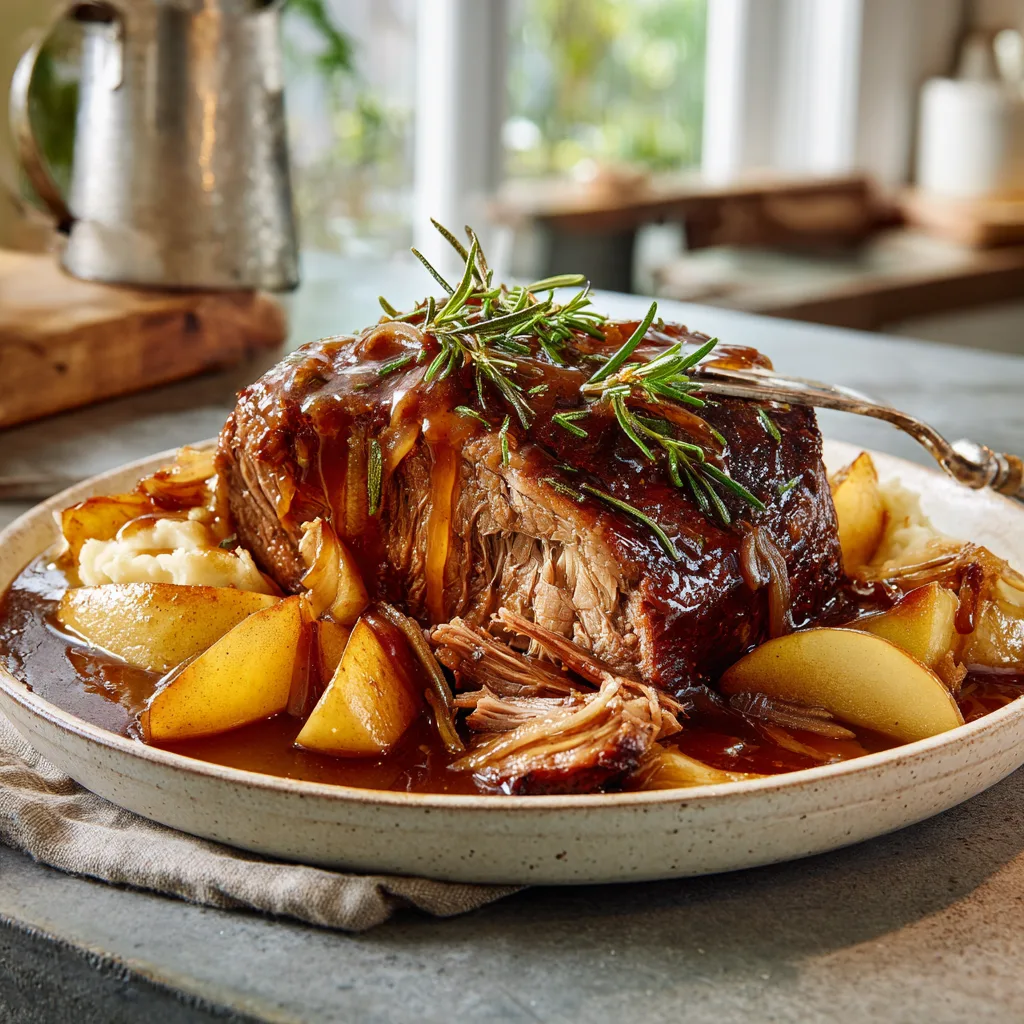
There are few dishes that evoke the feeling of home quite like a perfectly executed pot roast. It is the quintessential comfort food, a dish that transcends generations and culinary trends. The image of a large, tender cut of beef, glistening with rich gravy and adorned with fresh rosemary, sitting proudly atop a bed of creamy mashed potatoes, is enough to make anyone’s mouth water. This isn’t just a meal; it’s an experience—a warm hug on a cold day, the centerpiece of a gathered family table on a Sunday afternoon. Achieving that melt-in-your-mouth texture and deep, savory flavor, as seen in the picture, requires patience and a bit of know-how, but the rewards are immeasurable.
Why This Braised Beef is the King of Comfort Food
What makes pot roast so special? It’s the magic of transformation. You start with a tough, relatively inexpensive cut of meat and, through the alchemy of time and gentle heat, turn it into something incredibly luxurious. The process fills the house with an intoxicating aroma of savory beef, sweet onions, earthy herbs, and rich broth that builds anticipation for hours. Unlike quick weeknight meals, a pot roast commands attention and time, signaling that this meal is an event. It’s hearty, filling, and deeply satisfying in a way lighter fare just can’t compete with. The combination of tender protein, savory sauce, and starchy sides like the roasted and mashed potatoes pictured creates a perfectly balanced plate of indulgence.
Mastering the Meat: Choosing the Right Cut
The success of your pot roast hinges almost entirely on selecting the correct cut of beef. You cannot use just any steak. The beautiful, shreddable texture seen in the image comes from using a cut rich in connective tissue, specifically collagen. When cooked quickly, this tissue is tough and chewy. However, when cooked slowly at low temperatures in liquid (braising), the collagen breaks down into gelatin. This gelatin is what gives the meat its succulent, melting texture and adds incredible body and richness to the gravy.
The undisputed champion for pot roast is the **Boneless Beef Chuck Roast**. Coming from the shoulder area of the cow, it has the perfect amount of fat marbling and connective tissue to withstand long cooking times without drying out. Other viable options include the brisket or the bottom round rump roast, though the chuck generally offers the best flavor and tenderness for this application. Look for a roast with good marbling (white flecks of fat within the muscle) and a deep red color.
Ultimate Tender Pot Roast with Rich Gravy
Ingredients
Equipment
Method
- Preheat oven to 300°F (150°C). Pat the beef dry and season generously with salt and pepper.
- Heat oil in a large Dutch oven over medium-high heat. Sear the beef on all sides until deep brown, about 10 minutes total. Remove beef and set aside.
- Add onion and celery to the pot; cook until softened. Stir in garlic and tomato paste, cooking for 1 minute.
- Deglaze with red wine, scraping up browned bits. Simmer to reduce by half.
- Return beef to pot. Add broth, rosemary, thyme, and bay leaves. Bring to a simmer, cover tightly, and transfer to the oven.
- Braise for 2.5 hours. Remove pot, add carrots and potatoes around the meat. Cover and return to oven for another 45-60 minutes until meat is fork-tender.
- Remove meat and vegetables to a platter and tent with foil. Skim fat from the liquid in the pot.
- Bring liquid to a simmer on stovetop. Whisk in cornstarch slurry to thicken into gravy. Serve roast with vegetables and gravy.
Notes
The Art of the Braise: A Step-by-Step Breakdown
Braising is a two-step cooking method that is crucial for the perfect pot roast. It involves first searing the meat at a high temperature, then cooking it slowly in a liquid in a covered pot.
The first step, the **sear**, is non-negotiable. You must brown the meat aggressively on all sides in hot oil before adding any liquid. This isn’t about “locking in juices” (a common culinary myth); it’s about creating flavor via the Maillard reaction. That deep brown crust on the exterior of the beef, seen peeking through the gravy in the photo, is pure, concentrated flavor that will dissolve into the cooking liquid, forming the foundation of your sauce.
Once seared, aromatics like onions, celery, and garlic are softened in the same fat, picking up those browned bits (fond) from the bottom of the pot. Then, a liquid—usually a combination of good beef broth and perhaps some red wine for acidity and depth—is added. The pot is covered tightly, and the long, slow simmer begins, either on the stovetop, in the oven, or in a slow cooker.
The Vital Supporting Cast: Aromatics and Herbs
A great pot roast is more than just meat; it’s a harmony of flavors. The aromatics you choose build the flavor profile. The classic mirepoix (onions, carrots, and celery) is traditional. Garlic adds pungent depth. The herbs, however, are what lift the dish. The image prominently features fresh rosemary. **Rosemary** has a robust, pine-like aroma that stands up well to the rich flavor of beef and long cooking times. Thyme is another excellent companion, adding subtle earthy notes. Bay leaves are essential for their subtle, tea-like background flavor. When these herbs simmer with the beef, they infuse the meat and the gravy with a sophisticated savoriness that dried herbs simply cannot replicate.
Let’s look at what you need to recreate this masterpiece.
Ingredients 🥄
To achieve the tender, flavorful roast pictured, ensure your ingredients are fresh and high quality.
- 3 to 4 pound boneless beef chuck roast, tied
- Salt and freshly ground black pepper, generously applied
- 2 tablespoons vegetable oil or canola oil (with a high smoke point)
- 1 large yellow onion, roughly chopped
- 3 stalks celery, chopped into large chunks
- 4 cloves garlic, smashed
- 2 tablespoons tomato paste
- 1 cup dry red wine (like Cabernet Sauvignon or Merlot)
- 3 cups quality beef broth or stock
- 2 large sprigs fresh rosemary (plus extra for garnish as shown in the image)
- 4-5 sprigs fresh thyme
- 2 bay leaves
- 1 pound baby potatoes, halved (some to roast, some to braise if desired)
- 4 large carrots, peeled and cut into 2-inch chunks
- For the gravy slurry: 2 tablespoons cornstarch mixed with 3 tablespoons cold water
- Serve with: Creamy mashed potatoes
Instructions 📝
Follow these steps precisely to ensure the beef breaks down into the succulent texture shown in the photograph.
- Prepare the Meat: Remove the roast from the refrigerator at least 30 minutes before cooking to bring it to room temperature. Pat it completely dry with paper towels. Season generously on all sides with salt and pepper.
- The Sear: Heat the oil in a large Dutch oven or heavy-bottomed pot over medium-high heat until shimmering. Carefully add the roast. Sear undisturbed for 4-5 minutes per side until a deep brown crust forms. Remove the roast and set aside on a plate.
- Sauté Aromatics: Reduce heat to medium. Add the onions and celery to the pot. Cook for 5-7 minutes until softening, scraping up browned bits from the bottom. Add the smashed garlic and tomato paste, cooking for another minute until fragrant and the paste darkens slightly.
- Deglaze: Pour in the red wine. Use a wooden spoon to vigorously scrape the bottom of the pot to release all the caramelized fond. Let the wine reduce by half, simmering for about 3-4 minutes.
- The Braise: Return the seared roast to the pot along with any accumulated juices. Add the beef broth, rosemary sprigs, thyme sprigs, and bay leaves. The liquid should come about halfway up the side of the roast.
- Slow Cook: Bring to a simmer. Cover tightly with a lid. Transfer to a preheated 300°F (150°C) oven. Cook for approximately 3 to 3.5 hours.
- Add Vegetables: After about 2.5 hours, carefully remove the pot from the oven. Add the carrots and halved potatoes around the roast. Cover and return to the oven for another 45 minutes to an hour, or until the vegetables are tender and the meat is fork-tender (it should easily shred, as seen in the picture).
- Finish the Gravy: Remove the roast and vegetables to a serving platter and tent loosely with foil to rest. Skim excess fat from the surface of the braising liquid. Bring the liquid to a simmer on the stovetop. Remove the herb stems and bay leaves. Whisk in the cornstarch slurry slowly until the gravy reaches your desired thickness and has a glossy sheen.
- Serve: Slice or shred the roast. Serve over a bed of creamy mashed potatoes, surrounded by the braised vegetables, and pour the rich gravy generously over everything. Garnish with fresh rosemary.
Secrets to the Perfect Gravy and Sides
The gravy in the photo is dark, glossy, and looks incredibly rich. This is achieved through three things: a good sear on the meat, the use of tomato paste and red wine, and proper thickening. Skimming the fat off the top of the braising liquid before thickening is crucial so the gravy isn’t greasy. Using a cornstarch slurry creates that translucent, glossy finish, whereas a flour roux would create a more opaque, matte gravy.
Finally, the serving suggestions. The image shows the best of both worlds: creamy mashed potatoes *and* chunky roasted (or braised) potatoes. The smooth texture of mashed potatoes acts as the perfect vehicle for the rich gravy, while chunks of roasted potato add a textural contrast and earthy flavor. Serving both makes for an incredibly hearty and satisfying plate.
Conclusion: The Ultimate Act of Culinary Love
Creating the perfect pot roast is a labor of love. It requires time, attention to detail, and respect for ingredients. But when you pull that heavy pot from the oven and the aroma hits you, and you see the meat falling apart under the fork just like in the picture, you know it was worth every minute. It is a meal that nourishes not just the body, but the soul. So, gather your ingredients, preheat your oven, and prepare to make a meal that will be remembered long after the last bite is eaten.