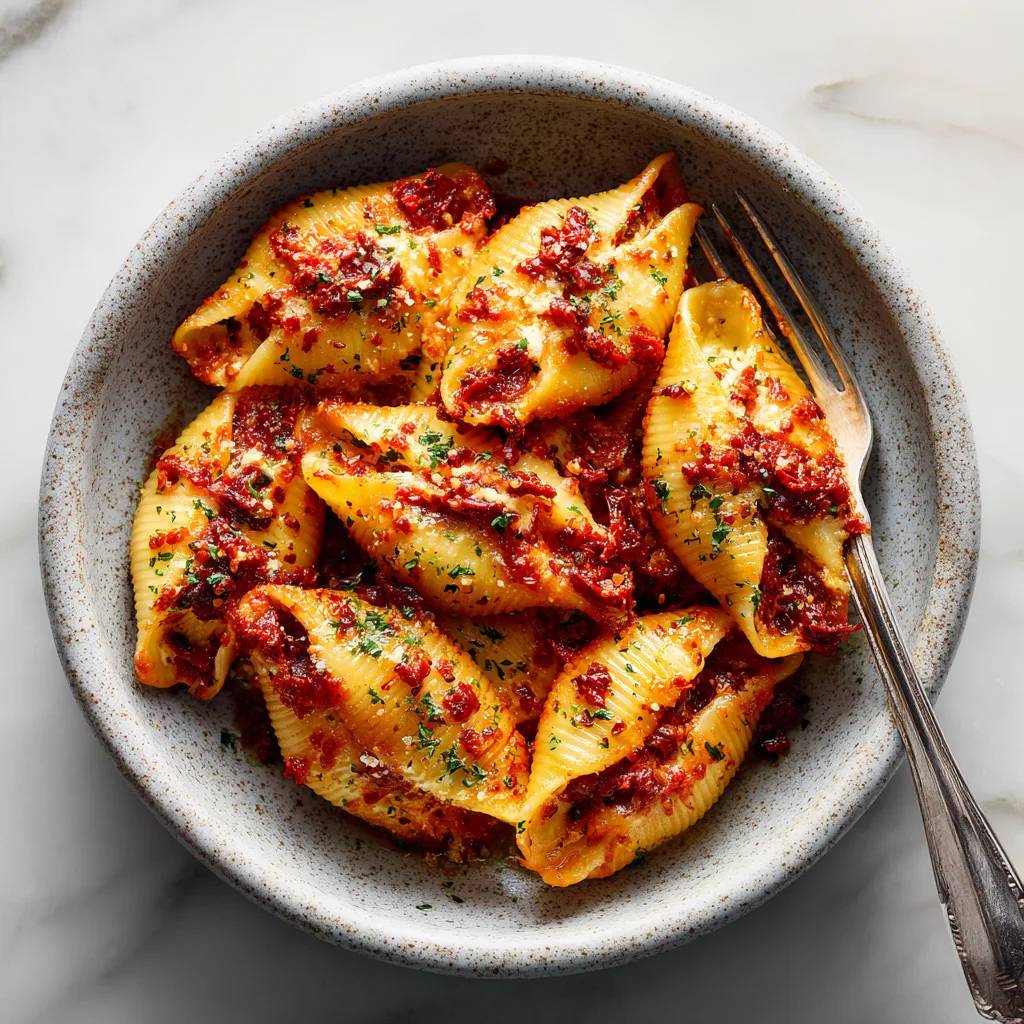
There are some dishes that transcend simple sustenance and become a warm, edible embrace. Jumbo Conchiglioni Bolognese is one of them. Imagine large, ridged pasta shells, their generous hollows filled to the brim with a rich, slow-simmered, traditional beef and pork Ragu. Then, imagine those beautiful parcels topped with a luxurious layer of more sauce and cheese, baked until bubbly and golden, and finished with a scattering of fresh green parsley. This photograph captures that very moment, offering a visual invitation to comfort, heritage, and pure, delicious satisfaction. It is a dish that speaks of family gatherings, slow Sundays, and the kind of care that only slow-cooked Italian sauces can convey.
Our journey with this recipe doesn’t just stop at the photograph. We will dive into the history of Bolognese, master the science behind achieving a perfect, deeply-flavored Ragu, and offer a myriad of ways to make this classic your own. From understanding why conchiglioni is the ideal vessel to troubleshooting common pasta-boiling issues, this comprehensive guide will give you everything you need to recreate this masterpiece flawlessly, whether you’re a seasoned chef or a first-time cook. Get ready to fill your home with the irresistible aroma of simmering tomatoes and spice.
📜 A Journey to Bologna: The Roots of a Rich Ragu
The dark red, chunky meat sauce in this photo is a Bolognese, a variation on the classic Ragu alla Bolognese that has its origins, as the name suggests, in Bologna, Italy. While often called simply “Bolognese sauce” globally and frequently served on spaghetti, the original is far more complex than just meat and tomato sauce. Historically, it’s a meat-focused ragu that is cooked for hours with aromatics, milk or cream, and sometimes wine, creating a profound depth of flavor. In traditional Bologna cooking, it’s almost always paired with wider egg pastas like tagliatelle or lasagne, rather than the thinner spaghetti.
The version we see here, stuffed inside jumbo conchiglioni shells, is a fantastic interpretation that leverages the sauce’s rich, textural nature. While the sauce might seem like a straightforward combination of meat and tomatoes, the authentic process involves a slow-simmering *technique* that is the real secret. This is not a sauce that you can simply heat and serve; it requires patience to allow the meats to tenderize, the flavors to meld, and the natural sweetness of the vegetables to develop. By slow-cooking, you break down the collagen in the meat, creating a rich, silky texture that is the hallmark of a true Bolognese, contrasting beautifully with the al dente pasta vessel in the photo.
✨ The Art of Conchiglioni: The Perfect Vessel
The conchiglioni (kohn-kee-lyoh-nee) in the photo, often called “jumbo shells” or “large shells” in English-speaking countries, are more than just a large pasta shape. Their specific design makes them ideal for a sauce as robust as Bolognese. The large, deep cavity, combined with the ridged exterior (rigati), is purpose-built to hold and capture a generous amount of chunky meat ragu. This ensures that every bite is a perfect balance of pasta and filling.
The pasta shape itself is a testament to Italian craftsmanship, designed to fulfill a functional role: to act as an individual, self-contained serving vessel. The sheer scale of jumbo conchiglioni transforms a simple meat-and-pasta dish into a plated presentation, as seen in the photo. It’s an elegant way to serve a hearty, comfort-focused meal, whether you’re plating individual portions or preparing a large batch for a crowd. Their sturdy structure allows them to be stuffed and then baked, either in a single layer for individual portions or nested tightly in a casserole dish for a shared meal.
🎨 Flavor Science: Decoding the Richness of Meat and Pasta
What makes the dish in the photo so universally appealing? The secret lies in the synergistic interplay of textures and flavors. You have the rich, savory, slightly gamey, and profoundly deep flavor of the beef and pork Bolognese ragu. This meat mixture provides a complex base of umami, which is further enhanced by the natural acidity and sweetness of slow-simmered tomatoes. The addition of milk or cream in a traditional Bolognese is crucial, as it provides a silky-smooth finish and a slightly sweet, creamy counterpoint to the robustness of the meat and tomato.
This rich, textural ragu is then enveloped by the simple, straightforward flavor and sturdy, al dente texture of the pasta shell. The conchiglioni offers a crucial element of contrast, providing a neutral backdrop and a firm structure that holds the filling together. The grated Parmesan on top adds a final, crucial layer of salty, nutty umami, while the fresh, chopped parsley provides a bright, herbal freshness that lifts and balances the entire composition. It is a perfectly composed bite, where every component has a purpose, creating a dimensional flavor experience.
🛠️ Masterclass in Slow-Simmered Bolognese: Key Ragu Tips
To achieve the dark, textured, and profoundly deep flavor of the Bolognese sauce depicted in the photo, you must embrace the process of slow-simmering. Here are the secrets to making a truly master-level Ragu, designed to take your conchiglioni to the next level.
Tips for a Superior Ragu:
- – Use a Mix of Meats: Combine ground beef and ground pork for a richer flavor. Pork adds fat and a dimensional savoriness that beef alone cannot provide. Consider a third addition like veal or ground pancetta for even more complexity.
- – Embrace the Sauté Stage: Do not rush the *soffritto* (sautéing your onions, carrots, and celery). This stage is critical for developing the natural sugars and creating a profound flavor base.
- – Brown the Meat Thoroughly: Cook the meat until it’s a deep brown, not just gray. Browning creates the Maillard reaction, which is essential for that deep, complex umami flavor.
- – Deglaze with Wine: Add a splash of dry red or white wine after browning the meat. This deglazes the pan, lifting up all those flavorful browned bits, and adds an essential layer of acidity and flavor.
- – Use High-Quality Tomatoes: Opt for canned crushed or San Marzano-style whole tomatoes for the best flavor and texture. Avoid overly sweet or watery varieties.
- – The Simmer is Secret: This is the most important step. Simmer your ragu for at least two hours, preferably three, over very low heat. This slow cooking allows the flavors to perfectly meld and the meats to become profoundly tender. A slow cooker is excellent for this.
- – The Final Secret Ingredient: Milk or Cream: Add a splash of whole milk or heavy cream in the last 30 minutes of simmering. This traditional step adds a subtle sweetness and creates a silky, smooth texture that is the hallmark of a true Bolognese.
🥣 Ingredients
The following is a comprehensive list of all the ingredients needed to recreate the specific dish in the photograph, focusing on a robust, slow-simmered Bolognese Ragu. Adjust seasonings to your personal preference.
- – 1 box (about 12 oz) Jumbo Conchiglioni shells pasta (check your recipe for quantity, but a photo like this uses around 12-15)
- – ½ lb ground beef
- – ½ lb ground pork (or additional beef if preferred, but a mix is better)
- – 1 tablespoon olive oil
- – 1 yellow onion, finely chopped
- – 1 large carrot, finely chopped
- – 2 celery stalks, finely chopped
- – 2 cloves garlic, minced
- – ½ cup dry red wine (e.g., Cabernet Sauvignon, Merlot)
- – 1 (28-oz) can crushed tomatoes (high-quality, like San Marzano style)
- – 2 tablespoons tomato paste
- – 1 cup whole milk (or heavy cream for an even richer texture)
- – 1 teaspoon dried oregano (or a small bunch of fresh if preferred)
- – Salt and black pepper to taste
- – Freshly grated Parmesan cheese (as depicted, plus extra for serving)
- – Fresh flat-leaf parsley, finely chopped (as depicted)
🔢 Instructions
Follow these numbered steps meticulously to create the deeply-flavored, beautifully-plated Jumbo Conchiglioni Bolognese seen in the photograph.
Jumbo Conchiglioni Bolognese Stuffed Shells
Ingredients
Equipment
Method
- Make the Bolognese Ragu: In a large pot or Dutch oven, heat the olive oil over medium heat. Sauté the finely chopped onion, carrot, and celery until very soft, about 8-10 minutes. Add minced garlic and cook 1 minute more. Add ground beef and ground pork, increasing heat slightly, and brown thoroughly (about 10 minutes), breaking it apart. Drain excess fat if needed. Pour in the red wine, deglazing the pot, and cook until mostly reduced. Stir in the tomato paste, crushed tomatoes, whole milk, dried oregano, salt, and pepper. Bring to a boil, then reduce heat to low, cover, and simmer for at least 2 hours (up to 3 for best flavor), stirring occasionally.
- Cook the Conchiglioni Pasta: While the sauce simmers, bring a large pot of salted water to a rolling boil. Carefully add the jumbo conchiglioni shells, ensuring not to overcrowding. Cook for 10-12 minutes, or until just al dente. Carefully drain the shells, rinse immediately with cool water, and place them in a single layer on a parchment-lined baking sheet to prevent sticking and breakages.
- Fill the Pasta Shells: Once the shells are cooled slightly and the Ragu is ready, stir 1 cup of grated Parmesan cheese into the finished Ragu if desired for extra creaminess, or leave it meat-focused. Using a spoon or small cookie scoop, generously fill each conchiglioni shell with the Bolognese mixture. Arrange the stuffed shells snugly in individual oven-safe bowls (like in the photo) or a single-layer in a large casserole dish.
- Top and Bake (Optional): Top each stuffed shell with a final layer of more Ragu and a dusting of grated Parmesan. If preparing to serve immediately as is, you can skip baking. For individual portions like in the photo, place the stuffed bowls under the broiler for 1-2 minutes until the cheese melts and browns slightly. For a casserole dish, bake covered with foil at 375°F (190°C) for 15 minutes, then uncover and bake 10 minutes more until bubbly.
- Final Garnish and Serving: Allow the shells to cool for 2-3 minutes before serving. Garnish generously with more freshly grated Parmesan cheese and finely chopped fresh parsley. Serve immediately with a fork.
Notes
- Prepare the Perfect Bolognese Ragu: In a large, heavy-bottomed pot or Dutch oven, heat the olive oil over medium heat. Add the finely chopped onion, carrot, and celery (the *soffritto*). Cook for 8-10 minutes, stirring occasionally, until the vegetables are very soft and the onion is translucent. Do not rush this step; it’s the foundation of flavor. Add the minced garlic and cook for 1 minute more until fragrant. Add the ground beef and ground pork, increasing the heat slightly to medium-high. Brown the meat thoroughly, breaking it apart with a spoon, until it is a deep brown all over, not just gray (this takes 8-10 minutes). Drain any excess fat if there’s a lot, leaving about a tablespoon in the pot.
- Deglaze and Add Flavor: Pour in the dry red wine and use a wooden spoon to scrape up all the flavorful browned bits (fond) from the bottom of the pot. Cook for 2-3 minutes, until the wine has mostly reduced. Stir in the tomato paste and cook for 1 minute, allowing it to toast slightly. Add the crushed tomatoes, whole milk (or cream), dried oregano, salt, and pepper. Bring the mixture to a gentle boil, then immediately reduce the heat to the lowest possible setting. Cover the pot with a tight-fitting lid and simmer for at least 2 hours, or up to 3 for the best flavor, stirring occasionally to ensure it doesn’t stick. The sauce should be dark and profoundly rich. If using a slow cooker, transfer the browned meat-and-vegetable mixture and all remaining sauce ingredients to the slow cooker and cook on low for 6-8 hours.
- Boil the Conchiglioni Pasta: While the sauce is finishing, bring a large pot of salted water to a rolling boil. Carefully add the jumbo conchiglioni shells. Do not overcrowding the pot. Cook the pasta for about 10-12 minutes, or until it is *al dente* (firm to the bite). It is crucial to use high-quality pasta and to *underbake* it slightly if you plan to bake the filled shells later. Carefully drain the shells, being gentle to prevent them from breaking. Immediately rinse them with cool water and place them in a single layer on a parchment-lined baking sheet or in a 9×13 inch baking dish to cool slightly and prevent sticking. You can give them a very light brush of olive oil if desired.
- Mix the Filling (Optional But Recommended): For an even creamier, more dimensional filling, mix about 1 cup of freshly grated Parmesan cheese into your finished Bolognese Ragu before stuffing the shells. This adds a crucial layer of cheesy goodness within each shell. If you prefer the cleaner, meat-focused approach seen in the photo, you can omit this step and just use the Ragu itself.
- Stuff and Plate the Conchiglioni: Working with one cooled pasta shell at a time, use a spoon or a small cookie scoop to generously fill the cavity of each conchiglioni with the Bolognese Ragu mixture. The shells should be fully filled, as seen in the photo. As you stuff each shell, place them in a single layer into individual oven-safe bowls, or arrange them snugly in a large casserole dish, depending on how you wish to serve them. Top the filled shells with a final, generous layer of more Bolognese Ragu and a dusting of grated Parmesan.
- Bake to Perfection (Optional But Encouraged): If you have prepared the shells in advance or simply prefer them baked and bubbly, preheat your oven to 375°F (190°C). Arrange the stuffed conchiglioni on a baking sheet or in a casserole dish. Cover with aluminum foil to prevent the edges from burning, and bake for 15 minutes. Then, remove the foil and bake for an additional 10 minutes until the cheese is melted, the edges are slightly golden, and the sauce is bubbly. This step further develops the flavors and creates that lovely, baked quality. For individual portions, like in the photo, you can place the stuffed, topped bowls under the broiler for 1-2 minutes until the cheese melts and browns slightly.
- Final Touches and Garnish: Allow the stuffed shells to cool for 2-3 minutes before serving to ensure they are the perfect eating temperature and to allow the flavors to settle. Garnish generously with more freshly grated Parmesan cheese and finely chopped flat-leaf parsley, exactly as depicted in the original photograph. This final pop of color and flavor is essential for a beautiful presentation. Serve immediately, with a fork, and enjoy the rich, comforting reward of your labor.
💡 Troubleshooting Pasta: Avoiding Soggy Shells
The conchiglioni in the photo are perfectly al dente, holding their shape and structure beautifully. Here are the secrets to achieving that perfect pasta texture, preventing common pitfalls that lead to soggy or broken shells.
Tips for Perfect Conchiglioni:
- – Use a Large Pot and Plenty of Water: Overcrowding is the number one cause of broken or undercooked pasta. Use a very large pot and ensure the shells have plenty of room to move freely.
- – Salt the Water Abundantly: Pasta water should be “salty as the sea.” This is your only chance to season the pasta itself, which is crucial for overall flavor. Don’t be afraid to add a generous tablespoon of salt.
- – Do Not Overcook: Check the pasta several minutes *before* the package instructions’ minimum time. Conchiglioni can turn from perfect to overcooked in a matter of seconds. Remember, you can always cook them more in the oven.
- – Rinse Immediately: As soon as the pasta is drained, rinse it thoroughly with cool or cold water. This stops the cooking process immediately and removes excess starch, preventing sticking.
- – Cool in a Single Layer: Lay the rinsed shells in a single layer on a parchment-lined baking sheet or in a large casserole dish. Do not pile them up, as this will trap heat and continue cooking them, leading to sogginess.
- – Consider Underbaking: If you know you will be baking the stuffed shells later, cook the pasta to about 2 minutes *under* the al dente stage. This compensates for the additional cooking time in the oven.
- – Gently Handle with Care: Use a slotted spoon or a colander carefully, as the large shells are more fragile than standard pasta shapes.
🎨 Beyond the Classic: Innovative Stuffing Ideas
While the classic beef and pork Bolognese in the photo is a traditional masterpiece, conchiglioni’s generous cavity is a blank canvas for a wide variety of delicious fillings. Here are some inspiring ideas to take your stuffed shells in a new and exciting direction.
Innovative Filling Ideas:
- – Ricotta and Spinach (Classical Alternative): The most popular non-meat alternative. Combine fresh ricotta, blanched and finely chopped spinach (make sure all moisture is squeezed out), Parmesan, nutmeg, salt, and pepper. Serve with a simple tomato marinara sauce.
- – Three-Cheese Blend: A decadent, comfort-focused option. Mix fresh ricotta, shredded mozzarella, and Parmesan, seasoned with a little garlic powder and Italian herbs. Serve with either marinara or a creamy vodka sauce.
- – Seafood Stuffing: A sophisticated choice. Create a mixture of finely chopped cooked shrimp, scallop, and crab meat, bound with a light béchamel or a ricotta-based sauce. Serve with a creamy white wine and garlic sauce.
- – Creamy Chicken and Mushroom: Sauté finely chopped chicken and mushrooms with shallots, and bind with a rich béchamel or a creamy white wine sauce. Garnish with more mushrooms.
- – Spicy Sausage and Kale: A hearty option. Combine cooked Italian sausage (spicy or mild), finely chopped kale, and a little mozzarella, bound with a touch of marinara sauce.
- – Pesto Ricotta: Mix fresh basil pesto directly into ricotta cheese, with a touch of Parmesan. This is incredible with a light cream or béchamel sauce.
- – Buffalo Chicken: A fun twist for game day. Shredded cooked chicken, mixed with cream cheese, blue cheese, and buffalo sauce. Bake and serve with a blue cheese or ranch drizzle.
- – Lentil Bolognese (Vegan): A fantastic plant-based option. Create a rich, complex ragu using brown lentils, mushrooms, and walnuts in place of the meat. Bind with a simple tomato sauce or a vegan béchamel.
🧊 Feeding a Crowd: Batch Cooking and Freezing
The beauty of conchiglioni, and a slow-simmered Bolognese in general, is how well they scale for batch cooking. While the photo depicts an elegant individual serving, this dish is a fantastic option for preparing large meals, whether for a party, family gathering, or for stocking your freezer. Here are the keys to scaling your recipe and freezing it successfully.
Tips for Batch Cooking and Freezing:
- – Double the Ragu: This is the easiest way to start. Make a massive pot of Bolognese Ragu. A portion can be used immediately, and the rest frozen in a single block for quick, effortless weeknight meals. A slow cooker is your best friend here.
- – Stuff and Freeze: This is the best method for preparing the final dish. Fully assemble and stuff all the conchiglioni, including the sauce topping. You can either arrange them snugly in a single-layer casserole dish or, for individual portions, freeze them separately on a baking sheet.
- – Flash-Freeze First: If freezing separate portions, place the stuffed conchiglioni (unbaked and with sauce topping) on a parchment-lined baking sheet and flash-freeze them for 2-3 hours until solid. Once frozen, you can transfer them to a freezer-safe zip-top bag, squeezing out as much air as possible. This prevents them from sticking together.
- – Choose the Right Freezing Vessel: For large batches, prepare the stuffed shells in a durable, freezer-to-oven safe casserole dish (e.g., Pyrex or metal). Cover tightly with multiple layers of aluminum foil and plastic wrap to prevent freezer burn.
- – How to Reheat from Frozen: If reheating a large casserole dish, place the covered dish directly into a preheated 375°F (190°C) oven. Do not thaw. Bake for 30 minutes, then remove the foil and bake for an additional 15-20 minutes until the cheese is melted, the edges are golden, and the center is piping hot. For separate frozen shells, place them on a parchment-lined baking sheet and bake for 20-25 minutes from frozen, topping with a little fresh cheese for the last 5 minutes.
- – Label and Date: Always label your frozen batches clearly with the dish name, serving size, and date. Stuffed shells will keep well in the freezer for up to 3 months.
🚩 Storing and Reheating: Managing Moisture
Proper storage is essential to maintain the quality of both the pasta and the sauce, especially when a rich ragu is involved. Moisture is the enemy of a firm shell, but the key to a tender ragu.
Storing Leftovers:
- – Refrigerate Quickly: As with all cooked food, allow the stuffed conchiglioni to cool slightly, then transfer to an airtight container and refrigerate within two hours. Leftovers will keep well for up to 4 days.
- – Reheating for Best Texture: The absolute best way to reheat conchiglioni is in the oven. Arrange the shells on a parchment-lined baking sheet or in a casserole dish. Top with a fresh sprinkle of Parmesan. Bake at 350°F (175°C) for 10-12 minutes until heated through. For individual portions, like in the photo, you can also reheat them in the bowl under the broiler for 3-5 minutes. Avoid the microwave, as it will overcook the pasta and make it rubbery.
- – Freeze with Intention: If you know you won’t eat all the conchiglioni within a few days, it’s always better to freeze the stuffed, unbaked shells immediately rather than freezing cooked leftovers. Refer to the “Feeding a Crowd” section for freezing details. If you must freeze cooked leftovers, do so within 2 days, but be aware the pasta will be softer when reheated.
🏁 A Final Taste: A Sweet and Savory Conclusion
As we conclude this deep dive, we can appreciate why the simple combination of jumbo conchiglioni pasta and slow-simmered Bolognese is a timeless Italian masterpiece. It is a dish that speaks of comfort, tradition, and the profound depth of flavor that only patience and quality ingredients can achieve. Every ridged shell, filled to the brim with that rich, textured Ragu and capped with snowy white Parmesan, is a self-contained promise of satisfaction. We encourage you to embrace the process—to let your aromatics soften, to let your meat brown thoroughly, and to let your sauce simmer for hours—because the reward is not just a beautiful plate, but a truly profound flavor experience that you can create in your own kitchen. Turn on that burner, feel the warmth, and enjoy every single delicious, comfort-filled bite of your Jumbo Conchiglioni Bolognese.


