
The Ultimate Guide to Rustic Spicy Pepperoni & Basil Pizza: Bringing the Pizzeria Home 🍕
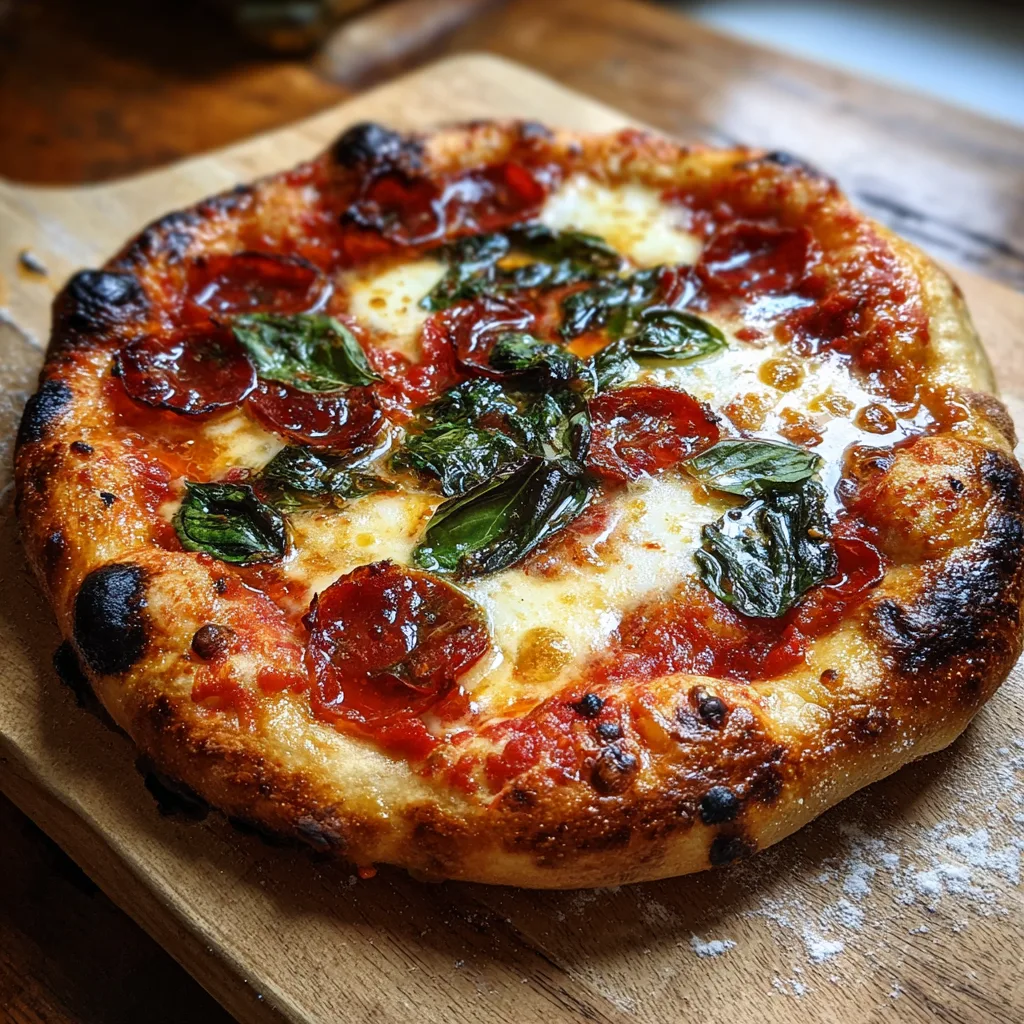
There is a specific kind of magic that happens when high heat meets fermented dough. It is the alchemy of water, flour, salt, and yeast transforming into a canvas for the world’s most beloved flavors. If you have ever stared longingly at the blistered, leopard-spotted crust of a pizza from a high-end Neapolitan pizzeria and thought, “I could never do that,” this guide is here to prove you wrong. The image of the rustic pizza above—with its golden, charred cornice, pools of molten mozzarella, and crisp, curling pepperoni—is not just a dream; it is your next dinner project.
Making pizza at home has evolved from a convenience meal to a culinary art form. We aren’t talking about thick, dense doughs laden with cheap toppings. We are talking about the “canotto” style or the classic Neapolitan rim that shatters upon the first bite, revealing a soft, airy interior. This recipe focuses on balancing the savory heat of spicy salami (or high-quality pepperoni) with the herbaceous brightness of fresh basil and the creamy richness of fresh mozzarella.
In this comprehensive guide, we will explore the science of the dough, the importance of ingredient selection, and the techniques required to mimic a wood-fired oven in your standard kitchen. Whether you are a novice baker or a seasoned pro, this deep dive will elevate your pizza night to a restaurant-quality experience.
The Foundation: Understanding the “00” Flour Difference
To achieve the texture seen in the photo, you cannot simply grab a bag of bleached all-purpose flour from the back of the pantry. The secret lies in the protein content and the grind. For this style of pizza, Italian “Tipo 00” flour is the gold standard. It is ground to a fine, talcum-powder consistency, which allows for incredible water absorption and a smooth, elastic dough.
However, if you cannot find 00 flour, a high-protein bread flour is a worthy substitute. The goal is to develop gluten—the network of proteins that traps carbon dioxide produced by the yeast. This gas is what creates those beautiful bubbles and the airy structure in the crust (the cornicione). We will be using a hydration level of approximately 65-70%, which means the dough will be slightly sticky but manageable. This higher hydration is crucial for that light, crisp-chewy texture.
The Fermentation Factor: Time is Flavor
Have you ever eaten pizza and felt incredibly thirsty or bloated afterward? That is often the result of a rushed dough. Quick-rise doughs don’t have time to break down complex starches. For our Rustic Spicy Pepperoni Pizza, we utilize a “cold fermentation” method.
By letting the dough rest in the refrigerator for 24 to 72 hours, two amazing things happen:
- Flavor Development: The yeast works slowly, producing organic acids (like acetic and lactic acid) that give the crust a subtle sourdough-like tang and savory depth.
- Digestibility: The enzymes have time to break down the gluten structure slightly, making the pizza much easier on your stomach.
Selecting the Stars: The Toppings
Looking at our inspiration image, simplicity is key, but the quality of those simple ingredients is non-negotiable.
The Sauce
Do not cook your pizza sauce. Authentic Neapolitan sauce is simply high-quality canned tomatoes (San Marzano are the best), crushed by hand, and seasoned with sea salt. Cooking the sauce beforehand results in a heavy, “stewed” flavor. The intense heat of the oven will cook the raw tomatoes perfectly on the pie, preserving their fresh, acidic brightness which cuts through the rich cheese and fatty meat.
The Cheese
You need “Fior di Latte” (cow’s milk mozzarella) or Buffalo Mozzarella. Avoid pre-shredded bagged cheese, which is coated in anti-caking agents (like cellulose) that prevent proper melting and browning. Buy a ball of fresh mozzarella, drain it well, and tear it by hand. This creates those milky, uneven pools of white gold seen in the picture.
The Meat: The “Cupping” Pepperoni
The pepperoni in the image has curled up into little cups, with slightly charred edges. To achieve this, look for natural casing pepperoni or spicy Soppressata. The natural casing shrinks faster than the meat when hit by heat, forcing the slice to cup upwards. This captures the rendered fat, creating a flavor bomb in every bite.
The Heat: Hacking Your Home Oven
Professional pizza ovens reach temperatures of 900°F (480°C). Most home ovens top out at 500°F or 550°F (260°C). To bridge this gap, you need thermal mass.
The Pizza Steel or Stone: A baking steel is superior to a stone because steel conducts heat much faster. Preheating your steel for at least 45 minutes to an hour ensures that when the dough hits the surface, it immediately puffs up and chars, rather than slowly drying out.
Ingredients
Here is what you will need to assemble this masterpiece. All measurements are precise for the best results.
Rustic Spicy Neapolitan Pizza
Ingredients
Equipment
Method
- Dissolve salt in warm water in a bowl. Mix in 10% of flour, then add yeast. Gradually add remaining flour and knead until smooth.
- Let dough rest at room temperature for 2 hours, then divide into two balls. Refrigerate for 24-48 hours (optional but recommended) or proceed to next step.
- Preheat oven with pizza stone/steel to 500°F (260°C) for at least one hour.
- Crush tomatoes by hand with a pinch of salt for the sauce.
- Stretch one dough ball on a floured surface to 10-12 inches. Transfer to a peel.
- Spread sauce thinly, top with mozzarella and pepperoni.
- Launch onto the stone and bake for 6-8 minutes until crust is charred and cheese is bubbly.
- Remove from oven, top with fresh basil and olive oil immediately.
Notes
For the Dough (Makes 2 pizzas):
– 350g Tipo 00 Flour (or strong bread flour)
– 230ml Warm Water (about 90°F/32°C)
– 10g Fine Sea Salt
– 3g Instant Yeast (approx. 1 tsp)
– 1 tsp Olive Oil (for the bowl)
For the Toppings:
– 1 can (14oz) Whole Peeled San Marzano Tomatoes
– 8oz Fresh Mozzarella, drained and torn
– 4oz Spicy Salami or Natural Casing Pepperoni, sliced thin
– A handful of Fresh Basil leaves
– Extra Virgin Olive Oil (for drizzling)
– Pecorino Romano (optional, for dusting)
Instructions
Follow these numbered steps to achieve pizza perfection.
- Mix the Dough: In a large mixing bowl, dissolve the salt in the water. Add 10% of the flour and mix with your hand or a spoon until it creates a batter. Add the yeast, then gradually add the rest of the flour. Mix until no dry flour remains.
- Knead and Rest: Turn the dough onto a clean surface. Knead vigorously for 10-15 minutes. The dough should transform from a shaggy mess to a smooth, soft ball that bounces back when poked. Cover with a damp cloth and let it rest for 2 hours at room temperature.
- Ball and Ferment: Divide the dough into two equal portions. Shape them into tight balls. Place them in a lightly oiled container, cover airtight, and place in the refrigerator for 24 to 48 hours. Remove the dough from the fridge 2 hours before you plan to bake to bring it to room temperature.
- Preheat: Place your pizza stone or steel on the second-highest rack of your oven. Preheat the oven to its maximum temperature (usually 500°F-550°F) for at least 1 hour.
- Prepare the Sauce: While the oven heats, pour the tomatoes into a bowl. Crush them by hand until you have a chunky consistency. Stir in a pinch of salt. Do not blend; keep it rustic.
- Stretch the Dough: deeply dust your work surface with flour. Take one dough ball and press your fingers from the center outwards, pushing the gas towards the rim (cornicione) to create the crust. gently stretch the dough over your knuckles until it is about 10-12 inches in diameter.
- Top the Pizza: Transfer the stretched dough onto a wooden peel dusted with semolina or flour. Working quickly, spread a thin layer of tomato sauce (about 2-3 tbsp). Distribute the torn mozzarella evenly. Arrange the spicy pepperoni slices on top.
- The Bake: Slide the pizza off the peel and onto the hot stone/steel. Bake for 6-8 minutes. The crust should be puffed and golden with charred spots, the cheese melted, and the pepperoni crisp.
- Finishing Touches: Remove the pizza from the oven. immediately scatter fresh basil leaves over the top (the heat will release their aroma without burning them). Drizzle with a little extra virgin olive oil. Slice and serve hot.
Troubleshooting Common Pizza Pitfalls
Problem: The dough springs back when I stretch it.
Solution: The gluten is too tight. Cover the dough and let it rest on the counter for another 15-20 minutes to relax before trying again.
Problem: The bottom is soggy.
Solution: You might be using too much sauce, or your stone wasn’t hot enough. ensure the stone preheats for a full hour, and drain your mozzarella thoroughly before using.
Problem: I can’t get the pizza off the peel.
Solution: This is the “stick of death.” Before adding toppings, give the peel a little shake to ensure the dough moves. If it sticks, lift the edge and blow a little air under it, then toss some semolina flour underneath.
Variations to Try
While the spicy pepperoni version is a classic, once you master the dough, the possibilities are endless.
- The White Pie: Skip the tomato sauce. Use a base of garlic-infused olive oil, mozzarella, ricotta dollops, and finish with hot honey.
- The Earthy Veggie: Use roasted mushrooms, thyme, truffle oil, and fontina cheese.
- The Sweet & Savory: Prosciutto, fig jam, goat cheese, and arugula added after baking.
Conclusion
Creating restaurant-quality pizza at home is less about having an expensive brick oven and more about patience and technique. By respecting the fermentation process and using high-quality, simple ingredients, you can produce a pizza that rivals any pizzeria in Naples. The contrast between the crunchy, charred crust and the creamy, spicy toppings creates a flavor profile that is truly addictive.
So, pour yourself a glass of Chianti, dust off that work surface, and get ready to impress your friends and family. Once you pull that first pie out of the oven, bubbling and fragrant, you’ll realize that the best pizza in town is the one you make yourself. Bon Appétit!


