
The Ultimate One-Skillet Creamy Chicken and Biscuits: Comfort in Every Bite
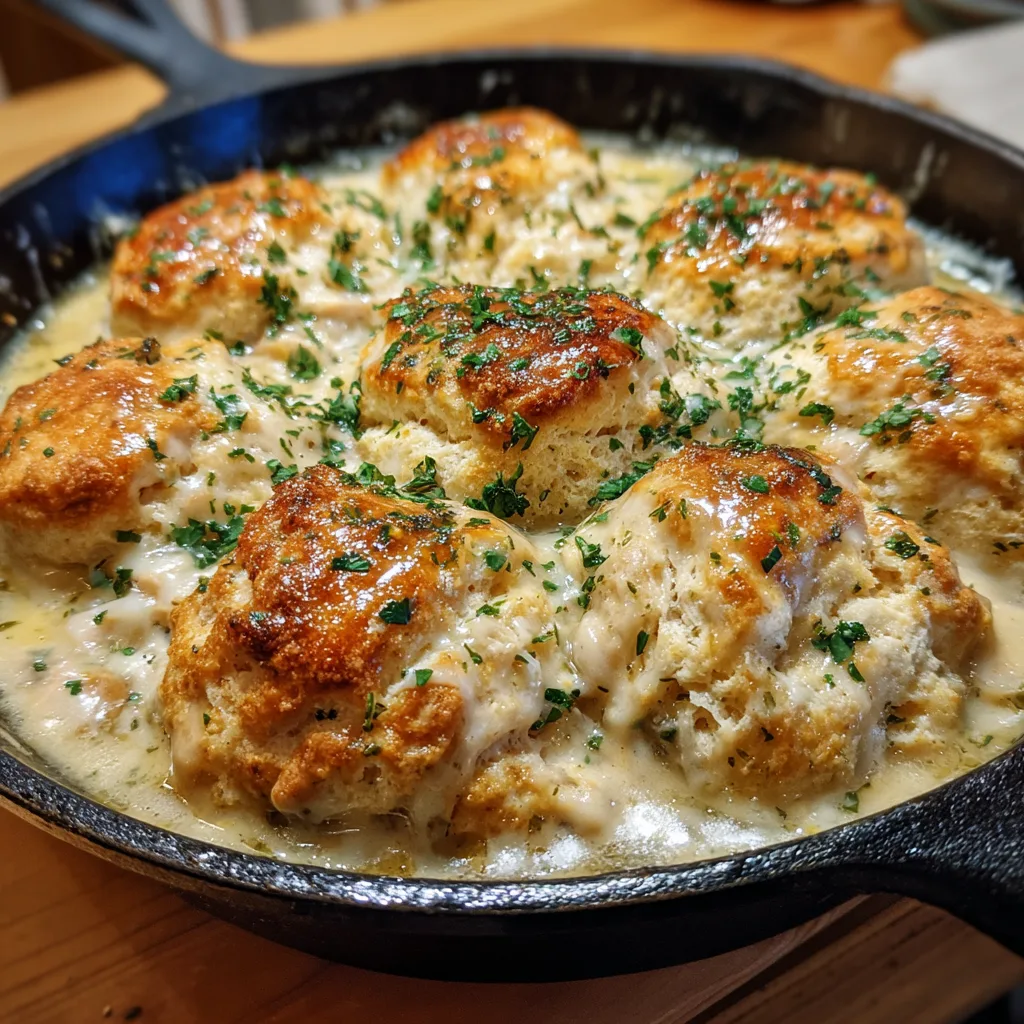
There is a specific category of food that acts as a culinary hug. It doesn’t just feed the body; it soothes the soul, eases the stress of a long day, and brings everyone to the table with a smile. One-Skillet Creamy Chicken and Biscuits sits proudly at the very top of this hierarchy. It is the rustic, slightly more rebellious cousin of the traditional chicken pot pie. Instead of fussing with rolling out pie crusts and crimping edges, you get the satisfaction of dropping fluffy, buttery dough directly onto a bubbling, savory stew and watching it transform into golden clouds of deliciousness.
In this extensive guide, we are going to explore the art of the perfect skillet meal. We will dissect the science behind the fluffiest biscuits, the secret to a gravy that is rich without being gluey, and how to utilize a cast-iron skillet to achieve that perfect sear and bake. Whether you are cooking for a hungry family on a Tuesday night or hosting a casual weekend gathering, this recipe is a showstopper that requires minimal cleanup and delivers maximum flavor.
Why the Cast Iron Skillet is King
Before we even touch an ingredient, we must discuss the vessel. This dish is designed for a cast iron skillet. Why? Because cast iron offers superior heat retention and distribution. When you make the gravy on the stovetop, the pan stays hot, keeping the filling bubbling even as you transfer it to the oven. This ensures that the bottom of the biscuits begins to cook immediately upon contact, preventing them from becoming soggy bottoms.
Furthermore, the dark interior of a well-seasoned skillet aids in browning. It adds a depth of flavor to the fond (the browned bits at the bottom of the pan) that stainless steel or non-stick simply cannot replicate. If you do not have a cast iron skillet, a heavy-bottomed oven-safe sauté pan or a Dutch oven can work, but for that authentic rustic crust and presentation, iron is the way to go.
The Anatomy of the Perfect Filling
The filling of this dish is essentially a thick, velvety chicken stew. The base flavor profile relies on the classic mirepoix (onions, carrots, celery) but is elevated with aromatic herbs and garlic. Here is where you can build layers of flavor:
- The Fat: We use butter for flavor. Sautéing the vegetables in butter rather than oil creates a rich base that smells like home.
- The Aromatics: Fresh thyme and rosemary are non-negotiable for that “simmered all day” taste. If you only have dried herbs, use half the amount, but fresh is always superior in a creamy sauce.
- The Liquid: A combination of chicken broth and heavy cream creates the perfect consistency. The broth provides the savory backbone, while the cream adds luxury. Using full-fat heavy cream ensures the sauce doesn’t curdle in the high heat of the oven.
Chicken Choices: Thighs vs. Breasts
For a stew that will be baked, chicken thighs are generally superior. They have a higher fat content and connective tissue, which keeps them juicy and tender even after simmering and baking. Chicken breasts are leaner and can dry out if overcooked. However, if you are looking for a shortcut, using a rotisserie chicken is a brilliant hack. Simply shred the meat and fold it in at the end; since it’s already cooked, you are just warming it through.
The Science of the Drop Biscuit
Now, let’s talk about the crown jewels of this dish: the biscuits. These are “drop biscuits,” which means there is no rolling pin required. The dough is wetter than a rolled biscuit dough, which actually allows for more steam generation during baking, leading to a loftier, lighter interior.
Cold Butter is Key: Just like with pie crust, you want small pockets of cold butter in your dough. When these pockets hit the heat of the oven, the water in the butter evaporates into steam, pushing the flour layers apart. This creates flaky layers. If your butter melts before it hits the oven, you will end up with dense, heavy cakes.
Buttermilk Acidity: We use buttermilk not just for tang, but for chemistry. The acidity in buttermilk reacts vigorously with the baking soda and baking powder, creating carbon dioxide bubbles that act as the leavening agent. This reaction happens immediately, so once you mix the wet and dry ingredients, you want to get those biscuits into the oven as fast as possible.
Ingredients
Prepare your workspace by measuring out these ingredients. Keeping your dairy and butter cold until the last second is crucial for the biscuits.
For the Creamy Chicken Filling
- Unsalted Butter – 4 tbsp.
- Yellow Onion – 1 medium, diced.
- Carrots – 2 large, peeled and diced.
- Celery – 2 stalks, diced.
- Garlic – 3 cloves, minced.
- All-Purpose Flour – 1/3 cup.
- Chicken Broth – 2.5 cups (low sodium).
- Heavy Cream – 1 cup.
- Cooked Chicken – 3 cups, shredded or cubed (rotisserie works great).
- Frozen Peas – 1 cup (optional, but adds color).
- Fresh Thyme – 1 tbsp, leaves stripped.
- Fresh Parsley – 2 tbsp, chopped (for garnish).
- Salt and Black Pepper – To taste.
For the Buttermilk Drop Biscuits
- All-Purpose Flour – 2 cups.
- Baking Powder – 2 tsp.
- Baking Soda – 1/2 tsp.
- Salt – 1 tsp.
- Garlic Powder – 1/2 tsp (optional for savory kick).
- Unsalted Butter – 6 tbsp, very cold and cubed.
- Buttermilk – 1 cup, cold (shake well before pouring).
- Melted Butter – 2 tbsp (for brushing the tops).
Instructions
Follow these numbered steps to coordinate the timing of the filling and the biscuits perfectly.
One-Skillet Creamy Chicken and Biscuits
Ingredients
Equipment
Method
- Preheat oven to 400°F (200°C).
- In a large skillet over medium heat, melt butter and sauté onion, carrots, and celery until soft (6-8 mins). Add garlic and thyme.
- Sprinkle flour over vegetables and stir for 2 minutes to cook the roux.
- Gradually whisk in chicken broth and heavy cream. Simmer until slightly thickened.
- Stir in cooked chicken and season with salt and pepper. Reduce heat to low.
- For biscuits: Whisk dry ingredients in a bowl. Cut in cold butter until crumbly. Stir in buttermilk just until combined.
- Drop spoonfuls of dough onto the hot chicken filling.
- Bake for 18-22 minutes until biscuits are golden brown.
- Brush with melted butter and garnish with parsley before serving.
Notes
- Preheat and Prep: Preheat your oven to 400°F (200°C). Ensure your oven rack is in the center position. Dice all your vegetables and shred your chicken so everything is ready to go.
- Sauté the Vegetables: Place a large cast-iron skillet (10 or 12-inch) over medium-high heat. Melt the 4 tablespoons of butter. Add the diced onion, carrots, and celery. Sauté for 6-8 minutes until the onions are translucent and the vegetables begin to soften. Stir in the minced garlic and fresh thyme, cooking for another minute until fragrant.
- Create the Roux: Sprinkle the 1/3 cup of flour over the vegetables. Stir constantly for about 2 minutes. This cooks out the raw flour taste and creates the thickening agent (roux). The mixture will look pasty and golden.
- Build the Sauce: Gradually pour in the chicken broth, about half a cup at a time, whisking or stirring constantly to prevent lumps. Once all the broth is incorporated, pour in the heavy cream. Bring the mixture to a gentle simmer. It should begin to thicken enough to coat the back of a spoon.
- Add Chicken and Peas: Stir in the cooked chicken and frozen peas. Season generously with salt and black pepper. Taste the sauce! It should be delicious on its own. Turn the heat down to low just to keep it warm while you make the biscuits.
- Make the Biscuit Dough: In a large mixing bowl, whisk together the flour, baking powder, baking soda, salt, and garlic powder. Add the cold cubed butter. Use a pastry cutter or your fingers to snap the butter into the flour until the mixture looks like coarse crumbs with some pea-sized bits of butter remaining.
- Combine Wet and Dry: Make a well in the center of the flour mixture and pour in the cold buttermilk. Stir gently with a spatula just until the dough comes together. Do not overmix; it’s okay if it looks a bit shaggy. Overmixing leads to tough biscuits.
- Assemble and Bake: Remove the skillet from the heat. Using a large spoon or ice cream scoop, drop 7-8 mounds of biscuit dough directly onto the hot chicken filling. Space them out slightly; they will expand.
- Bake to Golden Perfection: Place the skillet into the preheated oven. Bake for 18-22 minutes, or until the biscuits are deep golden brown and cooked through. You can test a biscuit by inserting a toothpick into the center of the dough; it should come out clean.
- Serve: Remove from the oven (handle carefully, the skillet is extremely hot!). Brush the tops of the hot biscuits with the melted butter and sprinkle with fresh chopped parsley. Let it rest for 5 minutes before serving to allow the sauce to settle.
Chef’s Tips for Troubleshooting
My sauce is too thin/thick.
If your sauce seems too thin before baking, remember that the starch from the biscuits and the reduction in the oven will thicken it further. If it is surprisingly thick (like glue), splash in a little extra chicken broth before adding the biscuit dough. You want a consistency similar to warm heavy cream.
My biscuits are burnt on top but raw in the middle.
This happens if the oven is running too hot or the biscuits are too large. If you notice the tops browning too quickly (before the 15-minute mark), loosely tent the skillet with aluminum foil for the remainder of the baking time. This traps heat to cook the center without scorching the top.
Can I make this ahead of time?
You can prepare the filling up to 2 days in advance and store it in the fridge. Reheat the filling in the skillet on the stove until hot before proceeding to the biscuit step. Do not make the biscuit dough in advance, as the baking powder will lose its potency. Mix the dough right before baking.
Variations to Try
The “Cheddar Bay” Twist: Add 1/2 cup of sharp shredded cheddar cheese and a pinch of cayenne pepper to the biscuit dough for a cheesy, spicy kick that mimics famous restaurant biscuits.
Vegetarian Option: Swap the chicken for hearty vegetables like cubed potatoes, mushrooms, and parsnips. Use vegetable broth instead of chicken broth. The cooking method remains the same, just ensure the potatoes are cut small enough to cook through.
Herbed Dough: Incorporate chopped fresh chives or dill directly into the biscuit dough for an extra layer of savory freshness.
Conclusion
The beauty of this Skillet Chicken and Biscuits lies in its honest simplicity. It uses humble ingredients to create a meal that feels special and celebratory. It is a dish that invites you to slow down, break bread (literally), and enjoy the savory, creamy, flaky goodness of home cooking. So, dust off that cast iron skillet and get ready to make your new favorite comfort food staple.


