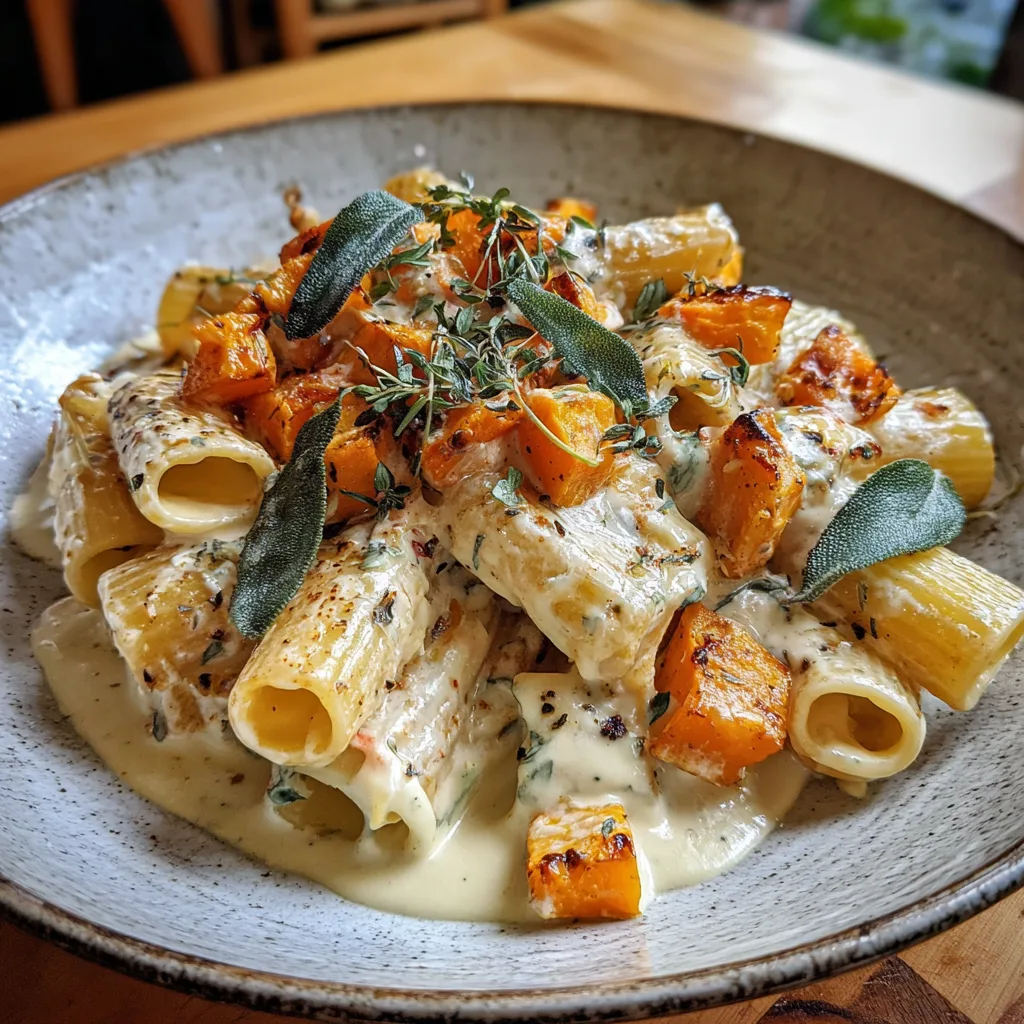
Creamy Roasted Butternut Squash & Sage Rigatoni
Embrace the cozy flavors of autumn with this luxurious pasta dish. Sweet, caramelized roasted squash meets a savory, garlic-infused cream sauce and earthy fresh sage for a meal that feels like a warm hug.
Introduction: A Symphony of Fall Flavors
As the air turns crisp and the leaves begin to change, our cravings shift from the light salads of summer to something more substantial, warming, and comforting. There is perhaps no vegetable that embodies the spirit of autumn quite like the butternut squash. Its natural sweetness and vibrant orange hue make it a staple in seasonal cooking. But while soups and casseroles are common, pairing it with pasta in a rich cream sauce creates a culinary experience that elevates the humble squash to gourmet status.
This recipe for **Creamy Roasted Butternut Squash & Sage Rigatoni** is a celebration of textures and contrasts. We aren’t hiding the squash in a puree here; we are roasting it until tender and caramelized, allowing it to stand out as the star ingredient. These sweet gems are folded into a velvety, garlic-parmesan cream sauce that clings to every ridge of the rigatoni. Topped with earthy sage leaves that cut through the richness, this dish is elegant enough for a dinner party but easy enough for a Tuesday night.
In this comprehensive guide, we will explore not just how to make this dish, but the secrets to roasting squash perfectly, how to achieve a sauce that never separates, and why sage is the absolute best herb to pair with winter gourds. Let’s get cooking.
Ingredients
To create this restaurant-quality dish at home, you will need the following fresh ingredients:
Creamy Roasted Butternut Squash Rigatoni
Ingredients
Equipment
Method
- Preheat oven to 400°F (200°C). Toss cubed squash with olive oil, salt, pepper, and nutmeg.
- Spread squash on a baking sheet and roast for 25-30 minutes until tender and caramelized.
- Boil rigatoni in salted water until al dente. Reserve 1 cup of pasta water before draining.
- In a skillet, melt butter and fry sage leaves until crisp. Remove sage and set aside.
- Add garlic to the skillet, cook for 30 seconds, then pour in heavy cream. Simmer for 2 minutes.
- Stir in parmesan cheese until melted. Add roasted squash and cooked pasta to the sauce.
- Toss gently, adding reserved pasta water if needed to thin the sauce. Top with crispy sage and serve.
Notes
For the Roasted Squash:
- – 1 medium butternut squash, peeled, seeded, and cut into 1-inch cubes (about 4 cups)
- – 2 tablespoons olive oil
- – 1/2 teaspoon salt
- – 1/4 teaspoon freshly cracked black pepper
- – 1/4 teaspoon ground nutmeg (optional, but highly recommended)
For the Pasta & Sauce:
- – 1 lb (450g) Rigatoni or Penne pasta
- – 2 tablespoons unsalted butter
- – 2 cloves garlic, minced
- – 1 cup heavy cream (whipping cream)
- – 1/2 cup pasta cooking water (reserved)
- – 1/2 cup freshly grated Parmesan cheese, plus more for serving
- – 1/4 cup fresh sage leaves
- – 1 teaspoon fresh thyme leaves (optional)
- – Salt and pepper to taste
Instructions
- Roast the Squash: Preheat your oven to 400°F (200°C). Toss the cubed butternut squash with olive oil, salt, pepper, and nutmeg on a baking sheet. Spread them out in a single layer to ensure they roast rather than steam. Bake for 25-30 minutes, tossing halfway through, until the squash is tender and the edges are golden brown.
- Boil the Pasta: While the squash is roasting, bring a large pot of salted water to a boil. Add the rigatoni and cook according to package instructions until al dente. Crucial Step: Before draining, reserve about 1 cup of the starchy pasta water. Drain the pasta and set aside.
- Crisp the Sage (Optional but Recommended): In a large skillet, melt the butter over medium heat. Add the whole sage leaves and fry them for about 1 minute until they darken slightly and become crisp. Remove the leaves and set aside on a paper towel. This infuses the butter with sage flavor.
- Make the Cream Sauce: In the same skillet with the sage-infused butter, add the minced garlic and fresh thyme. Sauté for 30 seconds until fragrant (do not burn the garlic). Pour in the heavy cream and bring to a gentle simmer. Let it bubble for 2-3 minutes to thicken slightly.
- Melt the Cheese: Reduce the heat to low. Stir in the grated Parmesan cheese until melted and smooth. If the sauce is too thick, whisk in a splash of the reserved pasta water until it reaches your desired consistency.
- Combine: Add the cooked pasta and the roasted butternut squash to the skillet. Gently toss everything together, ensuring the sauce coats every noodle and the squash is evenly distributed. Add more pasta water if the sauce needs loosening.
- Serve: Season with extra black pepper. Divide into bowls and top with the crispy sage leaves and extra Parmesan cheese. Serve immediately.
The Art of Roasting Squash
Many people complain that their squash turns out mushy or bland. The secret to perfect roasted squash lies in three things: Size, Space, and Heat.
Uniformity is Key: When cutting your squash, aim for cubes that are roughly the same size. If you have some tiny pieces and some large chunks, the small ones will burn before the large ones are cooked through. Aim for 1-inch cubes for the perfect bite-sized texture in pasta.
Don’t Crowd the Pan: Vegetables need personal space to roast. If you pile the squash on top of each other, the moisture they release during cooking will get trapped, steaming the squash instead of roasting it. You want dry heat to hit the surface of the vegetable to induce the Maillard reaction—browning that equals flavor.
High Heat: Roasting at 400°F (200°C) or even 425°F guarantees that caramelized exterior while keeping the inside soft and creamy. Low heat will just dry it out.
Why Rigatoni? The Importance of Pasta Shapes
You might be tempted to use whatever pasta is in your pantry, and while spaghetti or fusilli will taste fine, there is a reason we chose Rigatoni for this recipe.
Rigatoni is a tube-shaped pasta with ridges down the outside. It is robust and hearty, matching the chunky texture of the butternut squash. The ridges capture the cream sauce, ensuring you get maximum flavor in every bite. Furthermore, the hollow center of the rigatoni often traps pockets of sauce and even small bits of garlic and herbs. A delicate pasta like angel hair would get lost under the weight of the squash and cream, while a smooth penne doesn’t hold the sauce quite as well as the ridged rigatoni.
The Science of the Sauce: Emulsification
The bridge between a bowl of dry noodles and a luxurious meal is the sauce. In this recipe, we use a technique involving starchy pasta water. This is a trick used by Italian chefs worldwide.
As pasta cooks, it releases starch into the boiling water, turning the water cloudy. This cloudy water is liquid gold. When you add salty, starchy water to the fat (cream and butter) and cheese in your pan, the starch acts as an emulsifier. It helps bind the water and fat together into a smooth, glossy sauce that coats the pasta perfectly, rather than sliding off to the bottom of the bowl. Never skip reserving the pasta water!
Variations and Substitutions
This recipe is a beautiful canvas for creativity. Here are a few ways to customize it to your taste or dietary needs:
- Add Protein: To make this an even heartier meal, add cooked Italian sausage (mild or spicy), crispy pancetta, or grilled chicken breast. The spicy sausage, in particular, contrasts wonderfully with the sweet squash.
- Add Greens: For a pop of color and nutrition, toss in two handfuls of baby spinach or kale during the final minute of cooking. The heat from the pasta will wilt the greens perfectly.
- Make it Gluten-Free: Simply swap the rigatoni for your favorite gluten-free pasta brand. Brown rice pasta or chickpea pasta works well here as they have a nutty flavor that complements the squash.
- The Vegan Twist: To veganize this dish, use olive oil instead of butter, full-fat coconut milk or cashew cream instead of heavy cream, and nutritional yeast or a vegan parmesan alternative. The roasted squash ensures the dish remains creamy and flavorful even without dairy.
- Texture Crunch: Toasted pine nuts or chopped walnuts sprinkled on top add a delightful crunch that contrasts with the soft squash and pasta.
Flavor Profile Breakdown
Why does this dish work so well? It is all about the balance of flavor profiles.
Sweet: The roasted butternut squash provides natural sugars that caramelize in the oven.
Salty/Savory: The parmesan cheese and the pasta water provide the savory backbone (umami) that prevents the dish from becoming too sweet.
Herbal/Earthy: Sage is part of the mint family but has a musky, earthy flavor that pairs historically well with winter squashes. It cuts through the heavy creaminess.
Creamy: The heavy cream binds it all together, mellowing out the garlic and creating a luxurious mouthfeel.
Conclusion
The Creamy Roasted Butternut Squash & Sage Rigatoni is more than just a pasta dish; it is the essence of autumn on a plate. It requires a little bit of love—roasting the vegetable separately, crisping the sage—but the result is vastly superior to any one-pot wonder. It is a dish that invites you to slow down, pour a glass of white wine, and savor the changing seasons. Whether you are cooking for a date night or feeding a hungry family, this recipe is guaranteed to become a fall favorite in your household. Bon appétit!


