The Ultimate Basque Burnt Cheesecake Loaf with Salted Caramel Glaze
Let’s be honest: the world of cheesecakes is vast and varied, from the dense New York style to the fluffy Japanese version. But there is one that has taken the culinary world by storm in recent years, captivating home bakers and professional chefs alike with its rustic charm and unbelievable texture: the Basque Burnt Cheesecake. Also known as San Sebastian Cheesecake, this crustless wonder is famous for its deeply caramelized—almost burnt—exterior that gives way to an impossibly creamy, custard-like interior.
Today, we are taking this iconic dessert and reimagining it in a new, elegant form: the Basque Burnt Cheesecake Loaf. By baking it in a loaf pan, we create a stunning dessert that is easy to slice, beautiful to serve, and offers the perfect ratio of caramelized edge to creamy center in every single bite. And to take it over the top? We are drowning it in a decadent, homemade salted caramel sauce that complements the tangy richness of the cheese perfectly. This is not just a dessert; it’s an event.
Why You Will Fall in Love With This Recipe
This recipe is the definition of high reward for low effort. Unlike traditional cheesecakes that require water baths, finicky temperature controls, and a fear of cracking, the Basque cheesecake embraces imperfection. The high heat of the oven is meant to scorch the top, creating complex caramel and slightly bitter notes that balance the sweet, rich interior.
The loaf shape is a game-changer for several reasons. First, it cooks more evenly than a large round cake, ensuring that perfect creamy texture throughout. Second, it’s incredibly easy to unmold and slice into neat, uniform portions. Finally, it looks undeniably chic on a dessert platter, resembling a golden ingot of creamy deliciousness. It’s a rustic yet sophisticated centerpiece for any dinner party, holiday gathering, or just a Tuesday night when you need a serious treat.
Ingredients
Quality ingredients are key to a simple recipe like this. Ensure all refrigerated items are at room temperature before you begin for a lump-free batter.
Basque Burnt Cheesecake Loaf with Salted Caramel
Ingredients
Equipment
Method
- Preheat oven to 425°F (220°C). Line a loaf pan with parchment paper with overhang.
- Beat cream cheese and sugar until smooth. Add eggs one at a time, mixing on low.
- Stir in heavy cream and vanilla. Sift and fold in flour and salt.
- Pour into pan and bake for 45-55 minutes until top is dark and center jiggles.
- Cool in turned-off oven with door ajar for 1 hour, then chill in fridge for 6+ hours.
- For sauce: melt sugar to amber color, whisk in butter, then carefully whisk in cream and salt.
- Unmold cheesecake using parchment, slice, and drizzle with warm caramel.
Notes
For the Cheesecake Loaf
- – 24 oz (3 blocks) full-fat cream cheese, softened to room temperature
- – 1 cup granulated sugar
- – 4 large eggs, at room temperature
- – 1 1/4 cups heavy whipping cream (35% fat or higher)
- – 1 teaspoon pure vanilla extract
- – 1/4 cup all-purpose flour (or cornstarch for a gluten-free version)
- – 1/2 teaspoon salt
For the Salted Caramel Glaze
- – 1 cup granulated sugar
- – 6 tablespoons unsalted butter, cut into cubes, at room temperature
- – 1/2 cup heavy whipping cream, at room temperature
- – 1 teaspoon flaky sea salt (plus extra for garnish)
Instructions
Follow these steps carefully. The method is simple, but the temperature and cooling process are crucial for that signature texture.
Part 1: The Cheesecake
- Prep and Preheat: Preheat your oven to a high 425°F (220°C). This high heat is essential for the “burnt” finish. Prepare a 9×5 inch loaf pan by greasing it lightly, then lining it with two sheets of parchment paper—one going lengthwise and one crosswise—leaving plenty of overhang on all sides. This is vital for lifting the cheesecake out later. Press the paper into the corners.
- Cream Cheese and Sugar: In the bowl of a stand mixer fitted with the paddle attachment (or a large bowl with a hand mixer), beat the softened cream cheese and granulated sugar on medium-low speed. Beat for about 2-3 minutes until the mixture is completely smooth and the sugar has dissolved. Scrape down the sides and bottom of the bowl. Do not beat on high speed, as you don’t want to incorporate too much air.
- Add Eggs One by One: With the mixer on low, add the eggs one at a time, waiting for each to be fully incorporated before adding the next. Scrape down the bowl again.
- Incorporate Liquids and Flavor: Slowly pour in the heavy cream and vanilla extract while mixing on low speed until just combined.
- Sift in Dry Ingredients: Place a sieve over the bowl and sift in the flour (or cornstarch) and salt. Gently fold this in by hand using a spatula or mix on the lowest speed just until you see no more dry streaks. Do not overmix.
- Bake the Loaf: Pour the batter into your prepared loaf pan. Give the pan a few firm taps on the counter to pop any large air bubbles. Place the pan on a baking sheet (to catch any potential butter leaks from the paper) on the middle rack of the preheated oven. Bake for 45-55 minutes.
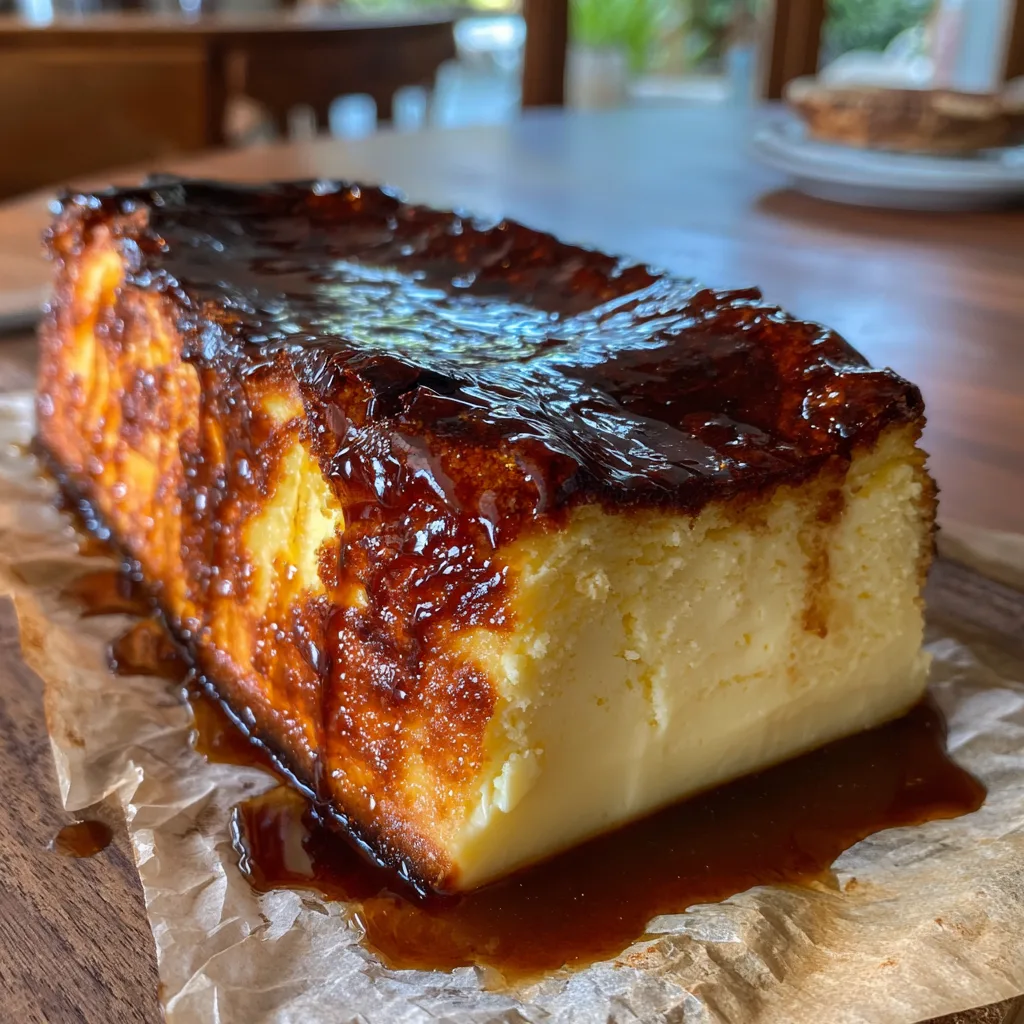
- The Jiggle Test: The cheesecake is done when the top is a deep golden-brown to dark amber color, and the edges are set, but the center still has a very distinct jiggle when you gently shake the pan. It will look undercooked in the middle—this is exactly what you want for a creamy final texture.
- The Cooling Process (Crucial): Turn off the oven and crack the oven door open slightly (you can prop it with a wooden spoon). Let the cheesecake cool inside the slowly cooling oven for 1 hour. This gentle temperature drop helps prevent drastic sinking and cracking.
- Chill: Remove the pan from the oven and let it cool completely to room temperature on a wire rack. Once cool, cover the pan loosely with plastic wrap and refrigerate for at least 6 hours, preferably overnight. The cheesecake needs this time to set its structure and develop flavor.
Part 2: The Salted Caramel Glaze
- Melt the Sugar: Place the granulated sugar in a medium, heavy-bottomed saucepan over medium heat. Allow the sugar to melt slowly. You can gently swirl the pan, but do not stir with a spoon until most of the sugar has melted and turned a golden amber color.
- Add Butter: Once the sugar is completely melted and a deep amber color, carefully add the cubed butter. Whisk vigorously as the mixture will bubble up violently. Continue whisking until the butter is completely melted and incorporated, about 2 minutes.
- Add Cream: Remove the pan from the heat. Very slowly and carefully pour in the heavy cream while whisking constantly. The mixture will bubble again. Whisk until smooth.
- Finish with Salt: Whisk in the flaky sea salt. Let the caramel sauce cool for at least 10-15 minutes before using. It will thicken as it cools.
- Serve: When ready to serve, lift the cheesecake out of the loaf pan using the parchment paper overhang. Peel back the paper and place the loaf on a serving board or platter. Slice into thick slabs and drizzle generously with the warm salted caramel sauce. Sprinkle with a little extra flaky salt if desired.
The Science Behind the “Burnt” Top
You might be wondering why we are intentionally burning a dessert. The magic lies in the Maillard reaction and caramelization. The high oven temperature causes the sugars and proteins on the surface of the batter to react quickly, creating a dark, almost charred crust. This isn’t a burnt toast flavor; it’s a complex, deeply caramelized, slightly savory, and bitter-sweet profile that provides a sophisticated counterpoint to the sweet, rich, and tangy cream cheese interior.
Furthermore, baking at a high temperature ensures that the outside cooks fast while the inside remains gently heated, resulting in that signature texture gradient from firm edges to a gooey center. It’s a delicate balance that this recipe achieves perfectly.
Tips for the Perfect Loaf
- Room Temperature is Non-Negotiable: If your cream cheese or eggs are cold, they will not emulsify properly, leading to a lumpy batter. Set your ingredients out at least 2 hours before baking.
- Don’t Fear the Dark: A true Basque cheesecake should have a very dark top. If at the 45-minute mark it still looks pale, keep baking. The dark color is where the flavor lives.
- The Power of Parchment: Don’t skimp on the parchment paper lining. The batter will rise and then sink, and the caramelization can make it sticky. The paper ensures you can get it out of the pan in one beautiful piece.
- Patience is a Virtue: The chilling time is just as important as the baking time. Cutting into a warm cheesecake will result in a runny mess. It needs cold to firm up into that sliceable, creamy texture shown in the photos.
Flavor Variations and Customizations
While this classic version is stellar, the recipe is a great base for experimentation:
- Chocolate Basque Loaf: Sift 1/3 cup of high-quality cocoa powder in with the flour for a rich chocolate version.
- Espresso Infusion: Dissolve a tablespoon of instant espresso powder into the heavy cream before adding it to the batter for a coffee-kick.
- Citrus Zest: Rub the sugar with the zest of one orange or lemon before adding it to the cream cheese for a bright, aromatic twist.
- Berry Sauce Alternative: If caramel isn’t your thing, a tart raspberry or blackberry coulis makes a wonderful, vibrant topping that cuts through the richness.
Storage and Make-Ahead
This cheesecake is an excellent make-ahead dessert. In fact, it’s better on day two when the flavors have had time to meld. It can be stored in the refrigerator, wrapped tightly in plastic wrap or in an airtight container, for up to 5 days. The caramel sauce can be refrigerated in a jar for up to 2 weeks; just gently reheat it in the microwave or on the stovetop before serving.
You can also freeze the baked and cooled cheesecake loaf (without the sauce). Wrap it in two layers of plastic wrap and one layer of aluminum foil. It will keep for up to 2 months. Thaw it in the refrigerator overnight before serving.
Conclusion: A Modern Classic
The Basque Burnt Cheesecake Loaf with Salted Caramel Glaze is a testament to the idea that perfection is overrated. It’s a dessert that celebrates rustic beauty, bold flavors, and incredible textures. It’s sophisticated enough to end an elegant dinner party yet comforting enough for a casual family gathering.
Once you experience the contrast of the bitter-sweet caramelized exterior, the luscious creamy interior, and the decadent salty-sweet sauce, this recipe is guaranteed to earn a permanent spot in your baking repertoire. So, preheat that oven high, grab your loaf pan, and get ready to bake a masterpiece.