Welcome to a bold, caffeinated twist on an absolute bakery classic! If you have ever stood in line at a New York City deli or a corner café, you have likely locked eyes with the iconic black and white cookie. Known for its soft, cake-like base and striking duo of vanilla and chocolate fondant frosting, it is a cookie that offers the best of both worlds. But what if we took that classic foundation and infused it with the deep, rich, and aromatic soul of your favorite coffeehouse beverage?
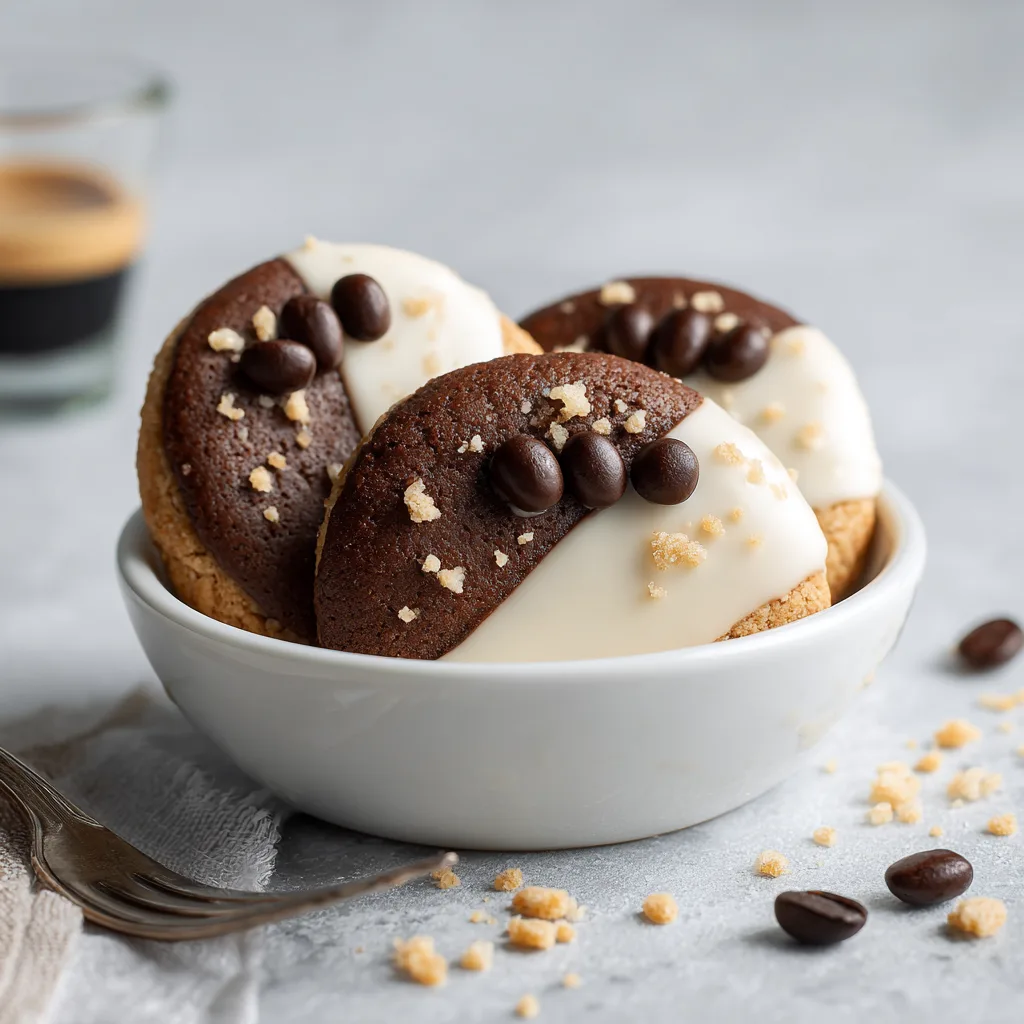
Enter the Espresso Black and White Cookie. This recipe takes the beloved half-moon treat and elevates it to an entirely new level of sophistication. We are adding rich espresso powder to the dough for a subtle roasted flavor, creating a dark, decadent mocha glaze for the “black” half, and pairing it with a sweet, creamy white chocolate-vanilla glaze for the “white” half. Topped off with an irresistible garnish of chocolate-covered espresso beans and buttery cookie crumbs, this is not just a cookie; it is a full culinary experience.
In this comprehensive guide, we are going to explore the fascinating history of this cookie, the science behind pairing coffee and chocolate, the exact ingredients you need, and the foolproof techniques to ensure your glazes look as sharp and professional as they taste. Let’s preheat those ovens and brew a fresh pot!
🏙️ The NYC Classic Reimagined: History of the Half-Moon
To truly appreciate this espresso variation, we must first pay our respects to the original. The black and white cookie, sometimes called a half-moon cookie (though true upstate New Yorkers will tell you there is a slight difference in the cake base and frosting type), has its roots deeply embedded in early 20th-century American bakeries. Originally created by German immigrants in upstate New York, it was designed as a “drop cake” rather than a traditional cookie. This explains why the texture is distinctly airy, tender, and sponge-like, rather than chewy or crispy.
By introducing espresso into this historic recipe, we are bridging the gap between a traditional bakery sweet and a modern artisanal café pastry. The coffee notes do not just sit on top of the flavor profile; they penetrate the crumb of the cookie itself. The slightly bitter, roasted undertones of the espresso perfectly cut through the heavy sweetness of the traditional glazes, resulting in a mature, balanced, and incredibly addictive dessert.
🍫 The Science of Synergy: Why Coffee and Chocolate Belong Together
There is a reason why almost every professional chocolate cake recipe calls for a cup of hot coffee or a tablespoon of instant espresso powder. Coffee and chocolate are botanical cousins, both derived from tropical seeds that undergo complex processes of fermentation, roasting, and grinding to unlock their flavor potentials.
When you combine the two, a fascinating culinary alchemy occurs. The chemical compounds in coffee actively enhance the perceived richness of the cocoa. The espresso acts as a magnifying glass for the chocolate, bringing out its fruity, earthy, and deep roasted notes while masking any cloying sweetness. In our Espresso Black and White Cookies, the mocha half of the frosting benefits immensely from this relationship. The coffee makes the chocolate taste more “chocolatey,” creating a deeply satisfying contrast against the sweet, mellow vanilla glaze on the opposite side.
🥣 Ingredients – Everything You Need for Bakery Magic
To achieve the perfect texture and flavor, quality ingredients are key. Here is what you will need to gather before we begin baking:
For the Cakey Cookie Base:
- – 1 3/4 cups all-purpose flour
- – 1/2 teaspoon baking soda
- – 1/2 teaspoon salt
- – 1 tablespoon instant espresso powder (high quality)
- – 1/2 cup unsalted butter (softened to room temperature)
- – 1/2 cup granulated sugar
- – 1 large egg (room temperature)
- – 1 teaspoon pure vanilla extract
- – 1/3 cup sour cream (or full-fat Greek yogurt)
- – 1/4 cup strongly brewed espresso or strong coffee (cooled)
For the Vanilla / White Chocolate Glaze:
- – 1 1/2 cups powdered sugar (sifted)
- – 1 tablespoon light corn syrup (for shine)
- – 1/2 teaspoon pure vanilla extract
- – 2 to 3 tablespoons hot water or milk
- – 2 ounces high-quality white chocolate (melted)
For the Dark Mocha Glaze:
- – 1 1/4 cups powdered sugar (sifted)
- – 3 tablespoons Dutch-processed cocoa powder
- – 1 tablespoon instant espresso powder
- – 1 tablespoon light corn syrup
- – 2 to 3 tablespoons hot brewed coffee
For the Garnish:
- – Chocolate-covered espresso beans
- – Crushed butter cookies, graham crackers, or crushed nuts
📝 Instructions – Step-by-Step to Espresso Excellence
Follow these numbered steps precisely to achieve that iconic, domed, cake-like texture and the sharp, beautiful contrast of the two glazes.
- Preheat and Prep: Preheat your oven to 350°F (175°C). Line two large baking sheets with high-quality parchment paper or silicone baking mats to prevent sticking.
- Whisk the Dry Ingredients: In a medium mixing bowl, vigorously whisk together the all-purpose flour, baking soda, salt, and the instant espresso powder until well combined and aerated. Set this bowl aside.
- Cream the Butter and Sugar: In the bowl of a stand mixer fitted with the paddle attachment (or using a large bowl with a hand mixer), beat the softened butter and granulated sugar on medium-high speed until pale, light, and very fluffy. This should take about 3 to 4 minutes. Scrape down the sides of the bowl as needed.
- Add the Wet Ingredients: Add the room-temperature egg and the vanilla extract to the butter mixture, beating until fully incorporated. Then, blend in the sour cream and the cooled brewed espresso until the mixture is smooth. (Do not worry if it looks slightly curdled at this stage; the flour will fix it).
- Combine Wet and Dry: Turn your mixer to the lowest speed. Gradually add the dry flour mixture into the wet ingredients in three additions. Mix just until the flour disappears. Overmixing will result in tough cookies, so be gentle! The batter will be very thick, almost like a thick cake batter or a very soft cookie dough.
- Portion the Dough: Using a 1/4-cup capacity ice cream scoop (or a large spoon), drop mounds of the batter onto the prepared baking sheets. Space them at least 3 inches apart, as they will spread significantly into large circles.
- Bake to Perfection: Bake in the preheated oven for 12 to 14 minutes. The cookies are done when the edges are lightly golden and the centers spring back slightly when gently touched. Do not overbake, or they will lose their signature soft texture.
- Cool Completely: Allow the cookies to cool on the baking sheets for 5 minutes before transferring them to a wire cooling rack. They absolutely must be 100% cool before you attempt to glaze them.
- Prepare the Vanilla Glaze: In a bowl, whisk together the powdered sugar, melted white chocolate, corn syrup, vanilla, and just enough hot water/milk to create a thick, spreadable glaze. It should coat the back of a spoon without running off completely.
- Prepare the Mocha Glaze: In a separate bowl, whisk the powdered sugar, cocoa powder, espresso powder, corn syrup, and hot brewed coffee until smooth and glossy.
- Glaze the Cookies: Turn the cooled cookies upside down (the flat bottom becomes the top for glazing). Using a small offset spatula or a butter knife, spread the white glaze over one half of each cookie. Let it set for about 15 minutes. Then, spread the dark mocha glaze over the other half, creating a neat line down the center.
- Apply the Garnish: While the mocha glaze is still slightly wet, carefully arrange 3 or 4 chocolate-covered espresso beans along the center line where the two colors meet. Sprinkle the crushed cookie crumbs over the dark side or along the center for added texture. Let the cookies sit at room temperature for at least an hour so the glaze can fully harden before serving.
👩🍳 Pro Tips for Flawless Frosting Lines
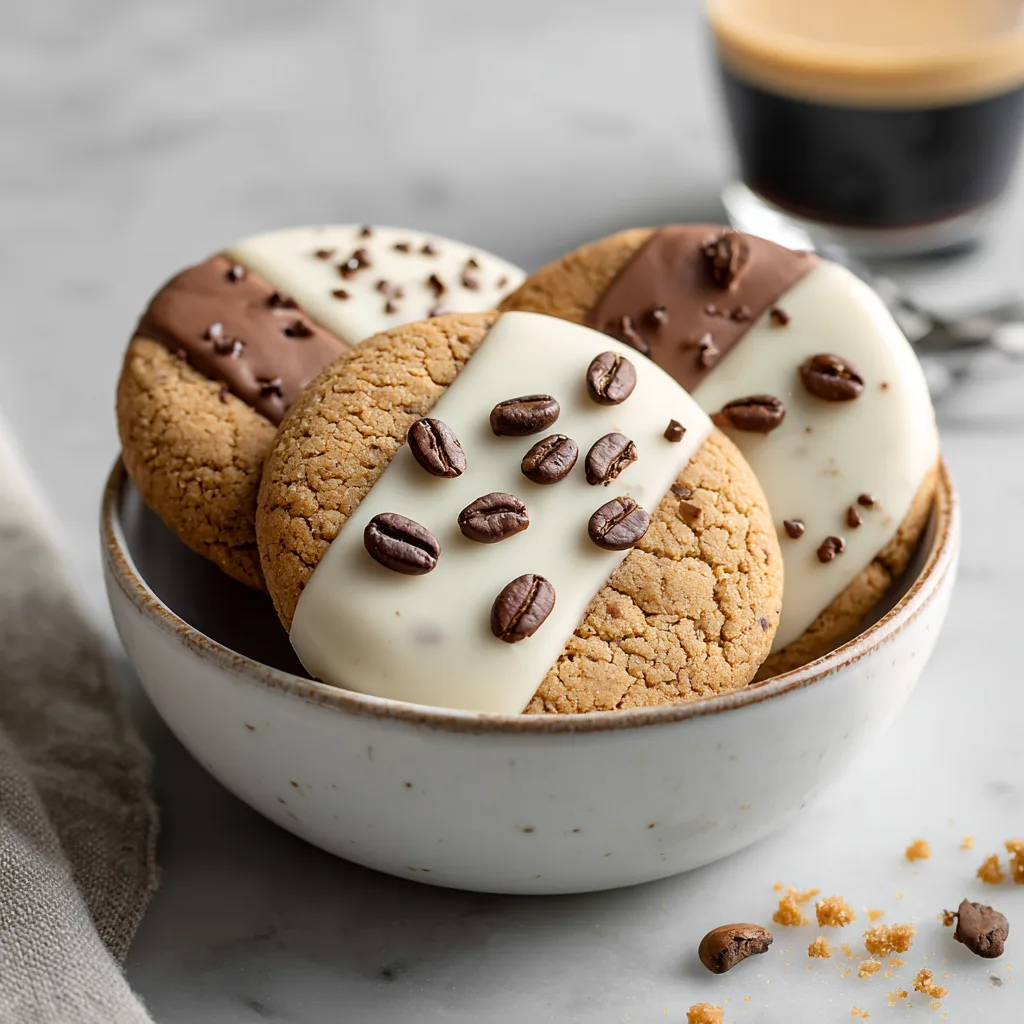
The hallmark of a great black and white cookie is the stark, clean line separating the two flavors. Getting this right can be a bit tricky, but with a few professional bakery secrets, you can achieve perfection.
First, always frost the lighter side (the vanilla/white chocolate) first. If you make a mistake, it is much easier to cover white frosting with dark chocolate than the other way around. Use an offset spatula and draw a line straight down the middle of the flat side of the cookie. Spread the icing outward to the edge. Let this white side dry slightly so it forms a light crust. When you apply the dark mocha side, carefully push the dark icing right up to the edge of the dried white icing. The corn syrup in the recipes is your secret weapon here—it ensures the glaze dries with a beautiful, professional sheen rather than looking dull and chalky.
🧊 Storage, Freezing, and Gifting Ideas
Because these cookies have a cake-like consistency, they are incredibly sensitive to drying out. Proper storage is absolutely essential.
Room Temperature: Store fully dried cookies in an airtight container at room temperature. To keep them extra soft, place a small piece of bread in the container with them; the cookies will absorb the moisture from the bread. They will keep well for up to 3 days.
Freezing: You can freeze these cookies! It is best to freeze them unglazed. Let the baked cookies cool completely, then wrap them individually in plastic wrap and place them in a freezer bag for up to 2 months. Thaw them at room temperature, then apply the fresh glazes. If you must freeze them glazed, place them in a single layer in a container, though be aware the glaze may lose a bit of its shine upon thawing.
Gifting: These make spectacular holiday or host gifts. Place them in a beautiful pastry box lined with wax paper. The addition of the espresso beans and crumb garnish makes them look like they came straight from an artisanal, high-end bakery in Manhattan. Pair a box of these cookies with a bag of locally roasted coffee beans for the ultimate coffee lover’s care package.
🏁 A Sweet Final Sip: Wrapping Up Your Baking Journey
Taking a bite of these Espresso Black and White Cookies is an experience. First, you get the slight crunch of the sweet glazes, followed immediately by the tender, soft, cakey interior laced with rich roasted coffee notes. Then, the satisfying crunch of the chocolate-covered espresso bean bursts on your palate, tying the whole flavor profile together.
Whether you are serving them alongside a morning cappuccino, offering them as the star dessert at a dinner party, or simply treating yourself to an afternoon pick-me-up, these cookies are guaranteed to impress. They honor the beloved New York tradition while boldly stepping into the modern coffeehouse era. Do not be intimidated by the dual glazes or the beautiful garnishes; as you have seen in the steps above, achieving bakery-level results at home is entirely within your reach. Happy baking, and enjoy every single caffeinated crumb!
Espresso Black and White Cookies
Ingredients
Equipment
Method
- Preheat oven to 350°F (175°C) and line two baking sheets with parchment paper.
- Whisk flour, baking soda, salt, and espresso powder in a medium bowl.
- In a mixer, cream butter and sugar until fluffy. Beat in the egg and vanilla.
- Mix in the sour cream and cooled espresso until combined.
- Gradually add dry ingredients, mixing just until the flour disappears.
- Drop 1/4-cup mounds of batter onto baking sheets, spacing them 3 inches apart.
- Bake for 12-14 minutes until edges are set. Cool completely on a wire rack.
- Whisk Vanilla Glaze ingredients until smooth and spreadable. Whisk Mocha Glaze ingredients in a separate bowl.
- Spread vanilla glaze on one half of the flat bottom of each cookie. Let set slightly.
- Spread mocha glaze on the other half.
- Before the dark glaze sets, garnish the center line with chocolate espresso beans and cookie crumbs. Let dry completely.