Mediterranean Shrimp and Asparagus Skillet: A 20-Minute Flavor Explosion
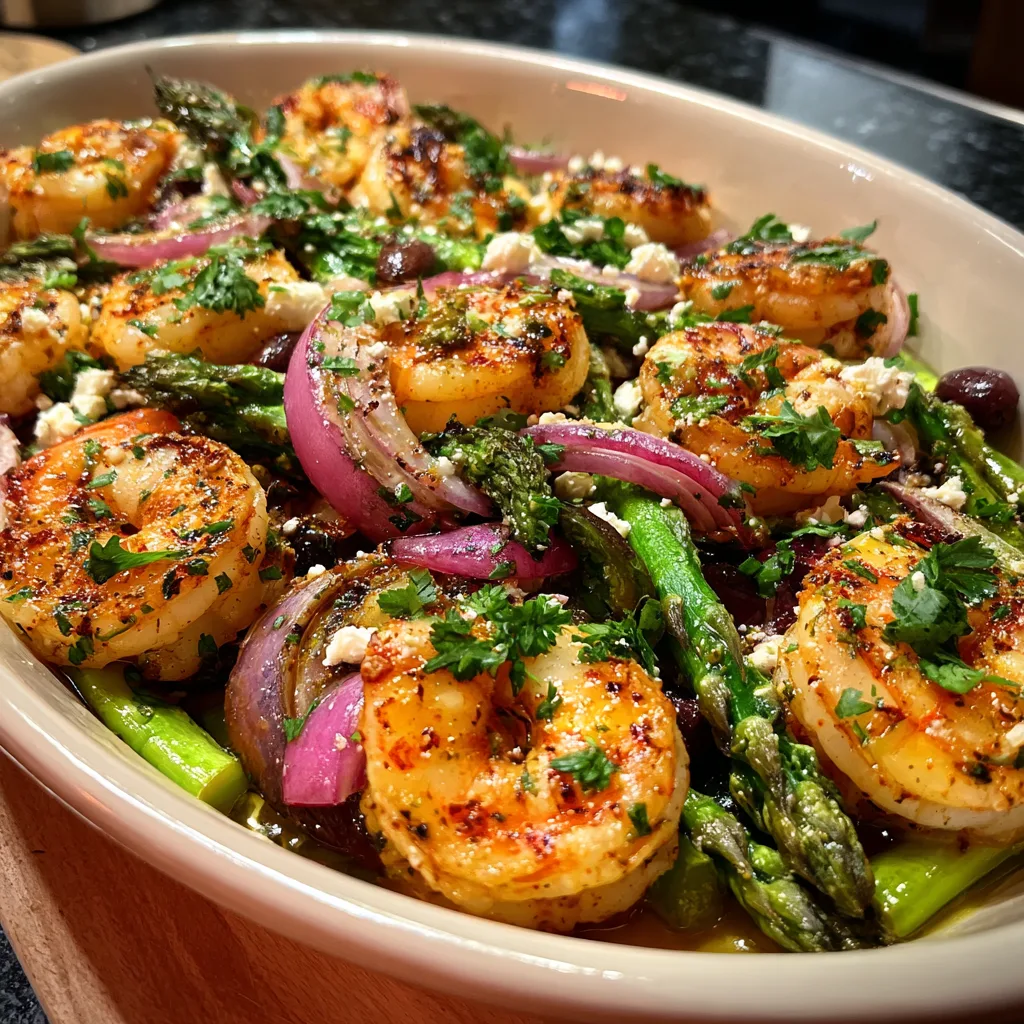
In the world of healthy eating, there is often a misconception that “good for you” means “boring.” This Mediterranean Shrimp and Asparagus Skillet is here to shatter that myth completely. Bursting with the vibrant colors of the Greek isles and packed with bold, zesty flavors, this dish is a celebration of fresh ingredients. Imagine succulent, large shrimp seared to perfection, paired with tender-crisp asparagus, sweet roasted red onions, briny kalamata olives, and tangy feta cheese, all brought together by a glossy lemon-herb dressing.
This recipe is the answer to the dreaded weeknight dinner slump. It comes together in under 20 minutes, uses just one pan (or a skillet and a serving dish), and delivers a restaurant-quality meal that looks as beautiful as it tastes. Whether you are following a Keto diet, eating low-carb, or simply trying to incorporate more heart-healthy Mediterranean meals into your life, this dish checks every box. It is light enough for a summer lunch yet hearty enough to satisfy you after a long day.
Why You Will Love This Recipe
This isn’t just another shrimp recipe; it is a complete flavor profile designed to hit every part of your palate.
- Incredible Speed: Shrimp is the ultimate fast food of the sea. Combined with quick-cooking asparagus, you can have dinner on the table faster than you can order delivery.
- Nutrient Dense: This dish is a powerhouse. You get lean protein from the shrimp, fiber and vitamins from the asparagus, and healthy monounsaturated fats from the olive oil and olives.
- Dietary Flexibility: It is naturally Gluten-Free, Low-Carb, Keto-friendly, and Pescatarian. It is a crowd-pleaser that fits almost any dietary restriction.
- Minimal Cleanup: Because everything cooks quickly in one skillet or on one sheet pan, you aren’t left with a sink full of dirty dishes.
- Flavor Complexity: The combination of salty feta, briny olives, sweet onions, and acidic lemon creates a perfect umami balance.
The Health Benefits of the Mediterranean Diet
This dish is a textbook example of the Mediterranean diet, which is widely considered one of the healthiest ways to eat in the world. By focusing on whole foods, healthy fats, and lean proteins, this recipe supports heart health and energy levels.
Olive Oil: The “liquid gold” of the region, extra virgin olive oil is rich in antioxidants and anti-inflammatory properties. In this recipe, it acts not just as a cooking medium, but as a key flavor component in the dressing.
Asparagus: This spring vegetable is loaded with Vitamin K, folate, and antioxidants. It acts as a natural diuretic and supports digestion.
Shrimp: Low in calories but high in protein, shrimp provides iodine and selenium, minerals that are essential for thyroid health and immunity.
Ingredients
The quality of your ingredients will shine through in this simple preparation. Here is what you need:
Mediterranean Shrimp and Asparagus Skillet
Ingredients
Equipment
Method
- Wash asparagus and snap off woody ends. Cut into 2-inch pieces. Slice red onion.
- Toss shrimp with 1 tbsp olive oil, half the garlic, oregano, salt, and pepper.
- Heat a large skillet over medium-high heat with 1 tbsp olive oil. Sauté asparagus and onions for 5-7 minutes until tender-crisp. Remove from pan.
- In the same skillet, add shrimp in a single layer. Sear for 1-2 minutes per side until pink.
- Add remaining garlic and lemon juice to the pan to create a sauce.
- Return veggies to the pan (or assemble on a platter) and toss with shrimp and sauce.
- Top with kalamata olives and crumbled feta cheese.
- Garnish with fresh parsley and serve immediately.
Notes
- Shrimp: 1 lb (450g) large or jumbo shrimp. Peel and devein them. You can leave the tails on for presentation (as seen in the photo) or remove them for easier eating.
- Asparagus: 1 bunch of fresh asparagus. Look for spears that are firm and bright green with tight tips. Avoid limp or wrinkly stalks.
- Red Onion: 1 medium red onion, sliced into wedges or thick strips. Red onion becomes incredibly sweet and mild when roasted or sautéed.
- Kalamata Olives: 1/3 cup pitted Kalamata olives. These dark purple olives have a distinct, rich flavor that standard black olives simply cannot match.
- Feta Cheese: 1/2 cup crumbled feta. Try to buy a block of feta in brine and crumble it yourself; it is creamier and tangier than the pre-crumbled dry version.
- Olive Oil: 3-4 tablespoons of high-quality Extra Virgin Olive Oil.
- Lemon: 1 large lemon. You will use both the juice and the zest for maximum brightness.
- Garlic: 3 cloves, minced. Fresh is best!
- Herbs: 1 tsp dried oregano (essential for that Greek flavor) and fresh parsley for garnishing.
- Seasoning: Salt, black pepper, and a pinch of red pepper flakes if you like a little heat.
Instructions
This recipe moves fast, so have all your ingredients chopped and ready before you turn on the stove.
- Prep the Veggies: Wash the asparagus. Hold a spear at both ends and bend it gently; it will naturally snap where the woody part ends. Discard the woody ends and cut the spears into 2-inch pieces. Slice the red onion into wedges.
- Season the Shrimp: In a bowl, toss the shrimp with 1 tablespoon of olive oil, half the minced garlic, half the dried oregano, salt, and pepper. Set aside to marinate while you cook the vegetables.
- Cook the Vegetables: Heat a large skillet over medium-high heat with 1 tablespoon of olive oil. Add the asparagus and red onion. Cook for 5-7 minutes, stirring occasionally, until the asparagus is tender-crisp and the onions are slightly softened and charred. Season with a pinch of salt. Remove veggies from the pan and set aside on your serving platter.
- Sear the Shrimp: In the same hot skillet, add another splash of oil if needed. Add the shrimp in a single layer. Do not overcrowd the pan; cook in batches if necessary. Sear for 1-2 minutes per side until they are pink, opaque, and have nice golden-brown edges.
- Make the Sauce: In the last 30 seconds of cooking the shrimp, add the remaining garlic and red pepper flakes to the pan. Squeeze in the juice of half the lemon to deglaze the pan, scraping up any tasty brown bits.
- Assemble: Pour the shrimp and the pan sauce over the cooked asparagus and onions on the platter.
- The Finisher: While everything is still hot, scatter the kalamata olives and crumbled feta cheese over the top. The heat from the shrimp will slightly warm the olives and soften the cheese.
- Garnish: Drizzle heavily with more extra virgin olive oil, the remaining lemon juice, and a generous dusting of fresh chopped parsley and the rest of the dried oregano. Serve immediately.
Tips for Perfectly Cooked Shrimp
Don’t Overcook: This is the number one rule. Shrimp cook incredibly fast. As soon as they curl into a “C” shape, they are done. If they curl into a tight “O” shape, they are overcooked and rubbery.
Dry Your Shrimp: Before seasoning, pat the shrimp dry with paper towels. Excess moisture will cause them to steam rather than sear, preventing that delicious golden crust from forming.
The “C” vs “O” Rule: Remember: “C” stands for Cooked, “O” stands for Overcooked.
Variations to Try
This recipe is very forgiving and easy to customize based on what is in your fridge.
- Sheet Pan Method: Don’t want to use the stove? Toss everything (shrimp and veggies) on a baking sheet with oil and spices. Roast at 400°F (200°C) for 10-12 minutes. Add the feta and olives at the end.
- Add More Veggies: Zucchini rounds, cherry tomatoes, or bell peppers make excellent additions to this medley.
- Change the Protein: This flavor profile works wonderfully with cubed chicken breast (cook it longer than shrimp) or salmon fillets.
- Make it Creamy: Stir a tablespoon of heavy cream or Greek yogurt into the pan sauce right at the end for a creamy lemon-garlic coating.
- Spice it Up: Add sliced pepperoncini peppers or a teaspoon of Calabrian chili paste for a spicy kick.
Serving Suggestions
While this dish is a complete meal on its own, especially for low-carb eaters, here are some great ways to round it out:
- Grain Bowls: Serve over a bed of fluffy jasmine rice, quinoa, or couscous to soak up the delicious lemon-oil sauce.
- With Bread: A loaf of crusty sourdough or warm pita bread is essential for mopping up the juices at the bottom of the plate.
- Pasta: Toss the entire mixture with freshly cooked angel hair pasta or orzo for a Mediterranean pasta salad.
- Potatoes: Roasted lemon potatoes make a classic Greek side dish that pairs perfectly with these flavors.
Choosing the Right Feta
Not all feta is created equal. For this dish, texture is key.
Greek Feta (PDO): Made from sheep’s milk or a blend of sheep and goat milk. It is tangy, crumbly, and rich. This is the authentic choice.
French Feta: Usually milder and creamier than Greek feta. Good if you find standard feta too salty.
Cow’s Milk Feta: Often drier and more crumbly, with a sharper sour taste. It works, but it lacks the depth of sheep’s milk feta.
Tip: If your feta is too salty, rinse the block under cold water before crumbling it.
Storage and Reheating
Storage: Store leftovers in an airtight container in the refrigerator for up to 2-3 days. Seafood is best eaten fresh, so try to consume it quickly.
Reheating: Reheat gently! Microwave on low power in short bursts, or sauté briefly in a pan just until warm. High heat will make the shrimp tough.
Meal Prep: You can chop all the vegetables and marinate the shrimp (without the acid/lemon juice) up to 24 hours in advance. Combine and cook when ready to eat.
Final Thoughts
The Mediterranean Shrimp and Asparagus Skillet is a testament to the fact that fast food can be healthy food. It brings the sunshine of the Mediterranean straight to your kitchen table with minimal effort. The combination of textures—the snap of the asparagus, the tender shrimp, the creamy cheese—makes every bite interesting. So, open a bottle of crisp white wine, slice some lemons, and enjoy a healthy dinner that feels like a vacation.