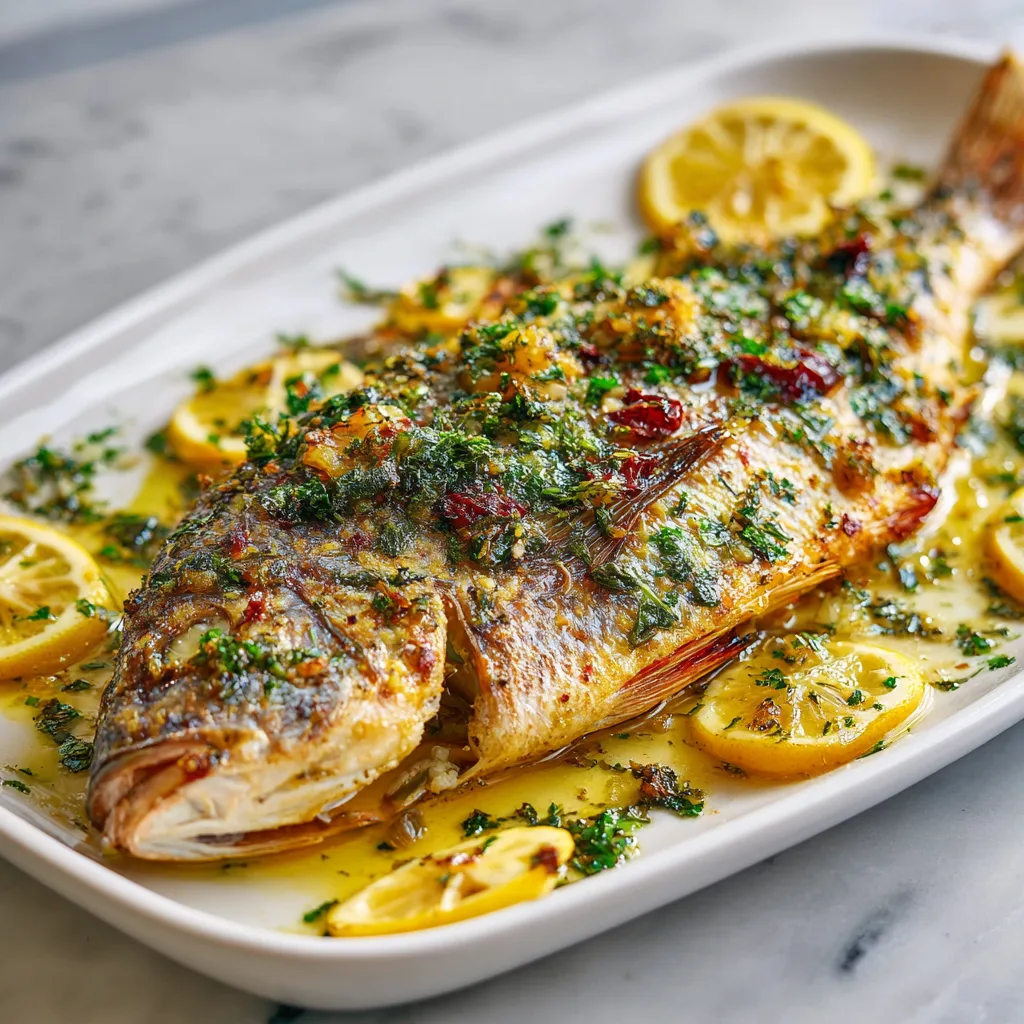
Lemon Herb Whole Roasted Red Snapper: A Mediterranean Masterpiece 🐟🍋
There is something undeniably primal and spectacular about serving a whole fish. In a culinary world often dominated by perfectly square fillets and processed cuts, the whole roasted fish stands as a testament to the beauty of nature and the elegance of simplicity. The Lemon Herb Whole Roasted Red Snapper is not just a meal; it is a centerpiece, a conversation starter, and a journey into the heart of Mediterranean cooking.
Many home cooks feel intimidated by the prospect of cooking a fish bone-in, head-on. The fear of navigating bones or undercooking the meat often relegates this dish to restaurant outings. However, this guide is here to dispel those fears. Cooking fish whole is actually easier and more forgiving than cooking fillets. The bones conduct heat gently, keeping the flesh moist and imparting a depth of flavor that a fillet simply cannot match. With the right technique, a hot oven, and a zesty, aromatic sauce, you will create a dish that tastes like a vacation on the Amalfi Coast.
Why You Should Roast Fish Whole
Before we dive into the “how,” let’s explore the “why.” Why bother with the whole fish? The answer lies in three key areas: flavor, texture, and presentation.
Flavor and Moisture: The bones and skin of the fish act as a natural barrier and insulator. They protect the delicate meat from the harsh direct heat of the oven, allowing it to steam in its own juices. Furthermore, the bones are rich in collagen and marrow, which melt slightly during the cooking process, infusing the meat with a rich, savory essence that creates a “stick-to-your-lips” quality.
Presentation: Let’s be honest—a platter holding a magnificent golden-brown fish, garnished with charred lemons and vibrant green herbs, looks like a five-star dining experience. It signals effort, care, and culinary confidence.
Cost-Effectiveness: Pound for pound, purchasing whole fish is often significantly cheaper than buying processed fillets. You are paying for the fish, not the labor of the fishmonger to break it down.
Selecting the Perfect Catch
The success of this recipe begins at the fish market. Since we are using minimal ingredients, the quality of the seafood is paramount. We are using Red Snapper for this recipe due to its sweet, nutty flavor and firm texture, but you can also use Sea Bream (Dorade), Branzino, or Black Sea Bass.
Here is your checklist for buying fresh whole fish:
- The Eyes: They should be clear, bright, and bulging. If they are cloudy or sunken, the fish is old.
- The Gills: Ask to peek under the gill flap. The gills should be a vibrant, bright red or pink. Brown or grey gills are a sign of oxidation and age.
- The Smell: Fresh fish should smell like the ocean—clean, salty, and briny. It should never smell “fishy” or like ammonia.
- The Touch: The flesh should be firm and bounce back when pressed. If your fingerprint remains in the flesh, pass on it.
Note: Ask your fishmonger to “scale and gut” the fish for you. This removes the messy work while leaving the fish whole for roasting.
The Flavor Profile: Mediterranean Brightness
This recipe relies on the holy trinity of Mediterranean seafood: Acid, Fat, and Herbs.
The acid comes from fresh lemons. We use them in two ways: sliced underneath the fish to prevent sticking and infuse flavor from the bottom up, and juiced into the finishing sauce for brightness. The fat is a high-quality olive oil and a touch of butter in the sauce to create a velvety texture. The herbs—fresh parsley, oregano, and garlic—provide the aromatic top notes that perfume the kitchen as the fish bakes.
Ingredients
Gather the following ingredients to prepare this feast. Ensure your produce is fresh for the best results.
Lemon Herb Whole Roasted Red Snapper
Ingredients
Equipment
Method
- Preheat oven to 400°F (200°C). Remove fish from fridge and let sit for 15 minutes.
- Score the fish by making 3 diagonal cuts on each side, cutting deep to the bone.
- Pat fish dry. Season cavity with salt and pepper, then stuff with parsley stems, garlic, and lemon slices.
- Mix olive oil, minced garlic, herbs, and spices. Rub over the fish and into the scored cuts.
- Lay lemon slices on a baking sheet and place fish on top.
- Roast for 20-25 minutes until flesh flakes easily or reaches 135°F (57°C).
- Meanwhile, simmer butter, oil, wine, lemon juice, and remaining garlic in a saucepan for 3 minutes.
- Transfer fish to a platter and pour the hot sauce over the top before serving.
Notes
- – 2 whole Red Snappers (approx. 1.5 lbs each), cleaned and scaled
- – 4 tablespoons extra virgin olive oil, divided
- – 3 whole lemons (2 sliced into rounds, 1 reserved for juice)
- – 6 cloves garlic, minced finely
- – 1 bunch fresh parsley, chopped (stems reserved)
- – 1 tablespoon fresh oregano or thyme leaves
- – 1 teaspoon red pepper flakes (optional for heat)
- – 1.5 teaspoons sea salt (flaky salt is best)
- – 1 teaspoon freshly cracked black pepper
- – 2 tablespoons unsalted butter
- – 0.25 cup dry white wine (Sauvignon Blanc or Pinot Grigio)
Instructions
Follow these steps to achieve perfectly roasted, juicy fish with crispy skin.
- Preheat and Prepare: Preheat your oven to 400°F (200°C). While the oven heats, take the fish out of the refrigerator and let it sit at room temperature for 15 minutes. This ensures even cooking.
- Score the Fish: Using a very sharp knife, make 3 to 4 diagonal cuts on both sides of each fish. Cut through the skin and deep into the flesh, but stop when you hit the bone. This increases surface area for the marinade and helps the thickest part of the fish cook at the same rate as the tail.
- Season the Cavity: Pat the fish very dry with paper towels (moisture is the enemy of crispy skin). Generously salt and pepper the inside of the cavity. Stuff the cavity with the parsley stems, half of the garlic, and two lemon slices per fish.
- The Rub: In a small bowl, mix 3 tablespoons of olive oil, the remaining garlic, chopped parsley, oregano, red pepper flakes, salt, and pepper. Rub this mixture all over the fish, ensuring you get it into the scored cuts you made earlier.
- Prepare the Bed: Arrange the remaining lemon slices in a single layer on a large baking sheet or roasting pan. Lay the seasoned fish directly on top of the lemon slices. This prevents the skin from sticking to the pan and steams the fish with lemon aromatics.
- Roast: Place the tray in the center of the oven. Roast for 20-25 minutes. The time will vary depending on the thickness of your fish.
- The Sauce (While Roasting): While the fish bakes, make the finishing sauce. In a small saucepan, melt the butter with the remaining 1 tablespoon of olive oil. Add the white wine and juice from the remaining lemon. Simmer for 2-3 minutes until slightly reduced. Stir in a pinch of fresh parsley.
- Check for Doneness: The fish is done when the flesh is opaque and flakes easily with a fork. You can also insert an instant-read thermometer into the thickest part near the head; it should read 135°F (57°C).
- Broil (Optional): If you want the skin extra crispy, switch the oven to “Broil” for the last 2 minutes of cooking. Watch it closely so the herbs don’t burn!
- Serve: Transfer the fish to a serving platter. Pour the warm wine and butter sauce over the fish and into the slits. Serve immediately.
How to Serve and Eat Whole Fish
Serving whole fish can seem tricky, but it is actually quite systematic. Bring the whole platter to the table for the “wow” factor, then you can either fillet it tableside or let guests dig in.
To fillet it: Run a spoon along the spine to separate the dorsal meat. Gently lift the top fillet off the bones and move it to a plate. Then, grab the tail of the skeleton and gently lift the entire bone cage up—it should pull away easily from the bottom fillet. Discard the bones (or save them for stock!) and serve the bottom fillet.
Pairing Suggestions
A dish this light and flavorful requires sides that complement, rather than overpower, the delicate fish.
- Greek Lemon Potatoes: Roast wedges of potatoes with lemon juice, oregano, and olive oil in the oven alongside the fish.
- Sautéed Greens: Spinach, Swiss chard, or broccolini sautéed with garlic provides a healthy, earthy contrast.
- Rice Pilaf: A simple buttered rice or a Mediterranean yellow rice soaks up the extra sauce beautifully.
- Wine Pairing: A crisp, high-acid white wine is non-negotiable here. A Sauvignon Blanc, Albariño, or a dry Greek Assyrtiko pairs perfectly with the lemon and garlic notes.
Conclusion: The Taste of the Sea
Cooking a whole Red Snapper is a culinary rite of passage that yields incredible rewards. It connects us to the source of our food and encourages a style of communal eating that is both healthy and heartwarming. The combination of the sweet, tender fish with the sharp, salty, herbaceous sauce is a timeless classic for a reason.
So, next time you are at the market, look past the fillets. Be bold, buy the whole fish, and treat your family to a meal that looks like a special occasion but is simple enough for a weeknight. Bon appétit! 🍽️