
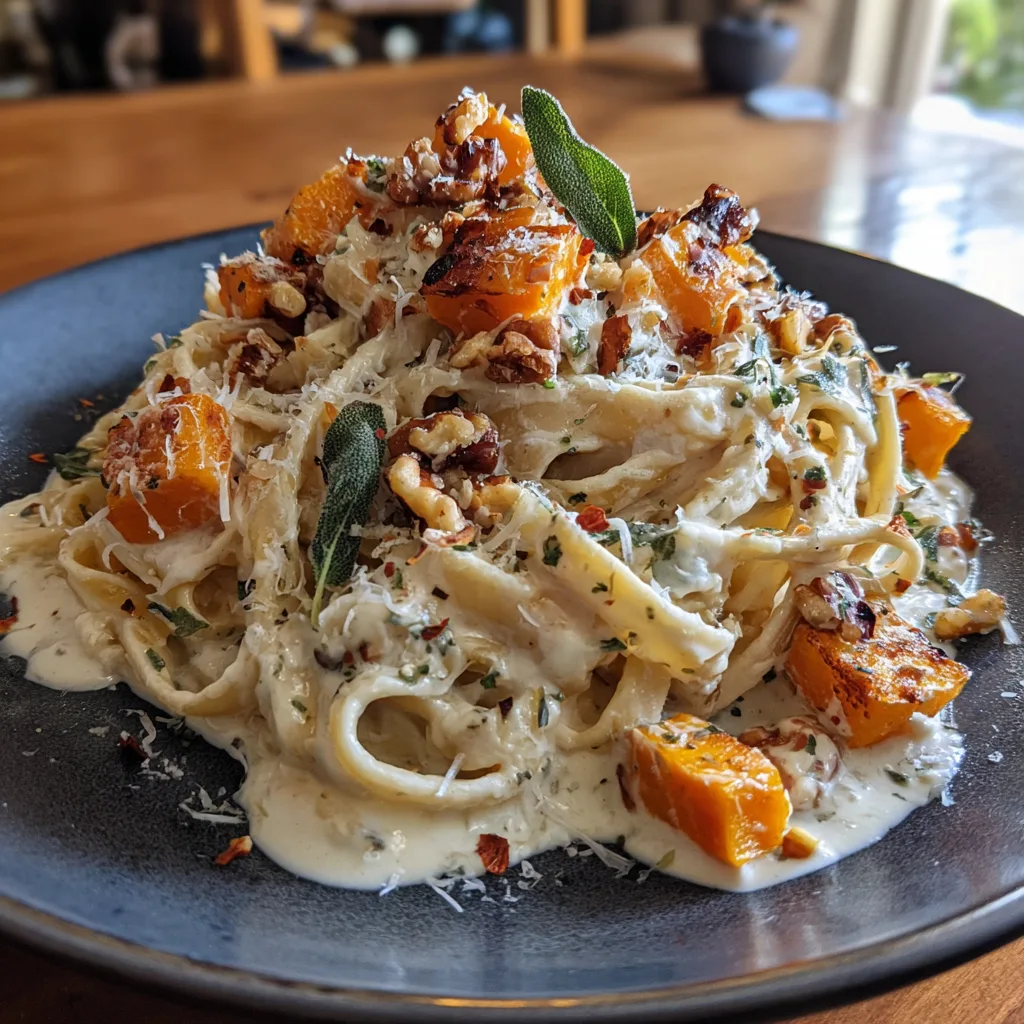
Autumn’s Embrace: Creamy Butternut Squash & Walnut Pasta with Crispy Sage 🍂🍝
There is a specific moment when the air turns crisp, the leaves begin to mourn their chlorophyll, and our cravings shift from the vibrant salads of summer to something deeper, warmer, and infinitely more comforting. This Creamy Butternut Squash and Walnut Pasta is the culinary embodiment of that transition. It is a dish that wraps you in a velvet blanket of savory cream, punctuated by the earthy sweetness of roasted squash and the unexpected, delightful crunch of toasted walnuts.
If you have been searching for the ultimate fall dinner recipe that balances gourmet presentation with rustic, soul-soothing flavors, you have arrived. This dish is not merely pasta; it is a celebration of textures. We take the humble butternut squash, roast it until it caramelizes into golden jewels, and pair it with a sauce that bridges the gap between a classic Alfredo and a savory herb-infused glaze. Finished with fried sage leaves that shatter like glass upon the bite, this meal is destined to become a seasonal tradition in your home.
In this comprehensive guide, we will explore not just the “how-to,” but the “why” behind these flavor pairings. We will dive into selecting the perfect produce, the science of emulsifying a cream sauce, and the art of plating that turns a Tuesday night dinner into a restaurant-quality experience.
The Symphony of Flavors and Textures 🎶
Why does this pasta dish work so well? It comes down to the culinary concept of contrast. A great dish usually requires a balance of salt, fat, acid, and heat, but texture plays an equally pivotal role.
The Creamy Element: The sauce acts as the conductor. By using heavy cream infused with garlic and parmesan, we create a rich, coating consistency (known in Italian cooking as mantecare) that clings to the fettuccine. This provides a luxurious mouthfeel that is immediately satisfying.
The Sweet & Earthy Element: Butternut squash is naturally sweet, but when roasted, that sweetness deepens and gains complexity. It provides a soft, yielding bite that mirrors the tenderness of the pasta but offers a different flavor profile—earthy, nutty, and slightly vegetal.
The Crunch Factor: This is where the walnuts come in. Pasta dishes can often suffer from being “one-note” in texture—everything is soft. The walnuts introduce a tannic, savory crunch that cuts through the richness of the cream and the softness of the squash. It wakes up the palate.
The Aromatic Finish: Fried sage is the crown jewel. Sage has a potent, pine-like aroma that can be overpowering raw. However, when flash-fried in butter or oil, it mellows out, becomes incredibly crispy, and infuses the fat with its essence, tying the entire dish together.
Selecting Your Ingredients: A Guide to Quality 🛒
Before we fire up the stove, let’s talk about the shopping list. The quality of your ingredients will dictate the final result of this dish.
The Squash
Look for a butternut squash that feels heavy for its size; this indicates moisture and freshness. The skin should be matte, not shiny, and free of deep cuts or soft spots. A darker shade of beige usually hints at a sweeter, more mature squash. While you can buy pre-cut cubes, roasting a fresh squash you’ve cut yourself often yields better texture as pre-cut versions can sometimes dry out.
The Pasta
The shape matters. For a sauce this creamy and chunky, you need a noodle that can hold its own. Fettuccine or Tagliatelle are the ideal choices here. Their broad, flat surface area allows the cream sauce to coat every millimeter, while the nests of pasta catch the bits of walnut and herbs. Avoid thin pastas like angel hair, which will get lost, or short tubes like penne, which feel too disjointed for this elegant presentation.
The Cheese
Please, I beg of you, do not use the green shaker can. Buy a block of Parmigiano-Reggiano or Grana Padano and grate it yourself. Pre-grated cheeses are coated in anti-caking agents (cellulose) that prevent them from melting smoothly, resulting in a grainy sauce. Freshly grated cheese melts into a glorious, cohesive emulsion.
Ingredients
Here is everything you need to assemble this masterpiece. Gather these items before you begin to ensure a smooth cooking process.
Creamy Roasted Butternut Squash & Walnut Pasta
Ingredients
Equipment
Method
- Preheat oven to 400°F (200°C). Toss cubed squash with olive oil, salt, and pepper.
- Spread squash on a baking sheet and roast for 25-30 minutes until tender and caramelized.
- Boil pasta in salted water until al dente. Reserve 1 cup of pasta water before draining.
- In a large skillet, melt 2 tbsp butter. Fry sage leaves and walnuts until crispy and toasted. Remove and set aside.
- Add remaining butter and garlic to the skillet, sautéing for 1 minute.
- Pour in heavy cream and nutmeg, bringing to a gentle simmer.
- Add drained pasta and parmesan cheese to the sauce, tossing vigorously. Add pasta water as needed to thin.
- Fold in half the squash and walnuts. Top with remaining squash, walnuts, and sage before serving.
Notes
- – 1 small Butternut Squash (peeled, seeded, and cut into 1-inch cubes)
- – 1 lb (450g) Fettuccine or Tagliatelle pasta
- – 2 tbsp Olive Oil (for roasting)
- – 1/2 cup Walnuts (roughly chopped)
- – 4 tbsp Unsalted Butter (divided)
- – 12-15 fresh Sage leaves
- – 2 cloves Garlic (minced)
- – 1 cup Heavy Cream (double cream)
- – 1/2 cup Parmesan Cheese (freshly grated)
- – 1/4 tsp Nutmeg (freshly grated is best)
- – Salt and Black Pepper (to taste)
- – Pinch of Red Pepper Flakes (optional, for heat)
- – Pasta Water (reserved from cooking)
Instructions
Follow these steps carefully to achieve the perfect balance of creamy sauce and roasted vegetables.
- Roast the Squash: Preheat your oven to 400°F (200°C). Toss the cubed butternut squash with olive oil, a generous pinch of salt, and cracked black pepper. Spread them in a single layer on a baking sheet. Roast for 25–30 minutes, tossing halfway through, until the squash is tender and the edges are caramelized and golden brown.
- Boil the Water: While the squash is roasting, bring a large pot of salted water to a rolling boil. Use less water than usual to ensure the pasta water is starchy—this is liquid gold for your sauce later.
- Toast the Walnuts and Sage: In a large skillet or deep sauté pan, melt 2 tablespoons of butter over medium heat. Add the walnuts and the sage leaves. Cook for 3–4 minutes, stirring frequently. Watch closely; you want the walnuts to smell toasted and the sage to turn dark green and crispy, but the butter should not burn (brown butter is fine and delicious, burnt butter is bitter). Remove the sage and nuts from the pan with a slotted spoon and set aside on a paper towel.
- Start the Sauce Base: In the same pan (don’t wipe it out—keep that sage-infused butter!), add the remaining 2 tablespoons of butter. Add the minced garlic and sauté for 1 minute until fragrant but not browned.
- Cook the Pasta: Add your pasta to the boiling water. Cook it until it is just shy of al dente (about 1–2 minutes less than the package instructions). It will finish cooking in the sauce.
- Simmer the Cream: While pasta boils, pour the heavy cream into the skillet with the garlic butter. Reduce heat to low and let it simmer gently. Stir in the nutmeg, a pinch of salt, and pepper. Let it bubble slightly to thicken.
- Emulsify: When the pasta is ready, reserve 1 cup of starchy pasta water. Drain the pasta and transfer it directly into the skillet with the cream sauce. Add the grated parmesan cheese and a splash (about 1/4 cup) of the reserved pasta water.
- Toss and Combine: Using tongs, toss the pasta vigorously in the sauce over low heat. The motion helps emulsify the cheese and water into a glossy, thick cream. If it looks too dry, add more pasta water a tablespoon at a time.
- Assembly: Gently fold in half of the roasted squash cubes and half of the toasted walnuts. Be gentle so you don’t mash the squash.
- Serve: Plate the pasta immediately. Top with the remaining roasted squash, the crispy sage leaves, and the rest of the walnuts. Finish with extra grated parmesan and a pinch of red pepper flakes if desired.
Mastering the Art of Roasting Squash 🎃
Many home cooks struggle with soggy roasted vegetables. To ensure your squash provides that delightful textural contrast, spacing is key. If you crowd the baking sheet, the vegetables will steam instead of roast. Make sure there is air between the cubes.
Additionally, don’t be afraid of color. Those dark brown spots on the squash are where the natural sugars are caramelizing (the Maillard reaction). This is where the flavor lives. If you pull them out when they are just soft but pale, you are missing out on the depth of flavor required to stand up to the rich cream sauce.
Health Benefits Hidden in Comfort Food 🌿
While this is undeniably a comfort dish, it carries a nutritional payload thanks to the star ingredients.
Butternut Squash: This winter gourd is a powerhouse of Vitamin A, providing over 400% of your daily requirement in a single cup. It is also rich in fiber, potassium, and magnesium. The vibrant orange color comes from beta-carotene, an antioxidant that supports eye health and immune function.
Walnuts: Often cited as a “brain food” (and coincidentally shaped like a brain), walnuts are the only tree nut with an excellent source of plant-based omega-3 alpha-linolenic acid (ALA). They add healthy fats and protein to the dish, making it more satiating.
Sage: Historically used for medicinal purposes, sage is loaded with antioxidants and has anti-inflammatory compounds. While we consume it here for flavor, it’s a herb that has been revered for centuries for promoting longevity.
Troubleshooting Your Cream Sauce 🥛
Cream sauces can be temperamental. Here is how to fix common issues:
- The sauce is too thick: This happens if the cheese absorbs too much moisture or the cream reduces too much. simply add more hot pasta water, a splash at a time, tossing constantly until it loosens up.
- The sauce is grainy: This usually happens if the heat was too high when you added the cheese. Cheese separates at high temperatures. If this happens, remove the pan from the heat immediately and add a splash of cold cream, stirring vigorously to try and bring the emulsion back together.
- The sauce is bland: Cream absorbs a lot of salt. If it tastes “flat,” it likely needs more salt. Add it gradually. A squeeze of lemon juice can also cut the richness and brighten the flavors without making it taste sour.
Variations and Substitutions 🔄
Cooking is an art, not a science. Feel free to adapt this recipe to your dietary needs or pantry availability.
Protein Add-Ons
While this dish is a complete meal on its own, it pairs beautifully with protein. Grilled chicken strips seasoned with rosemary are a natural fit. For a more decadent option, sear some scallops or mix in crispy pancetta or bacon lardons. The salty pork fat works incredibly well with the sweet squash.
Vegan Adaptation
To make this plant-based, substitute the butter for a high-quality vegan butter block. Replace the heavy cream with full-fat coconut milk (the savory kind) or a cashew cream blend. Use nutritional yeast or a vegan parmesan alternative to achieve the cheesy flavor. The squash and walnuts will still do the heavy lifting for flavor.
Gluten-Free Options
This sauce is naturally gluten-free (as long as you don’t use a roux). Simply swap the wheat pasta for a high-quality gluten-free fettuccine, such as one made from brown rice or corn/quinoa blend. Be careful not to overcook gluten-free pasta, as it breaks apart easily when tossed.
Serving Suggestions and Wine Pairing 🍷
To round out this meal, you need something to cut the richness. A sharp, acidic salad is the perfect side. A simple arugula salad with a lemon vinaigrette and shaved fennel provides a peppery, fresh counterpoint to the creamy pasta.
For wine, you want a white wine with enough body to stand up to the cream, but enough acidity to cleanse the palate. A California Chardonnay (oaked) complements the buttery, nutty flavors perfectly. Alternatively, an Italian Pinot Grigio or a Viognier offers floral notes that highlight the sage and nutmeg.
Storage and Reheating 🥡
Cream-based pastas are best enjoyed fresh, but leftovers can be saved.
Storage: Store in an airtight container in the refrigerator for up to 3 days.
Reheating: Do not microwave this on high power; the oil will separate from the sauce. Instead, reheat it in a saucepan over low heat. You will likely need to add a splash of milk or water to loosen the sauce as it will have solidified in the fridge. Stir gently until warmed through.
Conclusion
This Creamy Butternut Squash and Walnut Pasta is more than just dinner; it is an experience of the season. It captures the essence of fall harvest in a bowl, offering warmth, comfort, and sophistication. Whether you are cooking for a date night, a family gathering, or simply treating yourself after a long week, this recipe delivers on every level.
So, pour a glass of wine, put on some jazz, and let the aroma of roasting squash and frying sage fill your kitchen. Bon appétit!


