
The Ultimate Guide to Mini Candied Orange and Rosemary Olive Oil Cakes 🍊
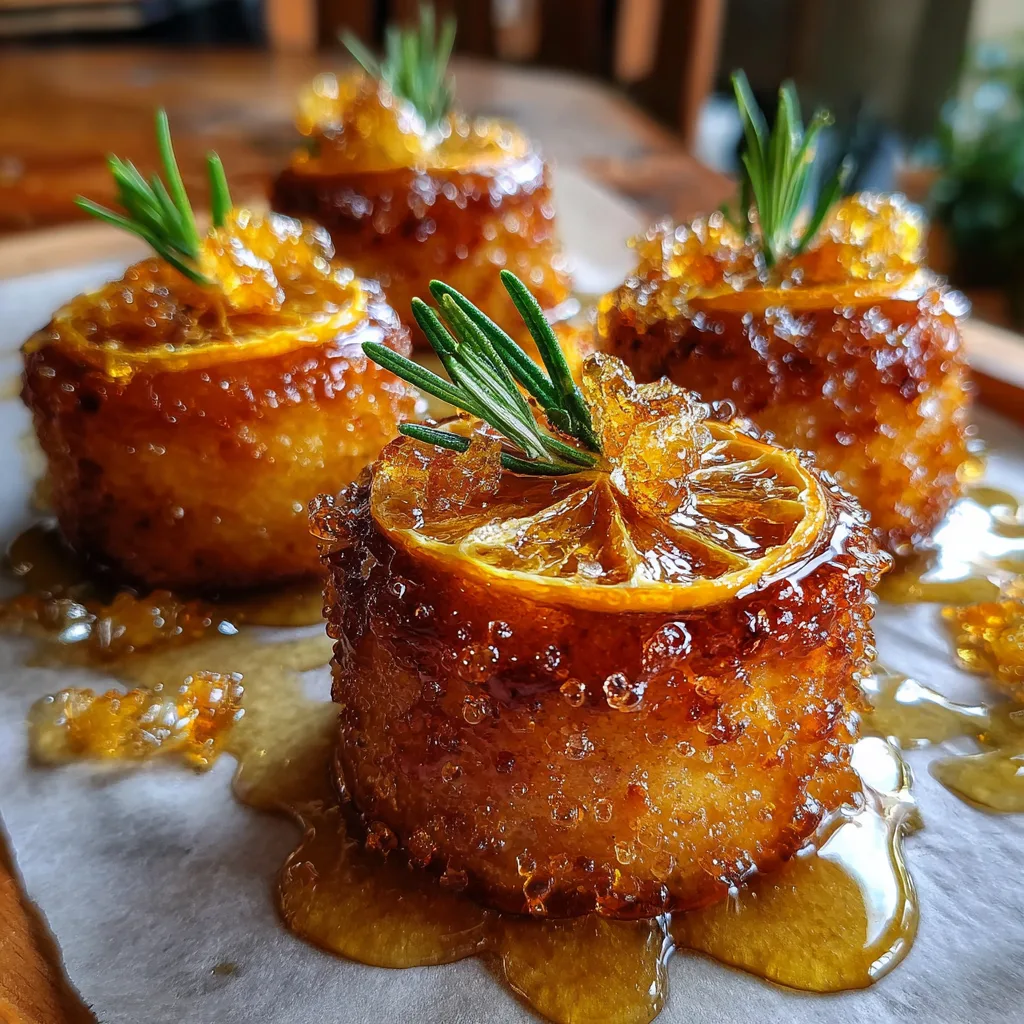
There is something undeniably sophisticated about a dessert that balances the brightness of fruit with the earthy depth of herbs. If you look at the image above, you aren’t just seeing a cupcake; you are seeing a jewel-toned masterpiece. These are Mini Candied Orange and Rosemary Olive Oil Cakes—sticky, moist, and glistening with a golden syrup that catches the light. They look like they belong in the window of a Parisian patisserie, yet they are rustic enough to be baked in your own kitchen on a rainy Sunday afternoon.
This recipe is a celebration of winter citrus. When the weather is cold and gray, nature gifts us with the vibrant oranges, clementines, and tangerines that bring sunshine to our plates. By pairing them with extra virgin olive oil and fresh rosemary, we move away from cloying sugary sweets and into the realm of complex, adult desserts. This guide is your comprehensive roadmap to mastering these little golden cakes, covering everything from the science of baking with oil to the art of candying fruit.
Why Olive Oil? The Science of Texture
You might be wondering: why use olive oil instead of butter? While butter is beloved for its flavor, it is solid at room temperature. This means cakes made with butter tend to firm up as they cool. Olive oil, however, is a liquid fat. This molecular difference is crucial.
When you bake with olive oil, the fat coats the flour proteins more thoroughly, inhibiting gluten formation. The result is a crumb that is incredibly tender and stays moist for days. In fact, olive oil cakes are often better on the second or third day as the moisture redistributes. Furthermore, the grassy, fruity notes of a high-quality Extra Virgin Olive Oil mirror the citrus notes in the orange, creating a flavor bridge that butter simply cannot build.
The Flavor Profile: Rosemary and Citrus
To the uninitiated, putting a piney herb like rosemary in a dessert might seem strange. But in the botanical world, rosemary and citrus share similar aromatic compounds (terpenes). The woody, pine-like scent of rosemary cuts through the sugar and the acidity of the orange, adding a savory “base note” to the melody of the dish. It transforms a simple sweet treat into a gastronomic experience.
Selecting Your Citrus
The star of the show is the orange slice on top. For these mini cakes, size matters.
- Clementines or Mandarins: These are ideal because their small diameter fits perfectly into a standard muffin tin or mini cake mold. Their skin is also thinner, making it less bitter when candied.
- Navel Oranges: These are often too large for mini cakes unless you use jumbo muffin tins. If using them, you may need to cut the slices to fit.
- Blood Oranges: For a dramatic visual twist, blood oranges offer a stunning deep red hue that looks incredible against the golden cake.
The Technique: The Upside-Down Method
The beauty of this recipe lies in its presentation, which requires zero frosting skills. By placing the fruit at the bottom of the pan with a little syrup and pouring the batter over it, the oven does the decorating for you. As the cake bakes, the juices from the orange slice caramelize against the hot metal of the pan, creating that gorgeous, stained-glass look when inverted. The key here is confidence—you must flip the cakes while they are still warm to ensure the fruit doesn’t stick to the pan.
Ingredients
Gather these ingredients. Since this is a simple cake, the quality of your olive oil and fruit will shine through.
Mini Candied Orange and Rosemary Olive Oil Cakes
Ingredients
Equipment
Method
- Slice oranges thinly. Simmer in a skillet with sugar, water, and rosemary sprigs for 15 mins until translucent.
- Remove orange slices and reduce the remaining liquid to a syrup. Preheat oven to 350°F (175°C).
- Grease muffin tin. Place one candied orange slice at the bottom of each cup.
- Whisk eggs and sugar until pale. Stream in olive oil, then add yogurt and zest.
- Fold in flour, baking powder, baking soda, salt, and chopped rosemary.
- Pour batter over orange slices. Bake for 20-25 minutes until golden.
- Cool for 5 minutes, then invert onto a rack. Brush with reserved syrup while warm.
Notes
For the Candied Topping
– 3 small Oranges or Clementines (organic is best as we eat the peel)
– 1 cup Granulated sugar
– 1 cup Water
– 2 sprigs Fresh Rosemary (whole)
For the Cake Batter
– 1.5 cups All-Purpose Flour (or Almond Flour for a denser, GF version)
– 1 tsp Baking powder
– 1/4 tsp Baking soda
– 1/2 tsp Salt
– 3 large Eggs, room temperature
– 1 cup Granulated sugar
– 3/4 cup Extra Virgin Olive Oil
– 1/2 cup Whole Milk or Greek Yogurt
– 1 tbsp Fresh Rosemary, finely chopped
– 1 tbsp Orange zest (grated from the fresh oranges)
For the Glaze and Garnish
– Reserved syrup from the candying process
– Fresh Rosemary sprigs (for decoration)
– Sea salt flakes (optional)
Instructions
Follow these steps carefully. The candying process takes a little patience but is worth the effort.
- Prep the Oranges: Wash your citrus thoroughly. Using a sharp knife or a mandoline, slice the oranges into thin rounds (about 1/8 inch thick). Discard the ends. You need about 12 nice slices.
- Candying the Slices: In a wide skillet, combine 1 cup of sugar and 1 cup of water. Bring to a boil to dissolve the sugar. Add the whole rosemary sprigs to infuse the syrup. Reduce heat to a gentle simmer. Carefully lay the orange slices in the syrup in a single layer. Simmer gently for 10-15 minutes until the rinds are translucent and the pith (the white part) looks clear.
- Cool the Fruit: Remove the pan from heat. Carefully lift the orange slices out and place them on a plate to cool slightly. Do not discard the syrup! Remove the rosemary stems from the syrup and simmer the liquid for another 5 minutes until it thickens into a glaze. Set aside.
- Prepare the Oven and Pans: Preheat your oven to 350°F (175°C). Generously grease a 12-cup muffin tin or mini cheesecake pan with olive oil or cooking spray. Place one candied orange slice in the bottom of each cup.
- Mix Dry Ingredients: In a medium bowl, whisk together the flour, baking powder, baking soda, salt, and finely chopped fresh rosemary.
- Mix Wet Ingredients: In a large bowl, whisk the eggs and sugar vigorously until pale and slightly thickened (about 2 minutes). Slowly stream in the olive oil while whisking to emulsify. Whisk in the milk (or yogurt) and orange zest.
- Combine: Gently fold the dry ingredients into the wet ingredients using a spatula just until no streaks of flour remain. Do not overmix, or the cake will be tough.
- Bake: Pour the batter over the orange slices in the muffin tin, filling each cup about 3/4 full. Bake for 20-25 minutes, or until the cakes are golden and a toothpick inserted into the center comes out clean.
- The Inversion: Let the cakes cool in the pan for exactly 5 minutes. Run a small knife around the edges to loosen them. Place a wire rack or baking sheet over the tin and flip it over to release the cakes. If any orange slices stick to the pan, just peel them off and place them back on the cakes.
- Glaze and Serve: While the cakes are still warm, brush them generously with the reduced orange-rosemary syrup. Garnish with a fresh sprig of rosemary on top.
Texture Troubleshooting: Why is my cake dry?
Olive oil cakes are forgiving, but they can still dry out if overbaked. Because the batter is gold-colored from the oil and eggs, it can be hard to tell when it’s done by color alone. Trust the “spring back” test—press the top gently; if it springs back, it is done. If your indentation stays, it needs a few more minutes. Also, ensure you measured your flour correctly (spoon and level method) rather than scooping the cup into the bag, which packs the flour down.
Serving Suggestions
These cakes are versatile enough for breakfast or dessert.
Warm: Serve warm with a dollop of crème fraîche or plain Greek yogurt. The tang of the dairy cuts the sweetness of the syrup.
Room Temperature: They are perfect with a cup of Earl Grey tea. The bergamot in the tea pairs wonderfully with the orange and rosemary.
Dessert Course: Serve with a scoop of vanilla bean ice cream and a drizzle of honey for a decadent finish.
Storage: The Gift of Time
Unlike butter cakes that stale quickly, the olive oil acts as a preservative for moisture.
Room Temperature: Store in an airtight container for up to 3 days. They will actually become moister on day 2.
Freezer: These freeze beautifully. Wrap each cake individually in plastic wrap and freeze for up to 2 months. Thaw at room temperature for an hour before eating.
Conclusion
These Mini Candied Orange and Rosemary Olive Oil Cakes are a testament to the power of simple, high-quality ingredients. They bring together the warmth of the Mediterranean sun and the cozy comfort of winter baking. Whether you are an experienced baker or a novice, the visual payoff of the upside-down fruit makes you look like a pastry pro. So, pour yourself a glass of wine or steep a pot of tea, and enjoy the sweet, sticky, herbal magic of these delightful little cakes.


