
There is an undeniable, universal appeal to the combination of sweet and savory flavors. It is a culinary profile that dances across the palate, hitting multiple taste receptors simultaneously and keeping you coming back for just one more bite. When you take the deeply savory, umami-rich notes of perfectly seared pork and marry them with the bright, tropical acidity and sweetness of fresh pineapple, you create a dish that is nothing short of spectacular. Welcome to the ultimate guide to making Sticky Pineapple Pork Rice Bowls—a recipe that will quickly become the crown jewel of your weeknight dinner rotation.
If you have ever ordered takeout sweet and sour pork or a glazed pineapple chicken dish and wished you could recreate that thick, glossy, lip-smacking sauce at home without a deep fryer, this recipe is your answer. We are skipping the heavy batter and the deep-frying oil, focusing instead on pan-searing the meat to achieve a beautiful crust through the Maillard reaction, and then enveloping it in a sticky, reduced glaze that clings to every single piece. Served over a bed of steaming, fluffy white rice and garnished with a shower of fresh cilantro, this bowl offers a symphony of textures and flavors.
In this comprehensive, deep-dive article, we are going to explore every facet of this magnificent dish. We will discuss the science behind the perfect sticky glaze, how to select the absolute best cuts of meat, the crucial differences between fresh and canned pineapple, and provide you with foolproof, step-by-step instructions to ensure your kitchen smells like a five-star fusion restaurant tonight. Prepare your tastebuds for a tropical getaway in a bowl!
1. The Magic of the Sticky Glaze: Sweet, Savory, and Irresistible 🍯
The undisputed star of this dish is the glaze. It is what transforms a simple bowl of meat and rice into a crave-worthy, restaurant-quality meal. Creating the perfect sticky glaze is an exercise in balancing flavor profiles: you need saltiness, sweetness, acidity, and umami.
The foundation of our glaze is soy sauce, which provides the deep, fermented umami and essential sodium. To balance this, we introduce brown sugar. Brown sugar is vastly superior to white sugar in this context because it contains molasses, which adds a complex, caramel-like depth and aids in achieving that sought-after dark, glossy finish as it reduces in the pan. The acid comes from the pineapple juice itself, along with a splash of rice vinegar. This acidity is crucial—it cuts through the richness of the pork and prevents the sauce from becoming cloyingly sweet.
But flavor isn’t the only important factor; texture matters immensely. To get that signature sticky consistency that coats the back of a spoon and clings to the meat, we utilize a cornstarch slurry. When the cornstarch hits the bubbling sauce, it gelatinizes, instantly transforming a thin, watery liquid into a luxurious glaze. The addition of freshly grated ginger and minced garlic adds a sharp, aromatic bite that elevates the entire profile, making the sauce incredibly dynamic and robust.
2. Choosing the Right Protein: Why Pork Works Best 🥩
While this recipe is highly adaptable and can certainly be made with chicken thighs or even a firm tofu for a vegetarian option, pork is the traditional and, arguably, the most flavorful choice. But not just any cut of pork will do. For a dish that requires pan-searing and simmering in a sticky sauce, you want a cut that has a good balance of lean meat and intramuscular fat (marbling).
Pork shoulder (also known as pork butt) is an excellent, economical choice. It is well-marbled, meaning it remains incredibly juicy and tender even when cooked over high heat. The fat renders down, contributing to the richness of the dish and helping to fry the exterior of the meat chunks.
If you want to elevate this dish to a truly decadent level, pork belly is the ultimate choice. Pork belly has distinct layers of meat and fat. When cubed and pan-fried, the fat renders out, allowing the meat to effectively fry in its own savory drippings. This creates incredibly crispy edges that contrast beautifully with the tender interior and the sticky, sweet glaze. Whichever cut you choose, ensure you cut it into uniform, bite-sized pieces so that they cook evenly and offer the perfect ratio of meat to glaze in every mouthful.
3. The Perfect Pineapple: Fresh vs. Canned and Why it Matters 🍍
Pineapple is the co-star of this dish, bringing a vibrant pop of color, a burst of juicy sweetness, and a necessary acidic tang. You will find yourself faced with a choice in the produce aisle: fresh or canned?
Fresh pineapple is almost always the superior choice for culinary applications. It boasts a firmer texture that holds up beautifully to heat without turning to mush. More importantly, fresh pineapple contains a high concentration of bromelain, a natural enzyme that breaks down proteins. When fresh pineapple is cooked alongside the pork, this enzyme acts as a natural tenderizer, ensuring your meat is melt-in-your-mouth soft. Furthermore, the flavor of a perfectly ripe fresh pineapple is brighter, more complex, and less syrupy than its canned counterpart.
However, we live in the real world, and sometimes convenience wins. Canned pineapple chunks are a perfectly acceptable substitute, especially on a busy weeknight. If you use canned, make sure you buy pineapple packed in 100% juice, not heavy syrup, to avoid throwing off the sweetness balance of your glaze. A major bonus of using canned pineapple is that you already have the required pineapple juice for the sauce right there in the tin! If using fresh, you will need to purchase a small bottle of pineapple juice separately to build the foundation of your sticky glaze.
4. Gathering Your Ingredients – The Building Blocks of Flavor 🛒
To create these stunning Sticky Pineapple Pork Bowls, you will need a balanced array of fresh produce, hearty protein, and pantry staples. Here is your grocery list:
Ingredients:
- – 1.5 lbs pork shoulder or pork belly, cut into 1-inch bite-sized cubes
- – 1 tablespoon vegetable oil or avocado oil (for searing)
- – 1/4 cup soy sauce (low sodium preferred)
- – 1/3 cup packed dark brown sugar
- – 1/2 cup pineapple juice
- – 1 tablespoon rice vinegar
- – 3 cloves garlic, finely minced
- – 1 tablespoon fresh ginger, grated
- – 1 tablespoon cornstarch
- – 2 tablespoons cold water
- – 2 cups fresh pineapple chunks (or one 20oz can of chunks, drained)
- – 3 cups cooked long-grain white rice (Jasmine or Basmati)
- – 1/4 cup fresh cilantro, roughly chopped (for garnish)
- – 1 teaspoon toasted sesame seeds (optional garnish)
5. Step-by-Step Instructions to Sticky, Caramelized Perfection 👨🍳
Follow these numbered instructions carefully to achieve the perfect balance of tender meat, caramelized edges, and a thick, glossy sauce.
Instructions:
- Prepare the Sauce Base: In a medium-sized mixing bowl, whisk together the soy sauce, dark brown sugar, pineapple juice, rice vinegar, minced garlic, and grated ginger. Stir until the brown sugar is mostly dissolved. Set this mixture aside.
- Prepare the Slurry: In a small, separate bowl, whisk together the 1 tablespoon of cornstarch and 2 tablespoons of cold water until completely smooth. Set aside. (Never add dry cornstarch directly to hot liquid, or it will clump uncontrollably).
- Sear the Pork: Heat the vegetable oil in a large, heavy-bottomed skillet or wok over medium-high heat. Once the oil is shimmering and hot, add the cubed pork in a single layer. Do not overcrowd the pan; work in batches if necessary. Let the pork sear undisturbed for 3-4 minutes until a deep brown crust forms. Flip the pieces and brown the other sides, cooking until the pork is mostly cooked through (about 6-8 minutes total).
- Drain Excess Fat: If you are using a fatty cut like pork belly, you may have excess rendered fat in the pan. Carefully drain off all but about 1 tablespoon of the fat before proceeding.
- Add the Pineapple: Toss the pineapple chunks into the skillet with the browned pork. Cook for 2-3 minutes, allowing the pineapple to lightly caramelize on the edges and release some of its natural juices.
- Glaze the Meat: Pour the prepared soy-pineapple sauce mixture over the pork and pineapple. Bring the liquid to a lively simmer. Let it bubble for about 3 minutes to allow the flavors to meld and the garlic and ginger to cook.
- Thicken the Sauce: Give your cornstarch slurry a quick stir (the starch will have settled to the bottom) and pour it directly into the bubbling skillet. Stir constantly. Within 30 to 60 seconds, the sauce will dramatically thicken, turning glossy and clinging tightly to the pork and pineapple chunks. Once thickened, immediately remove the skillet from the heat to prevent the sauce from burning.
- Assemble the Bowls: Divide the hot, cooked white rice evenly among serving bowls. Spoon a generous portion of the sticky pineapple pork directly over the rice, ensuring you scrape out every last drop of that glorious glaze from the pan.
- Garnish and Serve: Top each bowl with a handful of fresh, chopped cilantro. The bright, herbal flavor of the cilantro is crucial for cutting through the richness of the dish. Sprinkle with toasted sesame seeds if desired. Serve immediately while piping hot.
6. Building the Perfect Bowl: Rice, Garnishes, and Textures 🍚
While the meat and the glaze are the undeniable focal points of this recipe, the foundation of the dish—the rice—deserves your attention. A sticky, savory glaze demands a plain, neutral canvas to absorb it without making the dish overly salty. Jasmine rice is a fantastic option; its slightly floral aroma and soft, slightly sticky texture make it the perfect vehicle for scooping up the sauce.
To cook the perfect rice, always rinse your grains under cold water until the water runs clear. This removes excess surface starch, preventing the rice from becoming a gummy paste. Cook it gently, and once all the water is absorbed, let it sit off the heat, covered, for at least 10 minutes to steam. Fluffing it with a fork ensures distinct, tender grains.
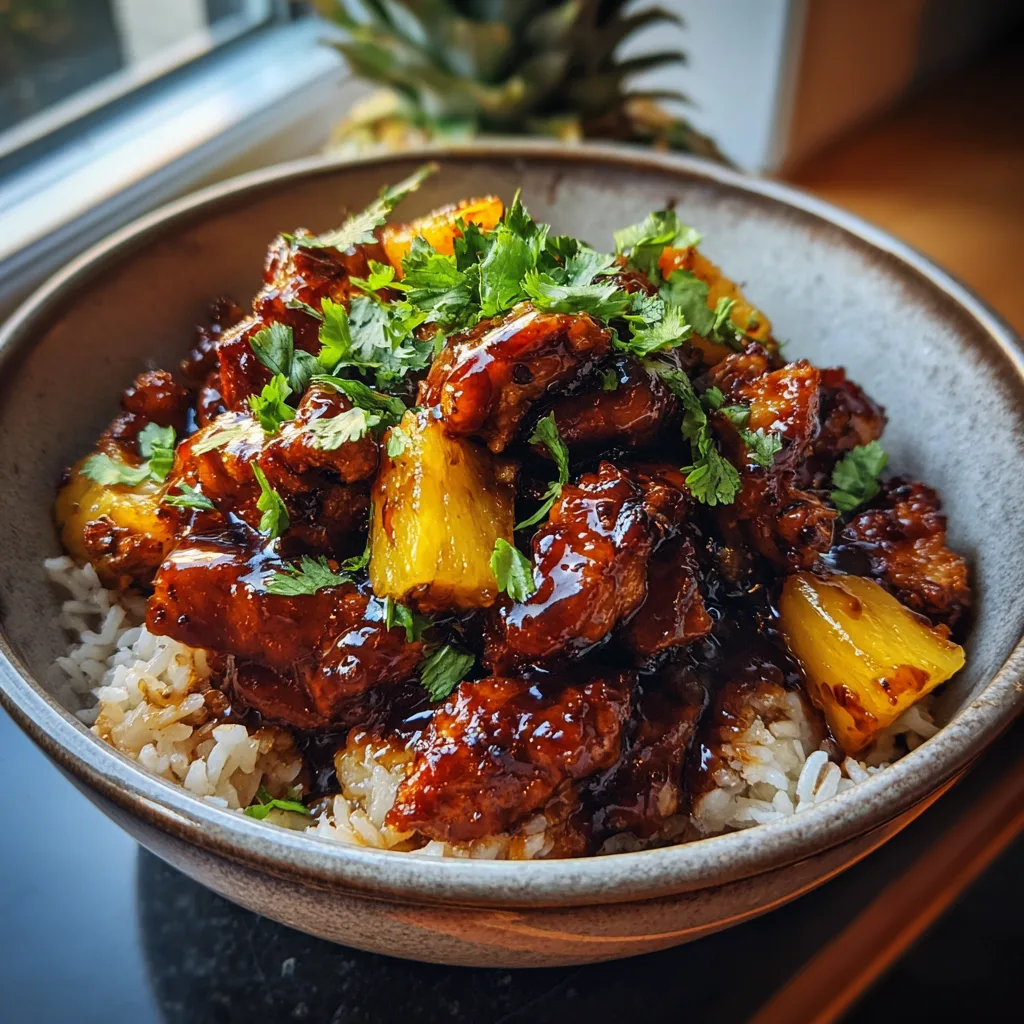
When it comes to garnishes, contrast is key. The dish is heavy, sweet, and rich. You need elements that are fresh, bright, and crunchy to balance it out. As seen in the inspiration image, fresh cilantro is non-negotiable for many (unless you have the soap-tasting gene, in which case, thinly sliced green onions are a perfect substitute). The cilantro provides a grassy, citrusy lift that refreshes the palate between heavy, meaty bites. A squeeze of fresh lime juice over the top just before eating can also take the bowl to the next level.
7. Pro Tips for Meal Prep and Reheating 🍱
One of the best things about these Sticky Pineapple Pork Bowls is that they make absolutely phenomenal leftovers, making this recipe a holy grail for meal preppers.
The glaze actually deepens in flavor as it sits in the refrigerator overnight, marrying with the pork and pineapple. If you are meal-prepping, divide the rice and the pork mixture into airtight glass containers. Store the fresh cilantro separately, adding it only after you have reheated the meal, so it doesn’t wilt and turn black.
When reheating, rice can often become hard and dry in the microwave. The professional trick is to sprinkle a tablespoon or two of water directly over the rice and pork before covering the container loosely with a damp paper towel. Microwave on high for 2 minutes. The water will create steam, rehydrating the rice and loosening the sticky glaze back to its original, glorious, saucy consistency.
Conclusion: A Tropical Getaway in a Bowl 🌴
Creating restaurant-quality Asian-fusion dishes at home is not only possible; it is incredibly rewarding. These Sticky Pineapple Pork Rice Bowls prove that with a few pantry staples, a good cut of meat, and a little bit of technique, you can create a masterpiece that looks like a million bucks but takes under 40 minutes to pull together.
The beautiful, deep caramelization on the meat, the glossy, sweet-and-sour glaze, the juicy bursts of bright pineapple, and the fresh bite of cilantro all resting on a bed of comforting white rice create a culinary experience that hits every single flavor note. It is comforting yet vibrant, rich yet balanced. So, fire up your stove, start chopping that pineapple, and get ready to enjoy one of the most satisfying dinners you will cook this month. Happy cooking!
Sticky Pineapple Pork Bowls
Ingredients
Equipment
Method
- In a bowl, whisk together the soy sauce, brown sugar, pineapple juice, rice vinegar, garlic, and ginger until sugar is mostly dissolved.
- In a small separate bowl, whisk the cornstarch and cold water together to make a slurry. Set aside.
- Heat the vegetable oil in a large skillet over medium-high heat. Add the cubed pork and sear until browned on all sides, about 6-8 minutes. Drain excess fat if necessary.
- Add the pineapple chunks to the skillet and cook for 2-3 minutes until lightly caramelized.
- Pour the soy-pineapple sauce mixture over the pork and pineapple. Bring to a simmer and let bubble for 3 minutes.
- Stir the cornstarch slurry and pour it into the bubbling skillet. Stir constantly until the sauce is thick and glossy (about 1 minute). Remove from heat immediately.
- Divide the cooked rice among serving bowls. Top generously with the sticky pineapple pork.
- Garnish with fresh chopped cilantro and serve immediately.


