
🍜 Soul-Warming Spicy Miso Ramen with Ground Pork & Cabbage
There is a specific kind of hunger that only a steaming bowl of ramen can satisfy. It is not just about filling your stomach; it is about warming your soul from the inside out. While many of us associate ramen with the instant packets of our college days or the hours-long lines at trendy downtown noodle shops, the truth is that making incredible, restaurant-quality ramen at home is surprisingly accessible. This recipe for Spicy Miso Ramen with Ground Pork and Cabbage is the ultimate testament to that fact. It is a dish that bridges the gap between convenience and gourmet, offering deep, complex flavors in under 30 minutes.
At its heart, this bowl is a celebration of textures and bold flavors. The broth is a creamy, savory emulsion of chicken stock and fermented soybean paste (miso), spiked with the heat of chili oil. The toppings—seasoned ground pork, tender sweet cabbage, and soft carrots—transform it from a simple soup into a hearty, balanced meal. It is the perfect antidote to a cold winter evening, a rainy afternoon, or any day where you simply need a culinary hug.
🌟 The Origins and Evolution of Miso Ramen
To truly appreciate this dish, one must understand its roots. Ramen itself is a dish of Chinese origin that was adapted by Japan in the early 20th century, but Miso Ramen is a uniquely Japanese invention. It was born in the snowy northern island of Hokkaido, specifically in the city of Sapporo, around the mid-1950s. Legend has it that a customer at a noodle shop asked the chef to put noodles into his miso soup, and a star was born.
Before this innovation, ramen broths were primarily seasoned with salt (shio) or soy sauce (shoyu). The introduction of miso created a thicker, heartier, and more robust soup that was perfectly suited for Hokkaido’s harsh winters. The high fat content and the fermented complexity of the paste helped keep the soup hot and provided essential nutrients. This recipe pays homage to that tradition but adapts it for the modern home cook, using ground pork for speed and ease without sacrificing that essential richness.
🧬 The Science of Flavor: Why Miso Matters
The secret weapon in this recipe is, undeniably, the miso. Miso is a traditional Japanese seasoning produced by fermenting soybeans with salt and kōji (the fungus Aspergillus oryzae) and sometimes rice, barley, sea weed, or other ingredients. The result is a thick paste used for sauces and spreads, pickling vegetables, or meats, and mixing with dashi soup stock to serve as miso soup.
The Umami Bomb: Miso is packed with glutamate, the amino acid responsible for the savory taste known as umami. When you dissolve miso into chicken or pork broth, you are essentially layering umami on top of umami. This creates a “synergistic effect” where the perceived savoriness is magnified far beyond what the ingredients could achieve individually.
Red vs. White: For this specific recipe, we recommend a mix or a Red Miso (Aka Miso). White Miso (Shiro Miso) is fermented for a shorter time and is sweeter and milder. Red Miso is fermented longer, resulting in a darker color and a saltier, funkier, more assertive flavor that stands up well to the spicy pork and the rich oils in this ramen. If you are unsure, look for “Awase Miso,” which is a pre-mixed blend of both.
🐷 The Protein: Why Ground Pork?
While thick slices of Chashu (braised pork belly) are the poster child for ramen toppings, ground pork is the unsung hero of the home cook. It offers several distinct advantages:
- Surface Area: Ground meat has a massive surface area compared to a solid block of meat. This means more room for browning (the Maillard reaction), which equals more flavor. When you sauté the pork with ginger, garlic, and chili paste, every single granule of meat becomes a flavor carrier.
- Texture: The ground pork integrates into the soup. Instead of eating the meat separately from the noodles, the pork clings to the noodles as you slurp, ensuring a perfect bite of meat, broth, and carb every time.
- Speed: Braising pork belly takes hours. Browning ground pork takes 5 minutes. For a weeknight dinner, the choice is obvious.
🥬 Vegetables: More Than Just Garnish
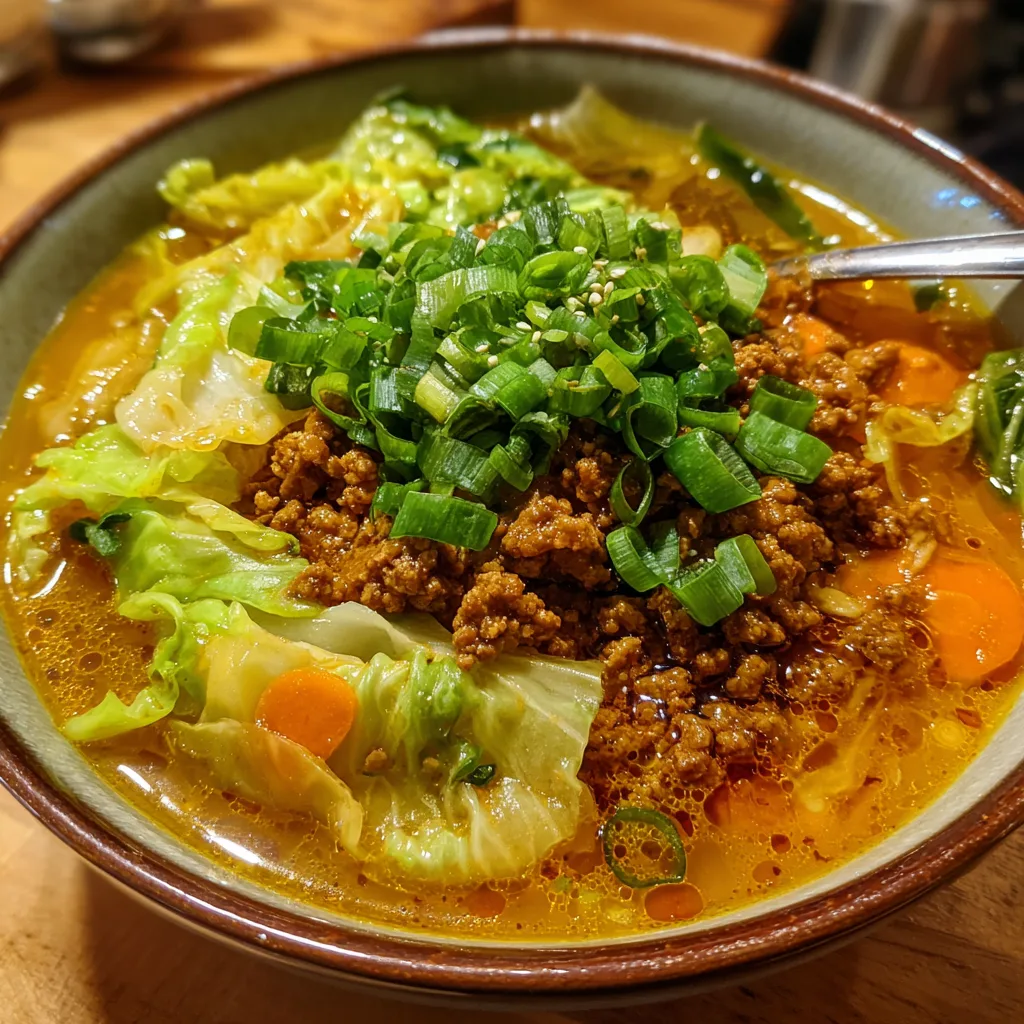
In many ramen styles, vegetables are an afterthought—a lone sheet of nori or a few bamboo shoots. In this Miso Ramen, vegetables are a main event. The image shows a generous amount of cabbage and carrots, and this is strategic.
Cabbage: When simmered in the broth, cabbage softens but retains a slight crunch. Its natural sweetness provides a necessary counterpoint to the salty miso and spicy chili. It adds bulk and nutrition, making the bowl feel substantial without being overly heavy.
Carrots: Similarly, carrots add earthy sweetness and a pop of color. The key is slicing them thin enough so they cook through quickly in the broth but thick enough to hold their shape.
Aromatics: The heap of fresh green onions (scallions) on top provides a sharp, fresh bite that cuts through the rich, fatty broth. The sesame seeds add a nutty aroma and a subtle texture contrast.
🛒 Ingredients Breakdown
To recreate this masterpiece, you will need to assemble the following. Do not be intimidated; most of these are pantry staples or easily found in the international aisle.
The Broth Base:
- – Aromatics: Fresh ginger and garlic. These form the aromatic foundation. Use fresh, not powdered, for the best “zing.”
- – Spicy Element: Doubanjiang (Spicy Bean Paste) is traditional for this style, but Sambal Oelek or a good Chili Garlic Sauce works perfectly fine.
- – Liquid: High-quality chicken stock (low sodium, so you can control the saltiness with the miso). Unsweetened soy milk is a secret ingredient often used in Japan to add creaminess to the broth without dairy.
- – Miso: Red or Awase miso paste.
- – Seasonings: Soy sauce, sesame oil, and a pinch of sugar to balance the heat.
The Solids:
- – Noodles: Fresh ramen noodles found in the refrigerated section are best. In a pinch, high-quality dried ramen (not the instant fried block kind) works well. Even spaghetti treated with baking soda can mimic the texture!
- – Meat: Ground pork is traditional, but ground chicken or turkey works for a lighter version. Plant-based ground meat is also excellent here as the strong flavors mask any “alternative” taste.
- – Veg: Green cabbage or Napa cabbage, chopped into bite-sized pieces. Carrots, sliced into coins or half-moons.
- – Toppings: Green onions, sesame seeds, and chili oil (La Yu).
🔥 Step-by-Step Instructions
This recipe moves fast, so mise en place (having everything chopped and ready) is crucial.
Spicy Miso Ramen with Ground Pork
Ingredients
Equipment
Method
- Bring a large pot of water to a boil for the noodles. Cook noodles according to package instructions, drain, rinse with cold water, and set aside.
- In a heavy soup pot, heat sesame oil over medium-high heat. Add ground pork and cook until browned and crispy.
- Add minced garlic, ginger, and spicy bean paste. Sauté for 1-2 minutes until fragrant.
- Add chopped cabbage and carrots. Stir fry for 2 minutes until cabbage begins to soften.
- Pour in the chicken broth and bring to a simmer. Cook for 5 minutes or until carrots are tender.
- Reduce heat to low. In a ladle or small bowl, dissolve the miso paste with a little hot broth, then stir it back into the pot. Add soy sauce and sugar.
- Divide noodles into bowls. Ladle the hot soup, pork, and vegetables over the noodles.
- Garnish generously with green onions, sesame seeds, and chili oil.
Notes
- Prep the Vegetables: Slice your carrots thinly and chop the cabbage into 1-inch squares. Finely mince the garlic and ginger. Slice the green onions, separating the white parts from the green tops.
- Cook the Noodles: Bring a large pot of water to a boil. Cook your ramen noodles according to the package instructions. Drain them and rinse briefly under cold water to stop the cooking and remove excess starch. Set aside. (Tip: If you time it right, you can cook noodles while the soup simmers).
- Brown the Pork: In a heavy-bottomed pot or Dutch oven, heat a tablespoon of sesame oil over medium-high heat. Add the ground pork. Break it up with a spoon and cook until it is browned and crispy in spots. This browning is essential for flavor!
- Bloom the Aromatics: Add the minced garlic, ginger, and the white parts of the green onions to the pork. Sauté for 1 minute until fragrant. Add the chili paste (Doubanjiang or Sambal) and stir constantly for another minute. Frying the paste “blooms” the spices and deepens the color.
- Simmer the Veggies: Toss in the carrots and cabbage. Stir fry them with the meat mixture for 2-3 minutes until the cabbage begins to wilt slightly.
- Build the Broth: Pour in the chicken stock. Bring the mixture to a simmer. Let it bubble gently for 5 minutes to ensure the carrots are tender.
- The Miso Finish: Crucial Step: Turn the heat down to low. You never want to boil miso vigorously as it destroys the delicate probiotics and aroma. Place your miso paste in a ladle or small bowl. Spoon some hot broth into it and whisk until smooth (to avoid clumps). Pour this miso slurry back into the pot. Stir in the soy sauce and sugar. Taste and adjust—add more chili if you want heat, or a splash of water if it’s too salty.
- Assemble: Divide the cooked noodles between bowls. Ladle the hot broth, pork, and vegetables generously over the noodles.
- Garnish: Top with a mountain of fresh green onion tops and a sprinkle of sesame seeds. Drizzle with extra chili oil if you dare.
💡 Expert Tips for the Perfect Bowl
The “Tare” Concept
In professional ramen shops, the salty seasoning base (Tare) is kept separate from the stock. In this home version, we mix them, but the principle remains: taste your broth before adding the noodles. It should taste slightly too salty on its own because the unseasoned noodles will dilute the flavor profile once added.
Noodle Timing
Ramen waits for no one. The noodles will continue to absorb broth and soften as they sit (a tragedy known as nobiru). Ensure your family or guests are seated and ready to eat the moment the broth hits the noodles.
Optional Add-Ins
While the image shows a pork-and-veggie focus, you can easily customize this:
- Corn and Butter: A classic Sapporo addition. A pat of salted butter and a scoop of sweet corn kernels add a creamy sweetness that pairs divinely with spicy miso.
- Ramen Egg (Ajitsuke Tamago): A soft-boiled egg marinated in soy and mirin is a standard topping that adds richness.
- Mushrooms: Wood ear mushrooms (Kikurage) add a lovely crunch, while Shiitakes add more umami.
🥡 Storage and Reheating
Separation is Key: If you anticipate leftovers, do not combine the noodles and broth in the storage container. Store the broth/pork/veggie mixture in one container and the cooked noodles in another (tossed with a little oil to prevent sticking). If stored together, the noodles will drink all the broth and turn into a soggy mush by morning.
Reheating: Reheat the broth on the stove until simmering. You can reheat the noodles by dipping them in boiling water for 30 seconds or simply dropping them into the hot broth for the last minute of heating.
✨ Conclusion
This Spicy Miso Ramen with Ground Pork is a powerful reminder that “fast food” doesn’t have to mean compromised quality. It is a dish of layers—the chew of the noodle, the crunch of the cabbage, the savory depth of the pork, and the spicy, enveloping warmth of the broth. It invites you to slow down, lean over the bowl, and savor the complex harmony of flavors. So, put down the phone, pick up a spoon (or chopsticks), and let this homemade masterpiece transport you to a cozy noodle shop in Hokkaido.


