
The Golden Hour: Mastering the Italian Lemon Olive Oil Cake
There is a quiet elegance to a cake that requires no frosting, no layers, and no fuss. The Italian Lemon Olive Oil Cake is the embodiment of “la dolce vita”—the sweet life found in simplicity. With its golden crust, impossibly moist crumb, and a scent that captures the essence of a Mediterranean grove, this cake is not just a dessert; it is a sensory escape.
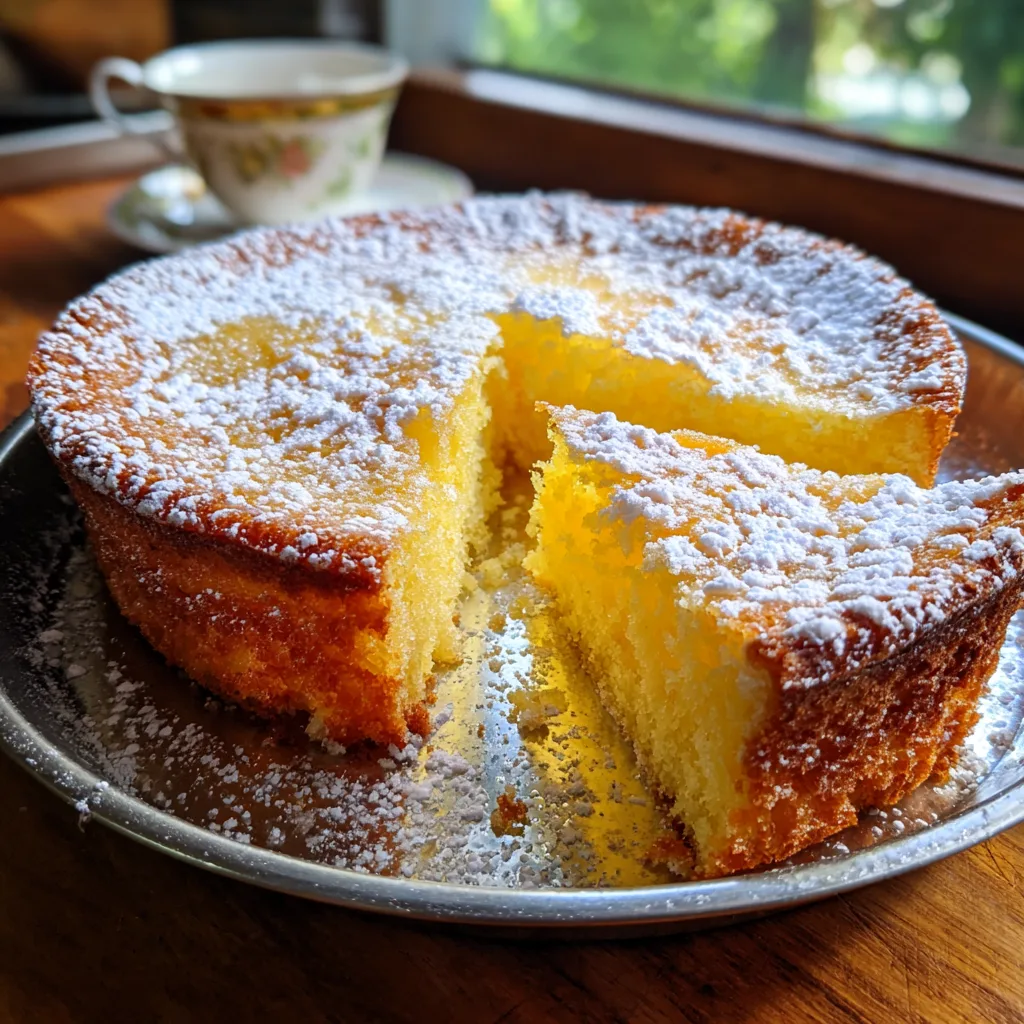
The image above captures a moment of pure culinary serenity. The cake sits proudly on a silver platter, its surface dusted with a snowfall of powdered sugar that clings to the caramelized edges. A single slice reveals a vibrant, yellow interior that promises a texture far superior to any butter-based sponge. Bathed in the soft light of a window, with a delicate tea cup waiting in the background, this scene invites us to slow down, to breathe in the citrus aroma, and to savor a slice of sunshine.
In this extensive guide, we will explore why olive oil is the baker’s secret weapon, how to select the perfect ingredients, and the step-by-step method to achieve that characteristic dense-yet-light texture. We will journey through the history of Mediterranean baking and uncover the science that keeps this cake fresh for days.
Why Olive Oil Reigns Supreme in Baking
For many, the idea of using olive oil—a staple of savory cooking—in a sweet cake seems counterintuitive. We are conditioned to believe that butter is the king of pastry. While butter provides flavor, olive oil provides longevity and texture.
1. The Moisture Factor:
Butter is roughly 80% fat and 20% water. When a butter cake cools, the fat returns to a solid state, which can lead to a dry or firm crumb. Olive oil, however, is 100% liquid fat. It remains liquid at room temperature. This means that an olive oil cake stays incredibly moist and tender long after it has left the oven. In fact, many bakers argue that this cake is better on the second or third day, as the flavors meld and the crumb softens further.
2. The Flavor Profile:
Butter tastes like… butter. It is creamy and rich. Olive oil, on the other hand, is a fruit juice. It carries complex notes—grassy, fruity, peppery, or floral—depending on the variety. In this recipe, the fruitiness of the oil acts as a bridge, connecting the floral notes of the vanilla with the sharp acidity of the lemon. It creates a sophisticated flavor profile that is not just “sweet,” but aromatic.
3. A Healthier Indulgence:
While cake is still a treat, swapping saturated animal fats for heart-healthy monounsaturated fats is a choice your body will appreciate. It creates a lighter mouthfeel, meaning you don’t feel as weighed down after enjoying a slice with your afternoon tea.
Ingredients
The beauty of this recipe lies in its pantry staples. However, because there are so few ingredients, the quality of each one matters immensely.
- – 1 ½ cups All-Purpose Flour (or cake flour for a finer crumb)
- – 1 cup Granulated White Sugar
- – ½ tsp Baking Powder
- – ½ tsp Baking Soda
- – ¼ tsp Fine Sea Salt
- – 3 Large Eggs (room temperature)
- – ¾ cup Extra Virgin Olive Oil (high quality, fruity variety)
- – ½ cup Whole Milk or Plain Greek Yogurt (for tang)
- – 2 tbsp Fresh Lemon Zest (approx. 2 lemons)
- – ¼ cup Freshly Squeezed Lemon Juice
- – 1 tsp Pure Vanilla Extract
- – Powdered Sugar (for dusting)
Instructions
This is a “one-bowl” style cake that comes together quickly. The key is in the emulsification of the liquids.
Italian Lemon Olive Oil Cake
Ingredients
Equipment
Method
- Preheat oven to 350°F (175°C). Grease a 9-inch round pan and line the bottom with parchment paper.
- In a large bowl, rub the lemon zest into the granulated sugar with your fingertips until fragrant.
- Whisk in eggs until pale. Slowly stream in olive oil while whisking to emulsify. Add milk, lemon juice, and vanilla.
- In a separate bowl, whisk flour, baking powder, baking soda, and salt. Fold into the wet ingredients until just combined.
- Pour batter into pan and bake for 40-50 minutes, or until a tester comes out clean.
- Cool in pan for 15 minutes, then transfer to a wire rack to cool completely.
- Dust generously with powdered sugar before serving.
Notes
- Prep the Oven and Pan:
Preheat your oven to 350°F (175°C). Grease a 9-inch round cake pan (springform is best) with a little olive oil. Line the bottom with a circle of parchment paper. This ensures the cake releases perfectly without tearing the beautiful bottom crust. - The “Lemon Sugar” Technique:
Place the granulated sugar in a large mixing bowl. Add the fresh lemon zest. Using your fingertips, rub the zest into the sugar for about 1-2 minutes. The friction releases the essential oils from the zest, turning the sugar damp, yellow, and incredibly fragrant. This step infuses the lemon flavor throughout the entire batter, rather than just having specks of zest. - Whisk the Wet Ingredients:
Crack the eggs into the lemon sugar. Whisk vigorously for about 2 minutes until the mixture is pale and frothy. Slowly stream in the olive oil while whisking constantly. This creates an emulsion (like making mayonnaise), ensuring the oil doesn’t separate during baking. Whisk in the milk (or yogurt), lemon juice, and vanilla extract. - Incorporate the Dry Ingredients:
In a separate small bowl, whisk together the flour, baking powder, baking soda, and salt. (Sifting is recommended to avoid lumps). Add the dry ingredients to the wet mixture in two batches. Whisk gently until just combined. Do not overmix. Stop as soon as you see no more flour streaks. Overmixing will develop gluten and make the cake rubbery. - The Bake:
Pour the batter into the prepared pan. Tap the pan gently on the counter twice to release large air bubbles. Bake for 40–50 minutes. The top should be a deep golden brown and slightly domed. A toothpick inserted into the center should come out clean or with a few moist crumbs attached. - Cooling:
Let the cake cool in the pan for 15 minutes. Run a thin knife around the edge to loosen it, then remove the ring (if using springform) or invert onto a wire rack. Let it cool completely before serving. - The Finish:
Just before serving, place a generous amount of powdered sugar in a sieve and dust the top of the cake until it looks like a snowy landscape. Slice and serve.
The Art of Selecting Olive Oil
The most common question regarding this cake is: “Will it taste like salad dressing?” The answer depends entirely on the oil you choose.
Extra Virgin is Essential
Always use Extra Virgin Olive Oil (EVOO). Light or “pure” olive oils are chemically refined and lack the nuanced flavor we want. However, not all EVOOs are created equal.
The Flavor Spectrum
Robust/Peppery: These oils often come from Tuscany. They have a spicy kick in the back of the throat. While delicious on a steak, they can be overwhelming in a delicate lemon cake. Avoid these unless you want a savory undertone.
Fruity/Buttery: These oils often come from Liguria (Italy), Spain (Arbequina olives), or California. They are smooth, golden, and taste of almonds and ripe olives. This is what you want. A buttery olive oil complements the vanilla and citrus perfectly.
Troubleshooting Your Bake
Even simple recipes have their quirks. Here is how to ensure perfection every time.
My Cake Sank in the Middle!
This usually happens for two reasons: underbaking or opening the oven door too early. Olive oil cakes are heavy. They need time to set the internal structure. Do not open the oven door until at least 35 minutes have passed.
The Texture is Too Dense/Gummy.
This is a sign of overmixing. When you add the flour, switch from a whisk to a spatula if you are heavy-handed. Fold gently. Alternatively, your baking powder might be expired. Always check freshness.
Variations on a Theme
Once you have mastered the lemon version, the base recipe is a canvas for other flavors.
1. Blood Orange & Rosemary:
Swap the lemon zest and juice for blood orange. Add 1 teaspoon of finely chopped fresh rosemary to the sugar step. The piney aroma of rosemary pairs beautifully with the floral orange and earthy oil.
2. Almond & Amaretto:
Replace ½ cup of the flour with almond flour. Add a splash of Amaretto liqueur instead of vanilla. Top with sliced toasted almonds before baking.
3. The “Polenta” Twist:
Substitute ½ cup of flour for fine cornmeal (polenta). This adds a delightful crunch and a beautiful yellow hue, making the cake feel even more rustic and Italian.
Serving Suggestions: The Afternoon Tea Context
As suggested by the tea cup in the photo, this cake is the ideal companion for a hot beverage.
Tea Pairings:
An Earl Grey with its bergamot oil mirrors the citrus in the cake. A Chamomile tea highlights the honeyed notes of the olive oil. For a robust contrast, an English Breakfast cuts through the richness.
Accompaniments:
While the cake is perfect on its own, you can dress it up for a dinner party.
Whipped Ricotta: Whip fresh ricotta cheese with a little honey and vanilla until fluffy. Serve a dollop on the side.
Macerated Berries: Toss strawberries or raspberries in sugar and let them sit for 20 minutes until syrupy. The red fruit contrasts visually and flavor-wise with the yellow cake.
Storage and Longevity
This cake is the traveler’s best friend. Because it contains no dairy cream or butter, it is shelf-stable at room temperature.
The “Better with Age” Phenomenon:
Wrap the cake in plastic wrap or store it under a glass dome. It will stay soft for up to 5 days. You will notice that on Day 2, the crust softens slightly and becomes sticky—this is a delicious characteristic of sugar and oil interacting.
Freezing:
This cake freezes exceptionally well. Wrap individual slices in plastic wrap and then foil. Thaw at room temperature for an hour, and it will taste as if it was baked that morning.
Conclusion: A Slice of Sunshine
In a world of complex, multi-layered, fondant-covered confections, the Italian Lemon Olive Oil Cake stands as a testament to the power of restraint. It doesn’t need to shout to be heard. Its beauty lies in its golden hue, its aromatic zest, and the way it melts on the tongue.
Whether you are baking for a solitary afternoon of reading by the window or hosting friends for a garden brunch, this cake brings a warmth that transcends the season. It is a recipe that asks for little but gives so much in return. So, find your best olive oil, zest your brightest lemons, and prepare to fill your kitchen with the scent of the Mediterranean.


