
The Ultimate Gourmet Sushi Cake: A Show-Stopping Salmon & Avocado Masterpiece 🍣
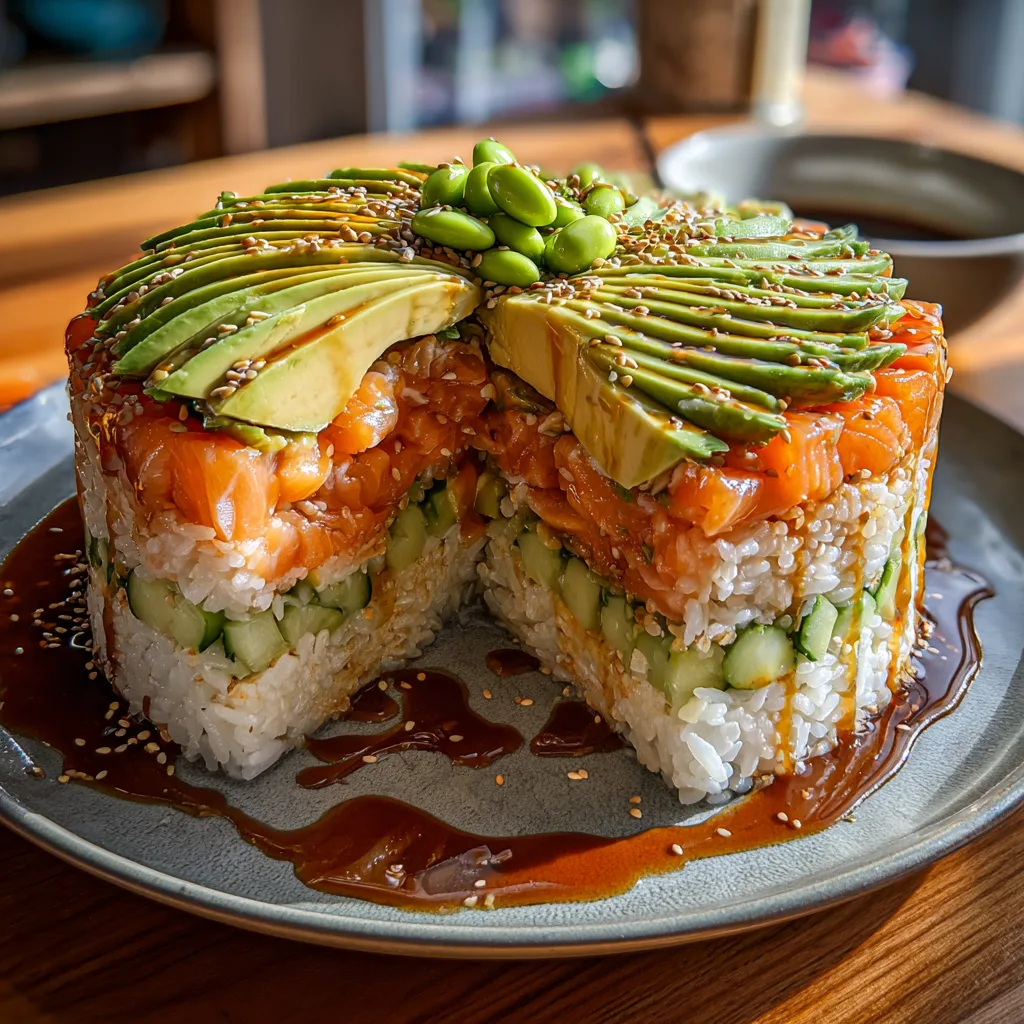
If you have ever felt intimidated by the delicate art of rolling maki or forming nigiri, prepare to have your culinary world revolutionized. Enter the Sushi Cake—a visually stunning, architecturally impressive, and incredibly delicious deconstruction of your favorite Japanese flavors. This isn’t just a meal; it is a centerpiece, a conversation starter, and a celebration of texture and taste that requires absolutely no bamboo mats or rolling skills.
Imagine the perfect bite of sushi: the vinegared tang of sticky rice, the buttery richness of fresh salmon, the cool crunch of cucumber, and the creamy finish of ripe avocado. Now, imagine that scaled up into a decadent, sliceable cake that feeds a crowd (or just a very hungry duo). This recipe takes the “poke bowl” concept and elevates it into fine dining territory with a presentation that looks like it came straight from a high-end Tokyo fusion restaurant.
In this comprehensive guide, we will walk you through sourcing the safest fish, perfecting the sticky rice, and layering your cake to prevent structural collapse. Whether you are hosting a dinner party, planning a romantic date night, or simply craving high-quality seafood, this Sushi Cake is your ticket to gastronomic bliss.
Why You Need This Recipe in Your Repertoire 🌟
There are countless reasons why the Sushi Cake has become a viral sensation on social media and a favorite among home cooks. It bridges the gap between “fast food” and “gourmet dining” in a way few other dishes can.
1. Maximum Impact, Minimum Effort: The “wow” factor of this dish is undeniable. When you bring this out to the table, jaws will drop. Yet, the actual process is simply chopping and layering. It is essentially a savory lasagna made with cold ingredients. There is no baking, no complex sautéing, and no rolling.
2. Customizable Layers: While we are using salmon and avocado today—the classic crowd-pleasers—this format is incredibly forgiving. You can swap salmon for spicy tuna, cooked shrimp, crab salad (surimi), or even marinated tofu for a vegetarian option. The possibilities are limited only by your imagination.
3. Perfect for Sharing: Sushi rolls can be fiddly to share, and ordering enough for a party gets expensive quickly. A sushi cake is designed to be sliced like a pizza or a dessert cake, making portioning easy and communal eating fun.
The Art of Perfect Sushi Rice 🍚
The foundation of any good sushi dish—cake included—is the rice. Do not treat this as an afterthought. “Sushi” actually refers to the vinegar rice, not the fish. If your rice is bland or mushy, the whole cake fails.
You need short-grain Japanese rice (often labeled as sushi rice). This variety has a higher starch content (amylopectin), which allows the grains to stick together, a crucial structural element for our cake. Long-grain rice like Jasmine or Basmati will fall apart when you remove the mold.
The Seasoning Ratio: The magic happens after cooking. You must fan the hot rice while folding in a mixture of rice vinegar, sugar, and salt. This creates that glossy sheen and the addictive sweet-tart flavor profile that cuts through the fatty richness of the salmon and avocado.
Sourcing Sashimi-Grade Fish 🐟
Since we are eating raw fish in this recipe, safety is paramount. You cannot simply buy a standard fillet from the supermarket counter and eat it raw. Here is what you need to look for:
- “Sashimi Grade” or “Sushi Grade”: While this is not a federally regulated term in many countries, it generally indicates the fish has been flash-frozen at extremely low temperatures (-4°F or lower for 7 days) to kill parasites.
- Ask the Fishmonger: Go to a reputable fish market. Tell them you intend to eat it raw. They will guide you to the safe cuts.
- Smell Test: Fresh fish should smell like the ocean, not “fishy” or sour. The flesh should be firm and bounce back when pressed, not mushy.
Gourmet Salmon & Avocado Sushi Cake
Ingredients
Equipment
Method
- Rinse rice thoroughly until water runs clear. Cook in rice cooker or pot with water.
- Whisk vinegar, sugar, and salt together. Fold into hot cooked rice. Let cool slightly.
- Mix cubed salmon with mayo, sriracha, soy sauce, and sesame oil. Refrigerate for 10 mins.
- Place ring mold on plate. Press half the rice firmly into the bottom.
- Add a layer of diced cucumber, followed by the remaining rice. Press down firmly.
- Spread the marinated salmon mixture over the top rice layer.
- Arrange avocado slices on top and garnish with edamame.
- Remove ring mold carefully. Drizzle with unagi sauce and sprinkle sesame seeds before serving.
Notes
Ingredients
To assemble this architectural beauty, you will need the following components. Measurements are precise to ensure the perfect balance of flavor.
For the Sushi Rice Base
- – 2 cups short-grain sushi rice (uncooked)
- – 2.5 cups water (for cooking)
- – 1/3 cup rice vinegar
- – 2 tablespoons white sugar
- – 1 teaspoon sea salt
For the Spicy Salmon Layer
- – 1 lb (450g) fresh salmon sashimi-grade, skin removed and cut into small cubes
- – 2 tablespoons Japanese mayonnaise (Kewpie brand is best)
- – 1 tablespoon Sriracha sauce (adjust for heat)
- – 1 teaspoon sesame oil
- – 1 tablespoon soy sauce
- – 1 green onion, finely chopped
For the Vegetable Layers & Toppings
- – 2 ripe avocados, thinly sliced
- – 1 large English cucumber, seeded and diced into small cubes
- – 1/2 cup shelled edamame beans (steamed)
- – 2 tablespoons toasted sesame seeds (white or black)
- – Unagi sauce (Eel sauce) or Teriyaki glaze for drizzling
- – Pickled ginger and Wasabi (for serving)
Instructions
Follow these steps carefully to construct your masterpiece. You will need a springform pan (6-inch or 8-inch) or a ring mold. If you don’t have one, you can line a round bowl with plastic wrap and invert it later.
- Prepare the Rice: Rinse the sushi rice under cold water in a fine-mesh sieve. Repeat this process 3-4 times until the water runs clear. This removes excess starch. Cook the rice in a rice cooker or on the stove with the 2.5 cups of water.
- Season the Rice: While the rice is cooking, whisk together the rice vinegar, sugar, and salt in a small bowl until dissolved. Once the rice is done, transfer it to a large, wide bowl (wooden is traditional). Pour the vinegar mixture over the hot rice. Use a paddle to gently “cut” and fold the rice to mix, while fanning it to cool it down. Cover with a damp cloth to keep it from drying out.
- Marinate the Salmon: In a medium bowl, combine the cubed salmon, Kewpie mayo, Sriracha, sesame oil, soy sauce, and green onions. Mix gently until the salmon is evenly coated. Place in the fridge to marinate for 10 minutes while you prep the veggies.
- Prep the Veggies: Slice your avocados thinly. To prevent browning, you can squeeze a little lemon juice on them. Dice the cucumber, ensuring you remove the watery seeds so your cake doesn’t get soggy.
- Assemble – Layer 1 (Rice): Place your ring mold or springform pan ring on the serving plate. Wet your hands with water (to prevent sticking) and press half of the seasoned sushi rice into the bottom of the mold. Press down firmly to create a solid base.
- Assemble – Layer 2 (Cucumber): Spread the diced cucumber evenly over the rice layer. Press down gently.
- Assemble – Layer 3 (Rice): Add the remaining sushi rice on top of the cucumber. Again, wet your hands and press down firmly to compact the layers.
- Assemble – Layer 4 (Salmon): Spoon the marinated salmon mixture over the second layer of rice. Spread it out to the edges.
- Top the Cake: Arrange the avocado slices in a beautiful fan pattern covering the salmon. Pile the steamed edamame in the center of the cake for height and color contrast.
- The Reveal: Carefully lift the ring mold straight up. If it feels stuck, run a thin knife around the inside edge first.
- Garnish & Serve: Generously drizzle unagi sauce or thick teriyaki over the avocado and down the sides of the cake. Sprinkle with toasted sesame seeds. Serve immediately with soy sauce, ginger, and wasabi on the side.
Expert Tips for Stability and Flavor 🏗️
The “Press” is Key: The most common mistake beginners make is not pressing the rice layers firmly enough. There are air pockets in the rice that need to be compressed. If you are too gentle, the cake will crumble when you slice it. Use a flat-bottomed glass or a specialized rice press if you have one.
Temperature Matters: Sushi rice should be served at room temperature or slightly warm—never ice cold. However, the raw fish must be cold. The contrast is delightful. If you make this ahead, the rice will harden in the fridge. Ideally, assemble it just before serving.
Knife Skills: When it comes time to serve, use your sharpest chef’s knife. Dip the knife in warm water and wipe it clean between every single cut. This prevents the sticky rice and avocado from dragging and ruining the beautiful layers.
Variations to Try 🔄
The “California” Cake: Replace the raw salmon with real crab meat or surimi (imitation crab) mixed with mayo. Add a layer of mango for sweetness. This is perfect for those who are hesitant about raw fish.
The “Spicy Tuna” Crunch: Use high-quality tuna minced and mixed with chili oil and togarashi spice. Add crushed tempura flakes between the rice and tuna layer for an incredible textural crunch.
The Vegan Delight: Marinate tofu cubes or cooked beets in soy sauce and sesame oil. Use layers of shredded carrot, cucumber, and radish. Top with avocado and microgreens.
Serving Suggestions 🍽️
This Sushi Cake is a meal in itself, but if you are serving it as part of a larger spread, it pairs beautifully with:
- Miso Soup: A warm bowl of soup prepares the palate.
- Sunomono Salad: A vinegar-based cucumber salad adds acidity.
- Gyoza: Pan-fried dumplings provide a hot, savory contrast to the cold sushi.
- Sake or Green Tea: Crisp, dry cold sake or hot sencha tea are the traditional beverage pairings.
Conclusion
The Sushi Cake is more than just a recipe; it is an experience. It takes the familiar, comforting flavors of Japanese cuisine and presents them in a way that feels new, exciting, and celebratory. It is the perfect solution for the home cook who wants to impress without spending years training as a sushi chef. By layering fresh ingredients with care and attention, you create a dish that is as beautiful to look at as it is to eat. So, gather your friends, sharpen your knife, and get ready to slice into a masterpiece. Enjoy your culinary journey!


