
The Ultimate Authentic Chimichurri: The Green Gold of Argentina 🌿🥩
In the world of condiments, there are sauces that merely coat food, and then there are sauces that bring food to life. Chimichurri belongs to the latter category. This vibrant, herbaceous, uncooked sauce from Argentina is the undisputed king of steak companions, but to limit it to beef would be a culinary crime. It is a zesty, garlicky, slightly spicy magic potion that transforms roasted vegetables, grilled chicken, fresh bread, and even fried eggs into gourmet experiences.
In this deep dive, we are moving away from the pureed, emulsified green pastes you often find in grocery stores. We are making real Chimichurri. We will explore the history of the Gauchos, the chemistry of acid and fat, the debate between hand-chopping and food processing, and the secrets to keeping that emerald green color bright. Prepare your knife skills; we are about to make the freshest sauce of your life.
What is Chimichurri? A History of Flavor 🇦🇷
Chimichurri is the national condiment of Argentina and Uruguay. Traditionally, it is a loose oil-based sauce, not a mayonnaise-like emulsion. Its origins are often attributed to the Gauchos (Argentinian cowboys) who used dried herbs to flavor their meat over open fires on the pampas.
The flavor profile is distinct:
Herbaceous: Dominated by fresh flat-leaf parsley and oregano.
Pungent: Heavy on fresh garlic.
Acidic: Sharp red wine vinegar cuts through the fat of grilled meats.
Spicy: A kick from red pepper flakes (aji molido).
Rich: High-quality olive oil ties it all together.
The Great Debate: Hand Chopped vs. Food Processor 🔪
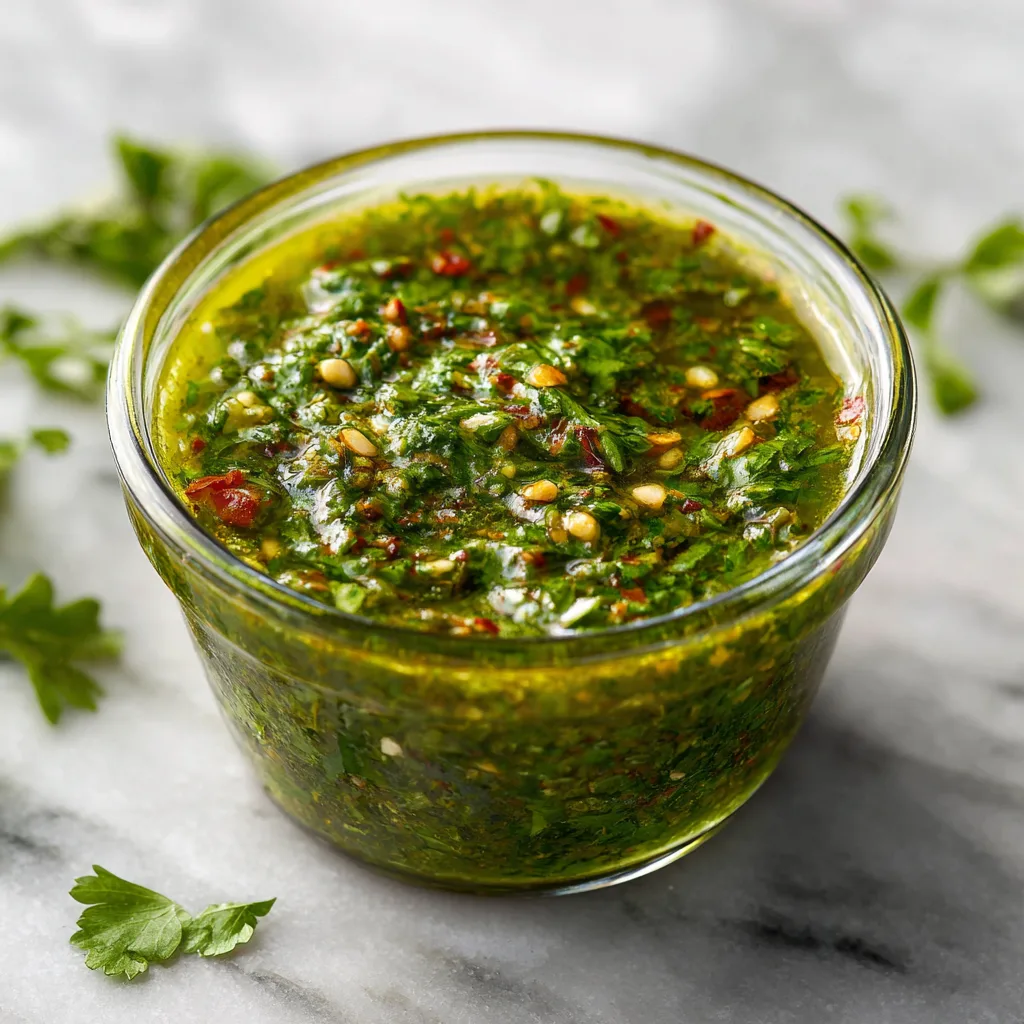
Before we touch an ingredient, we must address texture. If you look at the image above, you will see distinct pieces of parsley, visible flakes of chili, and separate bits of garlic. This is the hallmark of a proper Chimichurri.
The Case for Hand Chopping
Authentic Chimichurri should be hand-chopped. When you use a knife, you slice cleanly through the herb’s cell walls. This releases flavor without bruising the leaves. The result is a sauce with beautiful texture—a “spoonable” relish rather than a smoothie.
The Risk of the Food Processor
If you put these ingredients in a blender or food processor, you risk oxidizing the herbs. The high-speed blades bruise the parsley, causing it to turn a dark, muddy swamp green rather than a bright emerald. Furthermore, the oil and vinegar will emulsify into a thick, opaque sludge. While still edible, it lacks the rustic elegance and the mouthfeel of the traditional version.
Verdict: Take the extra 5 minutes and use your knife. It makes all the difference.
Ingredients 🛒
The quality of your ingredients defines this sauce.
Authentic Argentinian Chimichurri
Ingredients
Equipment
Method
- Wash and thoroughly dry the parsley to prevent a watery sauce.
- Finely hand-chop the parsley and fresh oregano. Mince the garlic cloves.
- Place herbs, garlic, red pepper flakes, salt, and pepper into a glass jar or bowl.
- Add the red wine vinegar and mix lightly. Let stand for 5-10 minutes to soften the garlic.
- Pour in the extra virgin olive oil and stir gently to combine.
- Let the sauce sit at room temperature for at least 30 minutes before serving to allow flavors to meld.
Notes
- – 1 cup fresh flat-leaf parsley, firmly packed (avoid curly parsley; it lacks the right texture)
- – 3-4 cloves fresh garlic (do not use jarred garlic; the raw bite is essential)
- – 2 tablespoons fresh oregano leaves (or 2 teaspoons dried oregano if fresh isn’t available)
- – 1/3 cup extra virgin olive oil (use a good quality oil as you will taste it distinctly)
- – 2 tablespoons red wine vinegar (this is the traditional acid; lemon juice is not authentic)
- – 1/2 teaspoon red pepper flakes (adjust for heat)
- – 1/2 teaspoon coarse Kosher salt
- – 1/4 teaspoon freshly cracked black pepper
- – Optional: 1 tablespoon finely minced red onion or shallot for extra crunch
Instructions 👩🍳
Follow these steps for the perfect rustic texture.
- Prep the Herbs: Wash the parsley thoroughly and dry it completely. Wet parsley will make your sauce watery and prevent the oil from coating the leaves. Remove the thick stems, but tender stems are fine. Finely chop the parsley leaves by hand. Do the same for the fresh oregano if using.
- Mince the Aromatics: Peel the garlic cloves and mince them as finely as possible. If you are using a red onion or shallot, mince that now as well to the same size as the garlic.
- Combine Dry Ingredients: In a medium glass jar or bowl (like the one in the photo), combine the chopped parsley, oregano, minced garlic, red pepper flakes, salt, and black pepper. Give it a quick toss.
- The Acid Wash: Pour the red wine vinegar over the herb mixture. Pro Tip: Let this sit for 5-10 minutes before adding the oil. This technique allows the acid to break down the garlic’s harshness and rehydrate the dried spices (if using dried oregano or chili flakes).
- Add the Fat: Pour in the extra virgin olive oil. Stir gently with a spoon to combine. Do not whisk vigorously; you want the oil and vinegar to separate slightly on the plate.
- The Most Important Step – Rest: While you can eat it immediately, Chimichurri gets significantly better after sitting at room temperature for at least 30 minutes. This allows the flavors to meld.
The Science of “The Rest” ⏳
Why does Chimichurri taste better the next day? It comes down to diffusion. Initially, the garlic is sharp and biting, and the vinegar is distinct. Over time, the oil absorbs the fat-soluble flavor compounds from the garlic and the chili flakes. The vinegar softens the herbs. The result is a sauce where the heat, acid, and earthiness are harmonized.
However, there is a limit. After about 24-48 hours, the fresh acids in the parsley will begin to break down due to the vinegar, and the bright green color will fade to an olive drab. While it will still taste good, it won’t look as vibrant.
Variations: Making it Your Own 🔄
While purists might frown, cooking is about personal taste. Here are common variations:
Chimichurri Rojo (Red Chimichurri)
Add smoked paprika and roasted red peppers (finely chopped) to the mix. This version is smokier and pairs exceptionally well with pork.
The Cilantro Twist
If you love cilantro, swap half the parsley for cilantro. This pushes the flavor profile slightly towards a “Peco” or salsa verde vibe, which is delicious on tacos or fish.
The Lemon Zest
While not traditional, adding the zest of one lemon adds a floral citrus note that lifts the heavy garlic flavor. Avoid adding the lemon juice if you want to keep it traditional, as the acid profile is different from vinegar.
Serving Suggestions: Beyond Steak 🍽️
Yes, flank steak and skirt steak are the classic pairings. But this “liquid gold” is versatile.
- Breakfast: Drizzle over fried eggs or avocado toast. The acidity cuts through the creamy yolk.
- Vegetarian: Toss with roasted potatoes or cauliflower. The oil crisps up the veggies while the herbs add freshness.
- Marinade: Use it as a marinade for chicken or shrimp. The vinegar tenderizes the meat while the garlic infuses flavor.
- Bread Dip: Serve it alongside crusty baguette instead of plain butter.
- Sandwich Spread: Mix a spoonful into mayonnaise for a chimichurri aioli on burgers.
Storage and Shelf Life 🧊
Room Temperature: If serving the same day, leave it out. The oil stays liquid and the flavors bloom.
Refrigerator: You can store Chimichurri in an airtight jar in the fridge for up to 2-3 weeks.
Note: The olive oil will solidify in the fridge. You must take the jar out 30 minutes before serving to let it return to room temperature and liquefy.
Freezer: Yes, you can freeze it! Freeze it in ice cube trays. Once frozen, pop the cubes into a bag. Thaw a cube whenever you need a burst of fresh flavor. The texture of the herbs will soften upon thawing, but the flavor remains potent.
Conclusion
This Authentic Chimichurri Recipe is the ultimate low-effort, high-reward condiment. It requires no cooking, just a bit of chopping and patience. The result is a sauce that looks stunning in a jar and tastes explosive on the palate.
Once you master this balance of parsley, garlic, and vinegar, you will find yourself making a jar every week. It is the secret weapon that makes a simple Tuesday night chicken breast taste like a meal at an Argentine steakhouse. ¡Buen provecho! 🌿


