Two of the world’s greatest comfort foods collide in this spectacular savory loaf.
The Ultimate Rustic Pepperoni Pizza Sourdough Loaf 🍕🍞
Introduction: When Pizza Met Sourdough
If there is a holy grail of savory baking, this might just be it. Imagine the tangy, chewy, complex crust of a perfectly fermented artisan sourdough loaf. Now, imagine that same loaf infused with the zesty, spicy kick of pepperoni and the gooey, rich indulgence of melted mozzarella cheese. This Pepperoni Pizza Sourdough Loaf is not just bread; it is an experience. It’s a tear-and-share masterpiece that bridges the gap between a rustic dinner side and a standalone main course.
There is something deeply primal and satisfying about pulling a loaf like this out of the oven. The smell alone—yeast fermenting, cheese bubbling, and pepperoni crisping—fills the kitchen with an aroma that rivals any pizzeria. The crust is dark, blistered, and crunchy, while the interior crumb is soft, airy, and studded with pockets of savory goodness. Whether you are a seasoned sourdough baker looking to experiment with inclusions or a pizza lover wanting to try your hand at bread making, this recipe delivers on every level. 🍕🔥
Why Sourdough is the Perfect Base
You might wonder, why not just make a regular yeast bread? The answer lies in the fermentation. Sourdough utilizes wild yeast and lactic acid bacteria, which creates a depth of flavor that commercial yeast simply cannot match. The natural acidity of the sourdough cuts through the richness of the cheese and the fat of the pepperoni, creating a balanced palate.
Furthermore, the structure of sourdough—specifically the strong gluten network developed during the long fermentation—is strong enough to hold heavy inclusions like meat and cheese without collapsing. A standard quick bread might turn soggy or dense with these add-ins, but a well-developed sourdough can lift them up, creating that beautiful open crumb we all covet, even with the weight of the fillings. It’s a technical challenge that pays off in flavor dividends. 🥖🧬
The Art of Lamination: Getting Fillings Inside
The secret to a loaf that tastes like pizza in every bite, rather than just bread with toppings, is a technique called “lamination.” This step happens during the bulk fermentation process. Instead of just kneading the ingredients in, we gently stretch the dough out into a large, thin rectangle on the counter.
Once stretched, we scatter the pepperoni, cheese, and herbs across the surface before folding the dough up like a letter or a burrito. This creates layers of dough and filling. As the bread rises and eventually bakes, these layers expand, distributing the pockets of cheese and meat evenly throughout the loaf. This ensures that when you slice into it, you aren’t just getting plain bread with a garnish on top; you are getting a cross-section of flavor complexity. 🧀📐
Artisan Pepperoni Pizza Sourdough Loaf
Ingredients
Equipment
Method
- Mix starter, water, and flours. Let rest (autolyse) for 1 hour.
- Add salt and mix thoroughly. Begin bulk fermentation (4-5 hours total).
- Perform stretch and folds every 30 minutes for the first 2 hours.
- Laminate the dough: stretch flat, add cheese, herbs, and 80g pepperoni. Fold up and finish rising.
- Shape dough into a round boule. Place in a banneton and refrigerate overnight (12-16 hours).
- Preheat Dutch oven to 500°F (260°C) for 1 hour.
- Turn dough onto parchment, top with remaining pepperoni, and score.
- Bake covered for 20 minutes at 500°F.
- Remove lid, lower heat to 450°F (230°C), and bake 20-25 minutes until deeply browned.
- Cool completely on a wire rack for at least 1 hour before slicing.
Notes
Choosing the Right Cheese and Meat
Not all ingredients are created equal when it comes to high-temperature baking.
- The Pepperoni: Look for “cup and char” style pepperoni or stick pepperoni that you slice yourself. These tend to be slightly thicker and have natural casings that curl up and crisp beautifully in the heat of the oven. Avoid paper-thin deli pepperoni if possible, as it can sometimes disappear into the dough or become too greasy.
- The Cheese: Low-moisture mozzarella is your best friend here. Fresh mozzarella (the wet balls packed in water) contains too much liquid and will create large, gummy caverns in your bread. Low-moisture blocks, cut into cubes rather than shredded, provide those distinct pockets of melted cheese that are so desirable. You can also mix in some sharp Provolone or Parmesan for an extra kick of umami.
- The Herbs: Don’t forget the seasoning! A sprinkle of dried oregano, basil, or a pre-mixed Italian seasoning blend inside the dough brings that authentic “pizza sauce” aroma without adding actual tomato sauce, which would wet the dough too much. 🌿🥩
Ingredients
PREPARE YOUR STARTER AND PANTRY FOR BAKING:
- The Leaven:
- 100g active sourdough starter (fed and bubbly)
- The Dough:
- 450g bread flour (high protein is essential for structure)
- 50g whole wheat flour (adds depth and fermentation activity)
- 350g water (warm, about 80°F/27°C)
- 10g fine sea salt
- The Inclusions:
- 120g pepperoni slices (divided: 80g for inside, 40g for topping)
- 150g low-moisture mozzarella cheese, cut into small cubes (not shredded)
- 2 tablespoons grated Parmesan cheese
- 1 tablespoon dried Italian seasoning (oregano, basil, marjoram)
- Optional: A pinch of red pepper flakes for heat
Instructions
A MULTI-DAY PROCESS FOR MAXIMUM FLAVOR:
- Autolyse (Mix Flour and Water): In a large mixing bowl, combine the active starter, water, bread flour, and whole wheat flour. Mix by hand until no dry flour remains. Cover with a damp towel or plastic wrap and let it rest for 30-60 minutes. This allows the gluten to begin forming before adding salt.
- Add Salt: Sprinkle the salt over the dough. Wet your hands slightly and pinch the salt into the dough, then fold the dough over itself for about 2-3 minutes until the salt is fully incorporated and the dough feels stronger.
- Bulk Fermentation & Folds: Cover the bowl and let the dough rise at room temperature for 4-5 hours total. During the first 2 hours, perform a set of “coil folds” or “stretch and folds” every 30 minutes to build strength.
- Lamination (The Fun Part): About 2 hours into the bulk fermentation (after your folds), wet your counter slightly. Turn the dough out and gently stretch it into a large, thin rectangle. Be careful not to tear it. Scatter 80g of the pepperoni, all the mozzarella cubes, Parmesan, and dried herbs over the dough. Fold the dough into thirds (like a letter), then roll it up. Place it back in the bowl to finish rising for the remaining time.
- Shape: Once the dough has grown by about 50% and feels airy, turn it out onto a lightly floured surface. Shape it into a tight round boule (ball) or batard (oval). Create tension on the surface by dragging it against the counter.
- Cold Proof: Place the shaped dough seam-side up into a banneton (proofing basket) dusted with rice flour. Cover with a plastic bag and place it in the refrigerator overnight (12-16 hours). This cold retard develops the sour flavor and makes the dough easier to score.
- Preheat: The next morning, place a Dutch oven (pot with lid) into your oven and preheat to 500°F (260°C) for at least 45 minutes to 1 hour.
- Score and Top: Remove the dough from the fridge and turn it out onto a piece of parchment paper. Arrange the remaining pepperoni slices on top of the loaf. Using a lame or razor blade, score the bread. You can do a simple slash or a decorative pattern. The score allows the bread to expand.
- Bake: Carefully lower the parchment and dough into the hot Dutch oven. Cover with the lid. Bake for 20 minutes at 500°F.
- Finish Baking: Remove the lid. Lower the temperature to 450°F (230°C). Bake for another 20-25 minutes. The crust should be deeply golden/dark brown, the cheese bubbling, and the pepperoni crispy.
- Cool: Transfer the loaf to a wire rack. It is crucial to let it cool for at least 1 hour before slicing. Slicing too early will result in a gummy texture because the steam needs time to escape and set the crumb.
Achieving the Perfect Crust
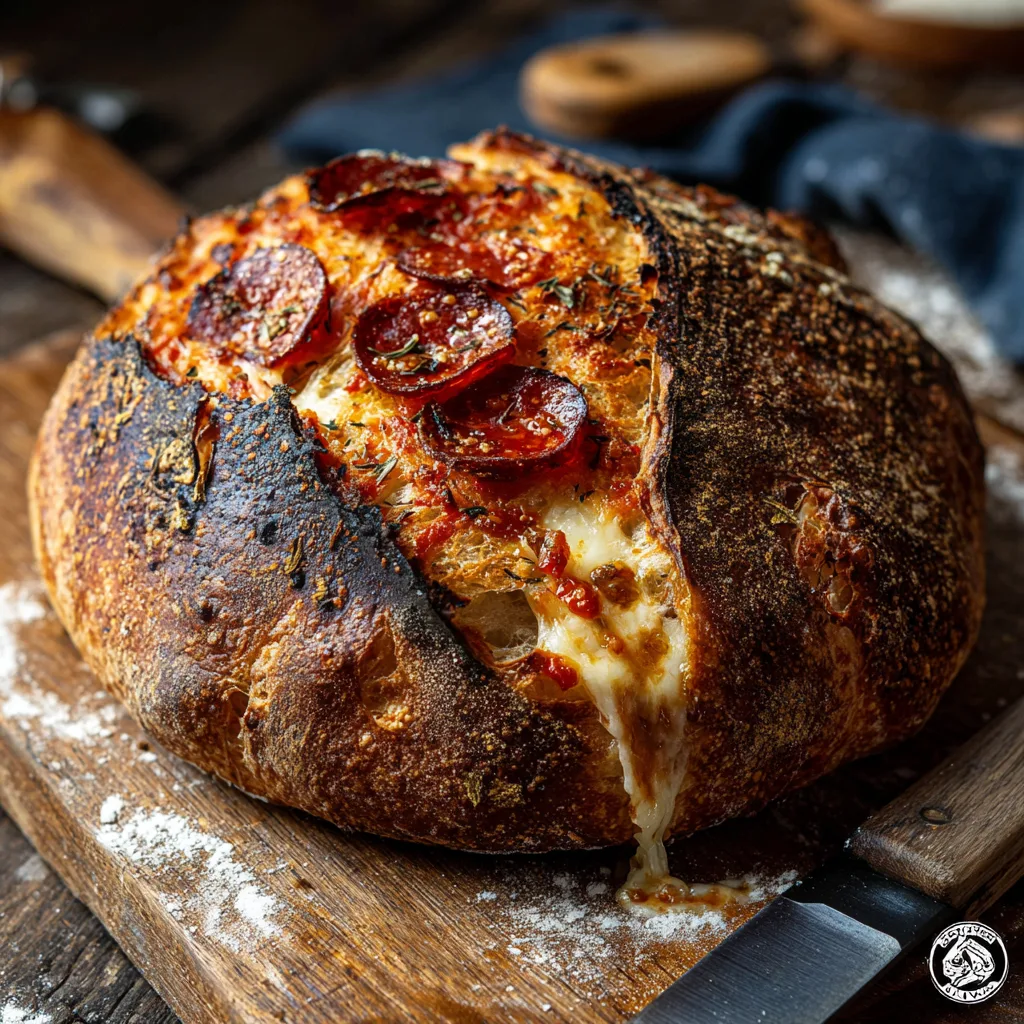
The photo shows a beautifully dark, almost charred crust. This is characteristic of artisan sourdough and provides a necessary bitterness to balance the sweet starch of the interior. To achieve this, do not be afraid of high heat. The Dutch oven acts as a steam chamber, keeping the crust soft initially so the bread can rise (“oven spring”). Once the lid comes off, the direct dry heat caramelizes the sugars in the crust.
If you find your bottom crust burns before the top is done, place a baking sheet on the oven rack directly below the Dutch oven to deflect some of the direct heat from the bottom element. 🔥🥖
Serving Suggestions
This bread is a showstopper on its own, but here are a few ways to elevate it:
- Marinara Dip: Serve warm slices with a side of heated marinara or pizza sauce for dipping.
- The Ultimate Grilled Cheese: Use two slices of this bread to make a grilled cheese sandwich. The pepperoni and herbs are already there; just add a slice of Provolone in the middle and grill.
- Soup Companion: It pairs magnificently with a creamy tomato basil soup or a roasted red pepper bisque.
Conclusion: Worth the Wait
Sourdough baking is a lesson in patience, but adding pizza flavors turns it into a lesson in pure joy. There is a moment when you cut into this loaf—hearing the crunch of the crust, seeing the cheese pull, and smelling the herbs—that makes every minute of the fermentation process worth it. This Pepperoni Pizza Sourdough Loaf is robust, flavorful, and undeniably comforting. It brings the pizzeria to your bread basket in the most delicious way possible. Happy baking! 🏠🍕