When you think of a satisfying, center-of-the-plate vegetable dish, cabbage might not be the first contender that comes to mind. It’s often relegated to a supporting role in coleslaw, fermented into sauerkraut, or tucked away in soups. But there is a cooking method that completely transforms this humble brassica into a powerhouse of flavor and texture: charring. Charring, particularly when applied to the sweet and complex leaves of a savoy cabbage, creates a revelation that must be experienced to be believed.
Our Charred Savoy Cabbage with Ginger-Soy Glaze isn’t just a recipe; it’s a statement. It’s a testament to the fact that when treated with respect and the right technique, simple, whole ingredients can surpass the most complex culinary creations. In this article, we’ll dive deep into why this combination works, how to master the art of the perfect char, and why this dish is the missing piece in your weeknight rotation, proving that vegan and vegetarian cooking can be decadent, satisfying, and utterly delicious. 🥬🥢🔥
Rediscovering the Humble Cabbage
For too long, cabbage has carried a reputation for being bland or, worse, emitting a strong odor when overcooked. This is a tragedy. When prepared correctly, cabbage is inherently sweet, slightly nutty, and boasts a texture that ranges from incredibly crisp to melt-in-your-mouth tender. The key is unlocking that sweetness through high, dry heat. Roasting and, crucially, charring are the magical keys to that flavor kingdom.
Savoy cabbage, specifically, is a superior choice for charring because of its beautiful, crinkled leaves. These natural ridges and valleys provide endless nooks for the dry heat to intensify flavors and create texture. They also grab onto the glaze better than smooth cabbage varieties, ensuring every bite is a perfect balance. Its flavor is milder and sweeter than its red or green counterparts, making it the perfect canvas for robust, umami-rich sauces like our ginger-soy glaze. It is time to elevate the cabbage, and this recipe does exactly that. We aren’t hiding it; we are celebrating it. 🥬✨
The Art of Charring: Technique and Flavor
The core of this dish is the char. This isn’t just ‘cooking the cabbage’; it’s about pushing the boundary of flavor through a deep, Maillard-driven transformation. When you char cabbage, you are introducing the smoky complexity that you might associate with grilling or high-end roasting. It’s the point where sugars begin to caramelize and eventually brown into deep, complex notes that are slightly bitter, smoky, and unbelievably savory.
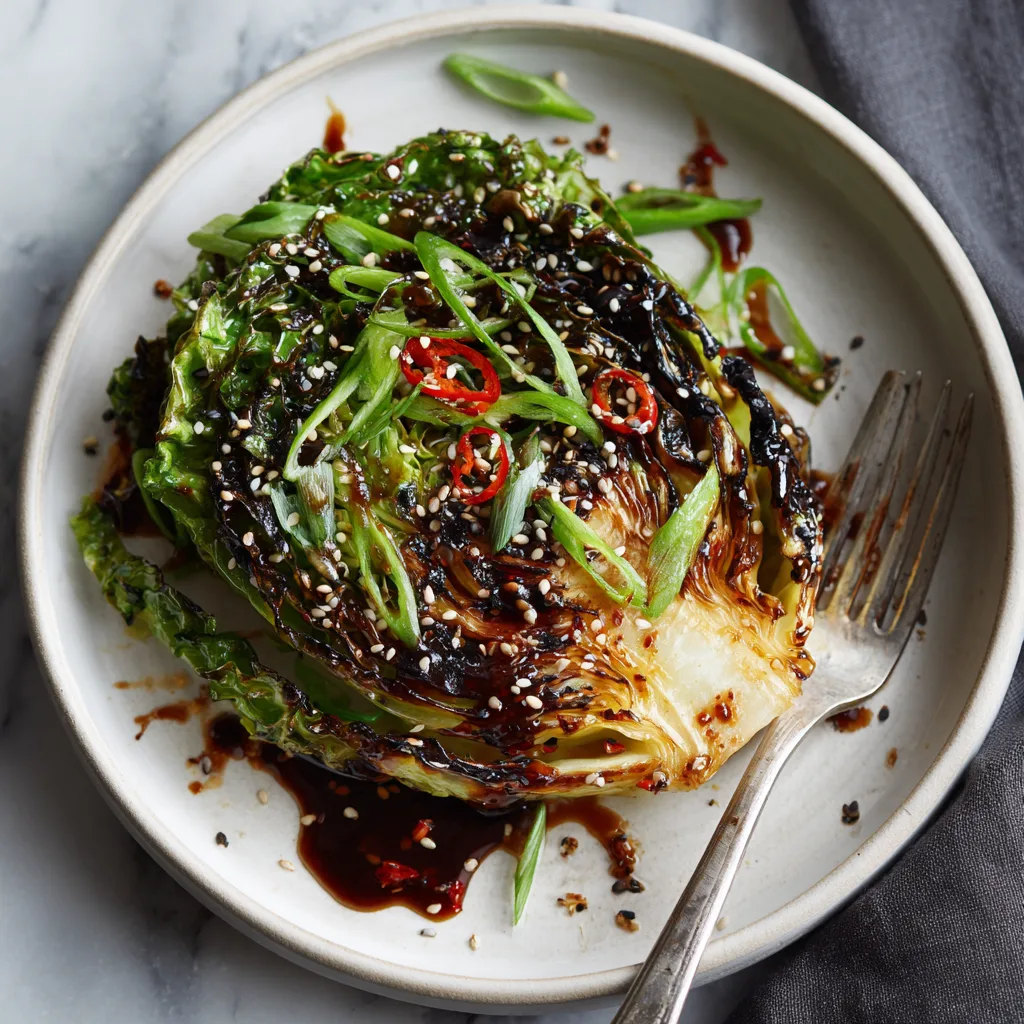
To achieve the perfect char seen in our inspiration image, you need a very hot, dry, and ideally heavy pan (like cast iron). We quarter the cabbage, allowing us to sear the flat cut faces while keeping the wedge intact. The high heat seals the cut side while the internal leaves steam and soften gently. You can’t achieve this result by simply boiling or gently sautéing. It must be *charred*. We aren’t just looking for browning; we are looking for a deep, dark coloration. This smoky foundation is the counterpoint that elevates the entire dish, and when it meets the sweet glaze, the magic truly happens. 🔥🍳🥬
Crafting the Perfect Ginger-Soy Glaze
If the charred cabbage is the soul of this dish, the ginger-soy glaze is the heart. This isn’t just a simple mix of soy sauce and oil; it’s a balanced, thick, reduction designed to cling, glaze, and pop. A good glaze must address all the flavor pillars: umami, sweetness, acid, and heat. Our glaze achieves this through meticulous ingredient choice and a final reduction step.
We start with a base of soy sauce (or tamari for a gluten-free option) for that deep, essential umami. To cut through the salt and the cabbage’s earthiness, we add sweetness. Honey or maple syrup are excellent, providing a more complex sweetness than simple sugar. For brightness and a needed acidic lift, rice vinegar (or lime juice) is essential, balancing the rich soy and the smoky cabbage. Finally, the aromatic elements—freshly grated ginger and garlic—are essential. The ginger adds a bright, warming heat that contrasts with the cabbage and ties the sauce together, while garlic provides its foundational savoriness. A dash of sesame oil brings a final layer of deep, nutty complexity. By simmering these ingredients, we reduce the mixture, concentrating the flavors and allowing the sugar to thicken the sauce into that glossy, sticky reduction that is essential for a true glaze. 🥢🌟🍋
From Farm to Fork: Choosing and Preparing Your Cabbage
Success begins with your ingredients. When buying cabbage, particularly savoy, look for a head that feels heavy for its size. The outer leaves should be vibrant and crinkled, not wilting, damaged, or yellowed. A fresh cabbage will have a beautiful, intricate internal leaf structure when cut open.
Preparing the cabbage is straightforward but crucial for even cooking. First, remove any damaged or very tough outer leaves. Then, you must quarter the head. When cutting, it is absolutely essential to cut *through* the core, leaving a piece of the core attached to each wedge. This built-in structure is what prevents the leaves from separating during the charring and roasting process. Once you have your wedges, gently rinse them and pat them completely dry. Any surface moisture will prevent the deep browning we are after, causing the cabbage to steam instead of sear. It is also an opportune time to season your cabbage with oil, salt, and pepper, focusing particularly on the cut faces before they meet the high heat. Proper preparation guarantees your cabbage will hold its shape and achieve that perfect contrast of smoky exterior and tender interior. 🔪🥬🌾
Serving and Pairings: A Versatile Star
The versatility of this Charred Savoy Cabbage with Ginger-Soy Glaze is one of its greatest strengths. While it can easily take center stage as a satisfying, elegant vegan main course when served alongside other plant-based components, it is also a stunning side dish that can elevate any meal. Its bold, complex flavors make it a natural pairing for simple proteins. It stands beautifully against simple roasted or grilled chicken, white fish, or even a steak, cutting through the richness with its acid and smoke. 🍽️🥬🐟
For a complete vegan or vegetarian feast, consider serving the cabbage alongside fluffy steamed jasmine or brown rice to soak up that extra glaze. It is also exceptional when paired with other asian-inspired sides: a refreshing smashed cucumber salad, a simple roasted sweet potato with misō butter, or a vibrant slaw. For texture, consider a crunchy topping: maybe some extra crushed peanuts or cashews, or perhaps a sprinkle of furikake (Japanese rice seasoning). The options are nearly endless, making this dish a reliable weeknight hero or an impressive component of your next gathering. 🍚🥜🥢
Ingredients and Instructions
Here is the straightforward method to recreate this revelatory dish in your own kitchen.
Charred Savoy Cabbage with Ginger-Soy Glaze
Ingredients
Equipment
Method
- Preheat oven to 400°F (200°C).
- Remove damaged outer leaves from cabbage. Cut the cabbage in half, then quarter it, ensuring a portion of the core remains attached to each wedge to keep the leaves intact.
- Gently rinse the cabbage wedges and pat them completely dry. Season with olive oil, salt, and pepper, focusing on the cut faces.
- Heat a heavy skillet (cast-iron is ideal) over high heat. Sear the cabbage wedges cut-side down in the dry, hot pan for 3-5 minutes per cut side until a deep, dark char develops. Work in batches to avoid crowding.
- Transfer the charred wedges to a baking sheet (or leave in cast iron if massive). Roast in the oven for 15-20 minutes, until the cabbage is tender throughout.
- While cabbage roasts, make the glaze: combine soy sauce, rice vinegar, honey, sesame oil, ginger, and garlic in a small saucepan. Simmer for 5-7 minutes until the sauce reduces, concentrates, and thickens into a glossy glaze.
- Once cabbage is cooked, remove from oven. Immediately pour the hot glaze directly over the wedges in the hot pan. Residual heat will thicken the glaze as it clings.
- Plate the wedges and garnish immediately with black and white sesame seeds, green onions, and fresh chili if desired. Serve immediately.
Notes
Ingredients
- – 1 medium head of Savoy Cabbage (about 2 lbs)
- – 1 tablespoon Extra Virgin Olive Oil
- – Sea Salt and Freshly Ground Black Pepper, to taste
- – 1/4 cup Soy Sauce (or Tamari)
- – 2 tablespoons Rice Vinegar (or lime juice)
- – 1 tablespoon Honey (or Maple Syrup)
- – 1 teaspoon Sesame Oil
- – 1 teaspoon fresh Ginger, finely grated
- – 1 clove Garlic, minced
- – Optional garnishes: toasted sesame seeds (black and white), sliced green onions, fresh red chili flakes.
Instructions
- Preheat your oven to 400°F (200°C). Arrange a oven-safe heavy skillet (like cast-iron) or a baking sheet with high sides near your stovetop. 🌡️
- Remove any damaged or tough outer leaves from the cabbage. Cut the cabbage in half, then quarter it, making sure a portion of the core remains attached to each wedge. 🔪🥬
- Gently pat the cabbage wedges completely dry with a towel. Brush the wedges (especially the cut faces) with olive oil and season generously with salt and pepper. 🧂💧
- Place your cast-iron skillet (if using) or a stainless steel pan over high heat. Once the pan is very hot, place the cabbage wedges cut-side down into the hot, dry pan. Sear for 3-5 minutes per cut side, pressing down occasionally to ensure maximum contact, until a deep, dark, smoky char develops. Work in batches if necessary to avoid crowding. 🍳🔥
- Transfer the charred cabbage wedges, still intact, to the baking sheet (or leave them in the cast-iron skillet if large enough). Roast in the preheated oven for 15-20 minutes, until the cabbage is tender throughout (test with a knife) but still retains some texture. 🌡️🥬
- While the cabbage roasts, make the glaze. In a small saucepan, combine the soy sauce, rice vinegar, honey, sesame oil, ginger, and garlic. Bring the mixture to a gentle boil, then reduce heat and simmer for 5-7 minutes, stirring occasionally, until the sauce is reduced by half and has thickened into a glossy, sticky glaze that coats the back of a spoon. 🥢🍋
- Once the cabbage is cooked, remove it from the oven. For that final perfect glaze, pour the reduced soy-ginger mixture directly over the hot cabbage wedges in the pan. The residual heat will continue to thicken the glaze as it clings to the crinkled leaves. 🥢🌟
- Transfer the glazed wedges to a serving plate. Garnish immediately with toasted black and white sesame seeds, finely sliced green onions, and fresh red chili flakes if desired. Serve immediately while piping hot. 🍽️🥢🔥
Your New Favorite Weeknight Hero
You may start this process thinking you are just cooking cabbage, but you will end it with a new appreciation for what simple ingredients can achieve. This Charred Savoy Cabbage with Ginger-Soy Glaze isn’t just a side dish; it’s a revelation. It proves that a deep understanding of cooking technique (the art of the char) and a simple but powerful flavor reduction can transform a kitchen staple into a star component of any meal. Whether you are looking for a satisfying vegan main or a side that steals the show, this recipe is a must-try. It is flavorful, nutrient-dense, and surprisingly easy to execute, making it your new favorite hero of the weeknight rotation. Gather your ingredients, get your pans hot, and enjoy the smoky, sticky, sweet transformation that is about to occur. Your taste buds will thank you. Happy cooking! 🥬✨🥢