🥩 Hearty Old-Fashioned Beef and Potato Stew: A Hug in a Bowl
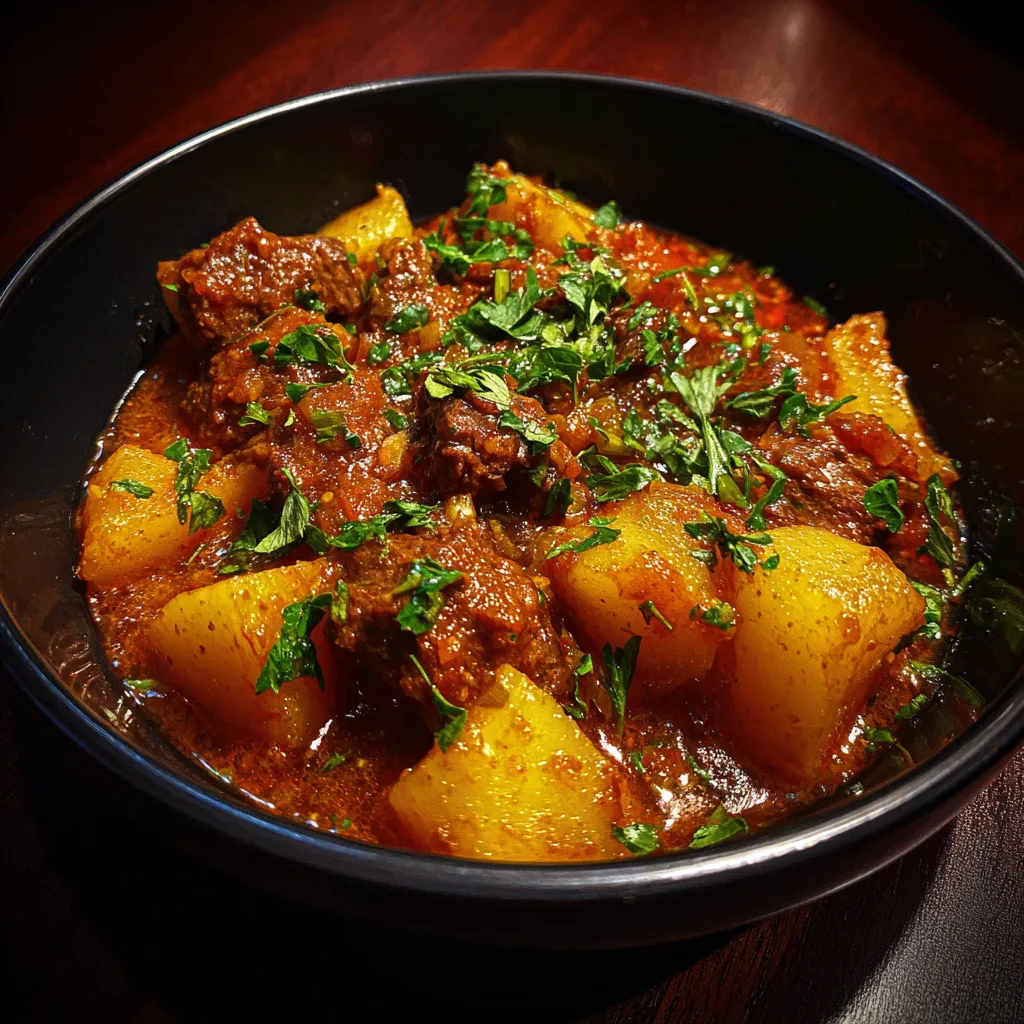
There are few dishes in the culinary world that evoke a sense of home and comfort quite like a beef stew. It is the culinary equivalent of a warm blanket on a cold rainy day. Looking at the image above, you can see the rich, glossy sauce clinging to tender morsels of beef and soft, yielding potatoes. This is Hearty Old-Fashioned Beef and Potato Stew, a dish that transcends trends and fads to deliver pure, unadulterated satisfaction.
This isn’t just a recipe; it’s a ritual. It’s about taking tough, affordable cuts of meat and, through the magic of time and gentle heat, transforming them into something that melts in your mouth. The sauce is robust, flavored with the depth of tomatoes, the sweetness of onions, and the earthiness of herbs. In this extensive guide, we will walk you through every nuance of creating the perfect stew, from the science of collagen breakdown to the debate over the perfect potato. Prepare your kitchen, because it is about to smell incredible.
🔥 The Soul of Stew: Why This Recipe Works
What makes a stew “good” versus “unforgettable”? It comes down to technique and patience. Many rushed recipes result in chewy meat and a thin, watery broth. Our method ensures the opposite.
First, we focus on the sear. By browning the beef deeply before adding any liquid, we trigger the Maillard reaction. This chemical reaction between amino acids and reducing sugars gives browned food its distinctive flavor. That dark crust on the beef dissolves into the liquid later, creating a base of flavor that stock cubes simply cannot replicate.
Second, we prioritize the reduction. A great stew shouldn’t need a lot of cornstarch slurry at the end (though a little helps). Ideally, the thickness comes from the gelatin released by the meat and the breakdown of the vegetables. The result is a gravy that coats the back of a spoon and clings to the potatoes, ensuring every bite is flavor-packed.
🥩 The Meat: Choosing the Right Cut
The success of your stew is 80% determined at the butcher counter. You might be tempted to buy “stew meat,” which is often a mix of scraps, but for the best results, you should select specific cuts.
Chuck Roast (The King of Stews)
The absolute best cut for beef stew is a Chuck Roast (from the shoulder). This muscle works hard during the cow’s life, meaning it is full of connective tissue called collagen. When you cook a steak quickly, collagen is tough and chewy. But when you cook it slowly in liquid, that collagen melts into gelatin. This gelatin does two things: it gives the meat a succulent, “melting” texture, and it naturally thickens the sauce, giving it a silky mouthfeel.
Other Options
- Bottom Round: Leaner than chuck, but can still work if cooked long enough. It won’t be quite as moist.
- Brisket: Excellent flavor and fat content, but usually more expensive and better suited for slicing than cubing.
- Short Ribs: If you want to feel fancy, boneless short ribs make the most decadent stew imaginable, though at a higher price point.
Prep Tip
Buy a whole roast and cut it yourself. Pre-cut “stew meat” is often cut into uneven sizes, leading to some pieces being overcooked while others are tough. Aim for uniform 1.5-inch to 2-inch cubes.
🥣 Ingredients
Gather these ingredients to build your layers of flavor. Do not skimp on the aromatics!
- – 2.5 lbs Beef Chuck Roast (cut into 1.5-inch cubes, excess hard fat trimmed)
- – 4 Tablespoons Olive Oil (divided, for searing)
- – 1 Large Yellow Onion (chopped roughly)
- – 4 Cloves Garlic (minced)
- – 3 Tablespoons Tomato Paste (gives the sauce richness and color)
- – 3 Tablespoons All-Purpose Flour (for coating the beef)
- – 4 cups Beef Broth (low sodium is best so you can control the salt)
- – 1 cup Red Wine (optional; Cabernet or Merlot works well to deglaze)
- – 1.5 lbs Potatoes (Yukon Gold or Russet, peeled and cut into 1.5-inch chunks)
- – 2 Carrots (sliced into coins, optional but adds sweetness)
- – 2 Bay Leaves (dried or fresh)
- – 1 Teaspoon Dried Thyme (or 3 sprigs fresh)
- – 1 Teaspoon Salt (adjust to taste)
- – 1/2 Teaspoon Black Pepper (freshly ground)
- – 1/2 cup Fresh Parsley (chopped, for garnish)
🔪 Instructions
Follow these steps patiently. Stew cannot be rushed. If you try to speed it up, the meat will be tough.
- Prepare the Beef: Pat the beef cubes dry with paper towels. Wet meat steams instead of searing. Season the beef generously with salt and pepper, then toss them in the flour until lightly coated. Shake off excess flour.
- Sear the Meat: Heat 2 tablespoons of olive oil in a large Dutch oven or heavy-bottomed pot over medium-high heat. Working in batches (do not crowd the pan!), sear the beef on all sides until a dark brown crust forms. This takes about 3-4 minutes per batch. Transfer seared meat to a plate.
- Sauté Aromatics: Add the remaining oil to the pot. Add the chopped onions and carrots. Sauté for 5 minutes until the onions soften and begin to brown. Add the minced garlic and cook for another minute until fragrant.
- Bloom the Tomato Paste: Stir in the tomato paste and cook it with the vegetables for 2 minutes. The paste will darken in color. This “blooming” step removes the raw metallic taste of the tomato.
- Deglaze: Pour in the red wine (or a cup of beef broth if skipping wine). Use a wooden spoon to scrape up the “fond”—the brown bits stuck to the bottom of the pot. This is pure flavor! Let it simmer for 2 minutes to reduce slightly.
- Simmer: Return the beef (and any juices on the plate) to the pot. Add the beef broth, bay leaves, and thyme. The liquid should just barely cover the meat. Bring to a boil, then reduce heat to a very low simmer. Cover with a tight-fitting lid.
- The Long Cook: Cook on low for about 1.5 to 2 hours. The meat should be starting to get tender but not falling apart yet.
- Add Potatoes: Add the potato chunks to the pot. If the liquid has reduced too much, add a splash more water or broth. Cover and continue to simmer for another 30-40 minutes, or until the potatoes are fork-tender and the beef falls apart with gentle pressure.
- Final Seasoning: Discard the bay leaves. Taste the sauce. Does it need more salt? Pepper? If the stew is too thin for your liking, simmer it uncovered for 10 minutes to thicken.
- Serve: Ladle into deep bowls and garnish generously with fresh parsley. Serve hot with crusty bread.
🥔 The Potato Debate: Wax vs. Starch
Choosing the right potato for a stew is a topic of hot debate among chefs. The texture of the potato can change the character of the entire dish.
Russet Potatoes (Starchy)
Russets are high in starch and low in moisture. When cooked in liquid, they tend to absorb the sauce beautifully, but their edges will dissolve. This naturally thickens the stew, making it hearty and rustic. However, if you stir too vigorously, they might turn into mush. If you like a thick, porridge-like stew, use Russets.
Yukon Gold (Waxy/All-Purpose)
Yukon Golds are the “Goldilocks” potato. They hold their shape better than Russets but are creamier than Red potatoes. They have a natural buttery flavor that complements the beef fat. For this recipe, Yukon Golds are our top recommendation because they provide distinct bites of creamy potato without disintegrating.
Red Potatoes (Waxy)
Red potatoes hold their shape perfectly even after long cooking. However, they can sometimes feel a bit “wet” or firm compared to the melting texture of a Yukon Gold. Use these if you want very defined cubes in your bowl.
🧪 Science of Tender Meat: Collagen Breakdown
Why does beef stew take 3 hours? It’s all about collagen hydrolysis. Collagen is a tough protein triple-helix structure. At around 160°F (71°C), the collagen begins to denature and squeeze out moisture (this is why meat gets dry if cooked quickly to well-done). However, if you keep the meat in a moist environment at roughly 180°F-200°F (82°C-93°C) for an extended period, that collagen slowly unravels and turns into gelatin.
Gelatin binds water, making the meat feel moist and succulent even though the muscle fibers themselves have lost water. This process takes time. You cannot rush it. If your stew meat is tough, you haven’t done anything wrong—you just haven’t cooked it long enough. Put the lid back on and wait another 30 minutes.
🍷 Variations to Elevate Your Stew
Once you have mastered the classic, try these twists:
- Guinness Stew: Swap the red wine for a dark stout beer. The bitterness of the hops and the roasted malt flavor add a profound depth to the sauce.
- Provencal Style: Add a strip of orange zest and a handful of pitted olives near the end of cooking for a French Mediterranean flair.
- Spicy Kick: Add a teaspoon of smoked paprika and a pinch of cayenne pepper to the flour mixture for a subtle smoky heat.
- Mushroom Lover’s: Sauté 8oz of cremini mushrooms and add them in the last 20 minutes of cooking for an umami bomb.
🧊 Storage and Freezing
Beef stew is famous for tasting better the next day. This phenomenon happens because as the stew cools, the gelatin solidifies, trapping flavor compounds. When reheated, these flavors are released in a more complex way.
Refrigerator: Store in an airtight container for up to 4 days. Reheat gently on the stove over medium-low heat. You may need to add a splash of water if it has thickened too much in the fridge.
Freezer: Stew freezes excellently. Let it cool completely, then portion into freezer-safe bags or containers. It keeps for up to 3 months. Thaw overnight in the fridge before reheating.
Note on Freezing Potatoes: Russet potatoes can sometimes become grainy when frozen and thawed. Yukon Gold potatoes handle freezing slightly better, but fresh is always best.
🍞 Serving Suggestions
What you serve with stew is almost as important as the stew itself. You need a vehicle to soak up that glorious gravy.
- Crusty Sourdough Bread: The acidity of sourdough cuts through the richness of the beef fat.
- Egg Noodles: Serve the stew over a bed of buttery, parsley-flecked egg noodles for a stroganoff-vibe.
- Polenta: Soft, cheesy polenta makes for an incredibly comforting base.
- Green Salad: A simple salad with a sharp vinaigrette (lemon or vinegar) provides a necessary refreshing contrast to the heavy stew.
🏁 Conclusion
Hearty Old-Fashioned Beef and Potato Stew is more than just dinner; it is an act of love. It requires time, attention, and quality ingredients. But the reward—a kitchen filled with savory aromas and a bowl filled with tender, melting beef—is worth every minute. Whether you are feeding a hungry family on a Tuesday night or hosting a cozy dinner party, this recipe will never let you down.
So, turn on your stove, pour yourself a glass of that leftover red wine, and enjoy the slow, meditative process of making the perfect stew. Bon Appétit! 🥩🥔🥘
Hearty Beef and Potato Stew
Ingredients
Equipment
Method
- Pat beef dry and toss with flour, salt, and pepper.
- Heat 2 tbsp oil in a large pot. Sear beef in batches until browned. Remove and set aside.
- Add remaining oil to the pot. Sauté onions for 5 minutes, then add garlic and tomato paste. Cook 2 minutes.
- Pour in red wine to deglaze the pan, scraping up browned bits.
- Return beef to the pot. Add broth, bay leaves, and thyme. Bring to a boil.
- Cover, reduce heat to low, and simmer for 1.5 to 2 hours until beef is tender.
- Add potatoes and continue to simmer covered for 30-40 minutes until potatoes are soft.
- Discard bay leaves, adjust seasoning, and serve garnished with parsley.