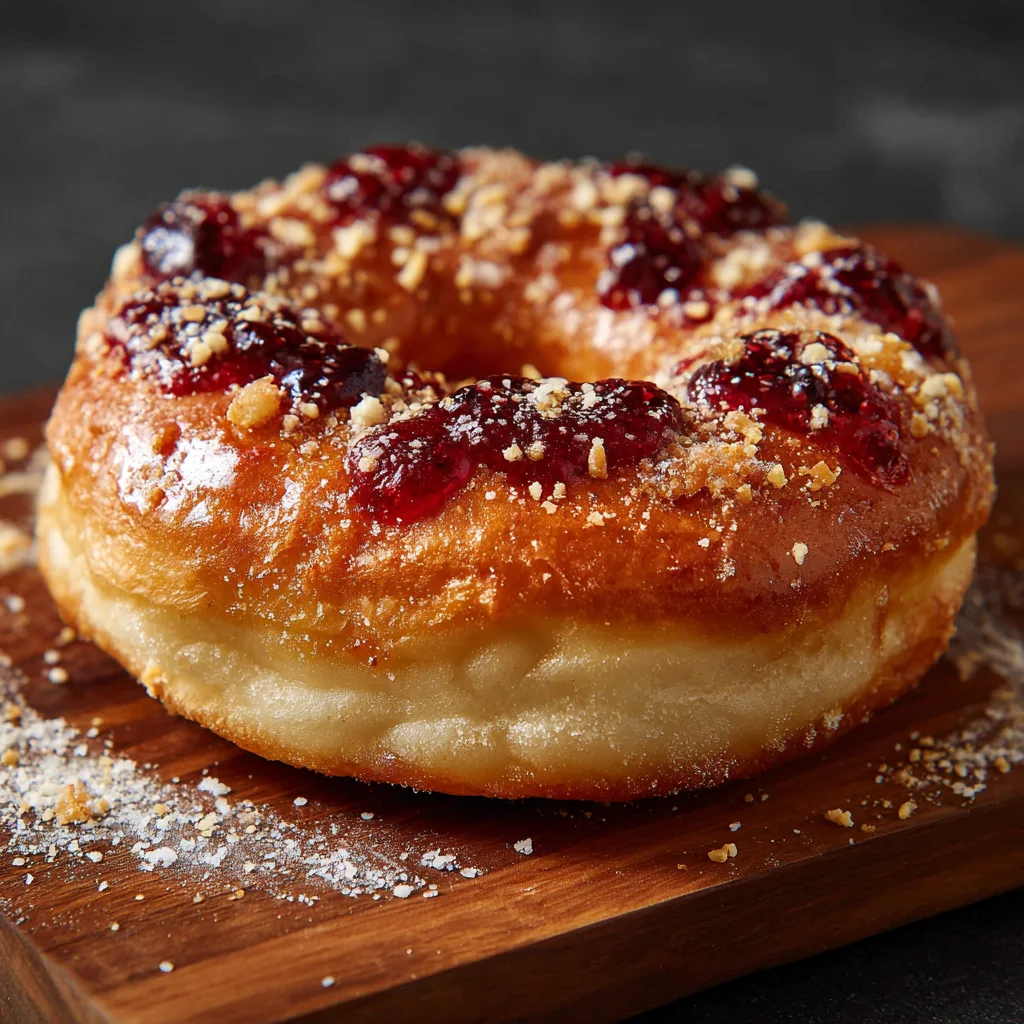
There is something undeniably enchanting about the scent of fresh pastries wafting through a cozy bakery on a crisp morning. It’s a sensory experience that instantly triggers feelings of comfort, indulgence, and pure joy. But what if you could capture that exact magic and bring it right into your own kitchen? Welcome to the ultimate guide to creating a true masterpiece of home baking: the Gourmet Raspberry Nut Glazed Donut. This isn’t just any ordinary fried dough; this is a highly elevated, texturally complex, and flavor-packed dessert that will make you look like an absolute culinary genius.
In this comprehensive guide, we are going deep into the science, the art, and the sheer delight of creating artisan-level donuts from scratch. We’ll explore the delicate balance of creating a feather-light yeast dough, the exact temperatures required for the perfect golden fry, and the glorious synergy of sweet glaze, tart fruit, and savory crunch. Whether you are an experienced home baker looking to expand your repertoire or an enthusiastic beginner ready to tackle a rewarding project, this article will equip you with everything you need to know. Prepare to embark on a baking adventure that will leave your friends and family begging for your secret recipe.
✨ The Magic Behind the Perfect Gourmet Donut Dough
The foundation of any spectacular donut lies in its dough. While cake donuts have their charm—dense, crumbly, and wonderfully spiced—a true gourmet bakery experience usually leans on a yeast-raised dough. Yeast is a living organism, and when treated with care, it rewards you by creating a structure that is impossibly light, airy, and pillowy soft. This specific recipe utilizes an enriched dough. In baker’s terms, “enriched” means the dough is fortified with fats and proteins, typically through the addition of milk, butter, and eggs. These ingredients tenderize the crumb, resulting in a donut that practically melts in your mouth.
The magic begins with blooming the yeast. This crucial step involves dissolving active dry yeast in warm milk with a touch of sugar. The temperature of the milk is paramount; if it’s too cold, the yeast will remain dormant, and your dough won’t rise. If it’s too hot, you risk killing the yeast entirely. The sweet spot is around 105°F to 110°F (40°C to 43°C). Once the yeast mixture becomes frothy and fragrant—usually after 5 to 10 minutes—you know you’re ready to proceed.
Kneading is the next critical phase. As you work the dough, the proteins in the flour (glutenin and gliadin) bond together to form gluten networks. This network traps the carbon dioxide gas produced by the yeast during the fermentation process, allowing the dough to rise and giving the finished donut its structure and chew. A well-kneaded dough should be smooth, elastic, and slightly tacky, but not overly sticky. The “windowpane test” is a great way to check your progress: stretch a small piece of dough between your fingers; if it stretches thin enough to let light pass through without tearing, your gluten is perfectly developed.
🍓 Why Raspberry and Nuts are a Match Made in Heaven
Creating a gourmet flavor profile is all about balance. A standard glazed donut is wonderfully sweet, but it can quickly become one-dimensional. To elevate this pastry to artisan status, we introduce contrasting flavors and textures. This is where the brilliant combination of thick raspberry jam and crushed roasted nuts comes into play.
Let’s start with the raspberry component. Raspberries possess a natural, vibrant tartness that cuts straight through the heavy sweetness of the classic sugar glaze and the rich, fatty nature of the fried dough. The bright acidity of the berries wakes up the palate and prevents the dessert from feeling cloying or heavy. Using a high-quality preserve or jam ensures a concentrated fruit flavor that stands up to the other bold elements of the pastry.
Then, we introduce the crushed nuts. Textural contrast is a hallmark of high-end culinary creations. While the donut itself is soft and yielding, and the jam and glaze are sticky and smooth, the nuts provide a much-needed savory crunch. Roasting the nuts beforehand (whether you choose peanuts, almonds, pecans, or walnuts) deepens their earthy flavor profile and brings out their natural oils, adding a subtle hint of saltiness and toasted warmth. Together, the sweet glaze, tart raspberry, and savory crunch create a harmonious symphony of flavors in every single bite.
🛠️ Essential Tools for Donut Making Success
Before you dive into the recipe, setting up your workspace with the right equipment will make the process exponentially smoother and significantly safer. Frying donuts at home can feel intimidating, but with the correct tools, it is a highly controlled and enjoyable process.
- Heavy-Bottomed Pot or Dutch Oven: A cast-iron Dutch oven is ideal for deep frying because it retains heat exceptionally well, ensuring the oil temperature doesn’t drop drastically when you add the dough.
- Candy or Deep-Fry Thermometer: This is arguably the most important tool in your arsenal. The oil must be maintained at exactly 350°F (175°C). If the oil is too cool, the donuts will absorb excess grease and become heavy and soggy. If it’s too hot, the outside will burn before the inside is fully cooked.
- Spider Strainer or Slotted Spoon: Essential for safely gently lowering the dough into the hot oil and fishing the golden donuts out without splashing.
- Wire Cooling Rack: Placing your freshly fried donuts on a wire rack set over a baking sheet allows excess oil to drip away and prevents the bottoms from becoming soggy. It’s also crucial for the glazing process.
- Stand Mixer (Optional but highly recommended): While you can absolutely knead this dough by hand, an enriched yeast dough is sticky and can take up to 15 minutes of rigorous manual labor. A stand mixer fitted with a dough hook makes the process effortless.
🛒 Ingredients
Gather the following high-quality ingredients to ensure the best possible flavor and texture for your gourmet donuts.
For the Yeast Dough:
- – 1 cup Whole milk, warmed to 110°F (43°C)
- – 2 ¼ teaspoons Active dry yeast (one standard packet)
- – ¼ cup Granulated white sugar
- – 2 Large eggs, at room temperature
- – 1 ½ teaspoons Pure vanilla extract
- – 4 cups All-purpose flour (plus more for dusting)
- – 1 teaspoon Fine sea salt
- – ½ cup (1 stick) Unsalted butter, softened to room temperature
- – 6 cups Neutral oil for frying (Vegetable, Canola, or Peanut oil work best)
For the Classic Glaze:
- – 2 cups Powdered (confectioner’s) sugar, sifted
- – 3 to 4 tablespoons Whole milk or heavy cream
- – 1 teaspoon Pure vanilla extract
- – A pinch of salt
For the Gourmet Topping:
- – ½ cup High-quality raspberry jam or preserves
- – ¾ cup Roasted nuts (peanuts, almonds, or walnuts), finely crushed
📝 Instructions
Follow these steps carefully, respecting the resting and rising times, to achieve bakery-quality results.
- Bloom the Yeast: In the bowl of a stand mixer, combine the warmed whole milk, active dry yeast, and 1 teaspoon of the granulated sugar. Stir gently and let the mixture sit for 5 to 10 minutes until a foamy, bubbly layer forms on top. This indicates your yeast is active and ready to go.
- Mix the Wet Ingredients: To the yeast mixture, add the remaining granulated sugar, the room temperature eggs, and the vanilla extract. Whisk lightly to combine.
- Form the Dough: Attach the dough hook to your mixer. Add the flour and sea salt to the bowl. Mix on low speed until a shaggy dough begins to form. Gradually add the softened butter, one tablespoon at a time, allowing it to incorporate before adding more.
- Knead: Increase the mixer speed to medium and knead the dough for about 8 to 10 minutes. The dough should become smooth, elastic, and pull away from the sides of the bowl. If it is excessively sticky, add a dusting of flour, 1 tablespoon at a time.
- First Proof: Lightly grease a large bowl with oil. Form the dough into a smooth ball and place it in the bowl, turning it once to coat the top in oil. Cover the bowl tightly with plastic wrap or a warm, damp kitchen towel. Let it rise in a warm, draft-free spot for 1.5 to 2 hours, or until it has completely doubled in size.
- Roll and Cut: Punch down the risen dough to release the air. Turn it out onto a lightly floured surface. Using a rolling pin, roll the dough out to an even ½-inch thickness. Use a lightly floured donut cutter (or a large biscuit cutter and a smaller ring for the center hole) to cut out your donuts. Gather the scraps, let them rest for 10 minutes, and re-roll to cut more.
- Second Proof: Place the cut donuts and donut holes onto a baking sheet lined with parchment paper. Cover loosely with a clean kitchen towel and let them rise for another 45 minutes to 1 hour, until they are puffy and delicate.
- Heat the Oil: About 15 minutes before the second proof is done, pour your frying oil into a heavy-bottomed Dutch oven. Attach a deep-fry thermometer and heat the oil over medium heat until it reaches exactly 350°F (175°C).
- Fry to Perfection: Using a spider strainer or a wide spatula, carefully lower 2 to 3 donuts into the hot oil. Do not overcrowd the pot, as this drops the oil temperature. Fry for about 1 to 1.5 minutes per side, until they are a deep golden brown. Transfer the fried donuts to a wire cooling rack set over paper towels to drain. Repeat with the remaining dough, constantly monitoring your thermometer to keep the oil at 350°F.
- Prepare the Glaze: While the donuts cool slightly, whisk together the sifted powdered sugar, 3 tablespoons of milk, vanilla extract, and a pinch of salt in a shallow bowl. If the glaze is too thick, add the remaining tablespoon of milk until you reach a smooth, dippable consistency.
- Glaze and Decorate: While the donuts are still slightly warm, dip the top half of each donut into the glaze. Let the excess drip off, then return them to the wire rack. Immediately spoon small dollops or swirl thick rings of the raspberry jam over the wet glaze. Generously sprinkle the finely crushed roasted nuts over the top so they adhere to the glaze and jam. Allow them to set for 15 minutes before serving.
Gourmet Raspberry Nut Glazed Donut
Ingredients
Equipment
Method
- In a stand mixer bowl, combine warm milk, yeast, and 1 tsp of sugar. Let sit for 5-10 minutes until foamy.
- Whisk in the remaining sugar, room temperature eggs, and vanilla extract.
- Add the flour and salt. Mix using a dough hook on low speed until a shaggy dough forms, then gradually add the softened butter.
- Knead on medium speed for 8-10 minutes until the dough is smooth, elastic, and pulls away from the sides.
- Place dough in an oiled bowl, cover, and let rise in a warm place for 1.5 to 2 hours until doubled in size.
- Punch down dough, roll out to 1/2-inch thickness on a floured surface, and cut out donuts using a cutter.
- Place cut donuts on a parchment-lined baking sheet, cover loosely, and let rise for 45-60 minutes until puffy.
- Heat oil in a Dutch oven to 350°F (175°C). Fry donuts 2-3 at a time for 1-1.5 minutes per side until golden brown. Drain on a wire rack.
- Whisk powdered sugar, milk, vanilla, and a pinch of salt together to make the glaze.
- Dip warm donuts into the glaze, let excess drip off, then immediately top with dollops of raspberry jam and crushed nuts. Let set before serving.
Notes
🎨 Creative Variations to Elevate Your Pastry Game
The beauty of this master donut recipe is its versatility. Once you have perfected the base yeast dough and the frying technique, the canvas is completely yours. If you want to switch up the flavor profile from raspberry and nuts, there are countless gourmet combinations to explore.
The Tropical Escape: Swap out the raspberry jam for a tangy passionfruit curd or mango preserve. Instead of roasted peanuts or almonds, sprinkle the wet glaze with toasted coconut flakes and finely chopped macadamia nuts. This creates a vibrant, bright, and sunny flavor profile.
The Chocolate Hazelnut Dream: Replace the standard vanilla glaze with a rich chocolate ganache dip. Pipe swirls of smooth hazelnut spread (like Nutella) on top, and finish with deeply roasted, crushed hazelnuts and a sprinkle of flaky Maldon sea salt. This is a decadent, dessert-heavy variation perfect for evening indulgences.
The Autumn Harvest: Incorporate ½ teaspoon of cinnamon and ¼ teaspoon of nutmeg directly into your dough. After frying, dip the donuts in a maple-infused glaze. Top with apple butter dollops and crushed, candied pecans. It’s the ultimate fall comfort pastry.
🥡 Storing and Reheating for Maximum Freshness
Let’s be honest: homemade yeast donuts are unequivocally at their absolute best within the first few hours of frying. As time goes on, the starches begin to retrograde, and the dough can become stale. However, if you find yourself with leftovers (a rare occurrence, but possible!), proper storage is key to maintaining their magic.
Do not store freshly glazed donuts in the refrigerator. The humidity and cold environment will cause the glaze to weep and melt, leaving you with a sticky, soggy mess, while the dough itself will dry out faster. Instead, keep them in an airtight container at room temperature for up to two days. To revive a day-old donut, pop it in the microwave for exactly 5 to 8 seconds. This brief burst of heat re-melts the fats in the dough, making it soft and pillowy once again without completely destroying the glaze and jam topping.
If you want to prepare ahead, the best method is to freeze the donuts after frying but before glazing. Let the unglazed donuts cool completely, then freeze them in a single layer on a baking sheet. Once solid, transfer them to a freezer-safe bag. When you’re ready for a fresh treat, let them thaw at room temperature for an hour, warm them in a 350°F (175°C) oven for 3-5 minutes, and then dip them in fresh glaze and toppings.
🎓 Conclusion: Your Next Baking Adventure Awaits
Creating Gourmet Raspberry Nut Glazed Donuts from scratch is truly a labor of love, but it is one of the most rewarding culinary projects you can undertake in your home kitchen. By mastering the delicate balance of an enriched yeast dough, monitoring your frying temperatures with precision, and embracing bold, contrasting toppings, you elevate a simple childhood treat into an artisanal masterpiece.
The contrast between the airy, golden-fried dough, the crackling sweet glaze, the bright tartness of the ruby-red raspberry jam, and the earthy, savory crunch of the roasted nuts is an experience that store-bought pastries simply cannot replicate. So tie on your apron, dust your counters with flour, and embrace the delightful process of donut making. Your kitchen is about to smell incredible, and your tastebuds are in for the ultimate treat. Happy frying!