
As the cold, heavy days of winter begin to fade into memory, our cravings naturally shift. We move away from the dense, rich comfort foods that kept us warm and start yearning for something lighter, brighter, and infused with the vibrant energy of a new season. Enter the ultimate transitional dish: the Rustic Spring Vegetable Potato and Asparagus Stew. This glorious bowl of comfort perfectly bridges the gap between cozy winter dining and the fresh, lively flavors of spring.
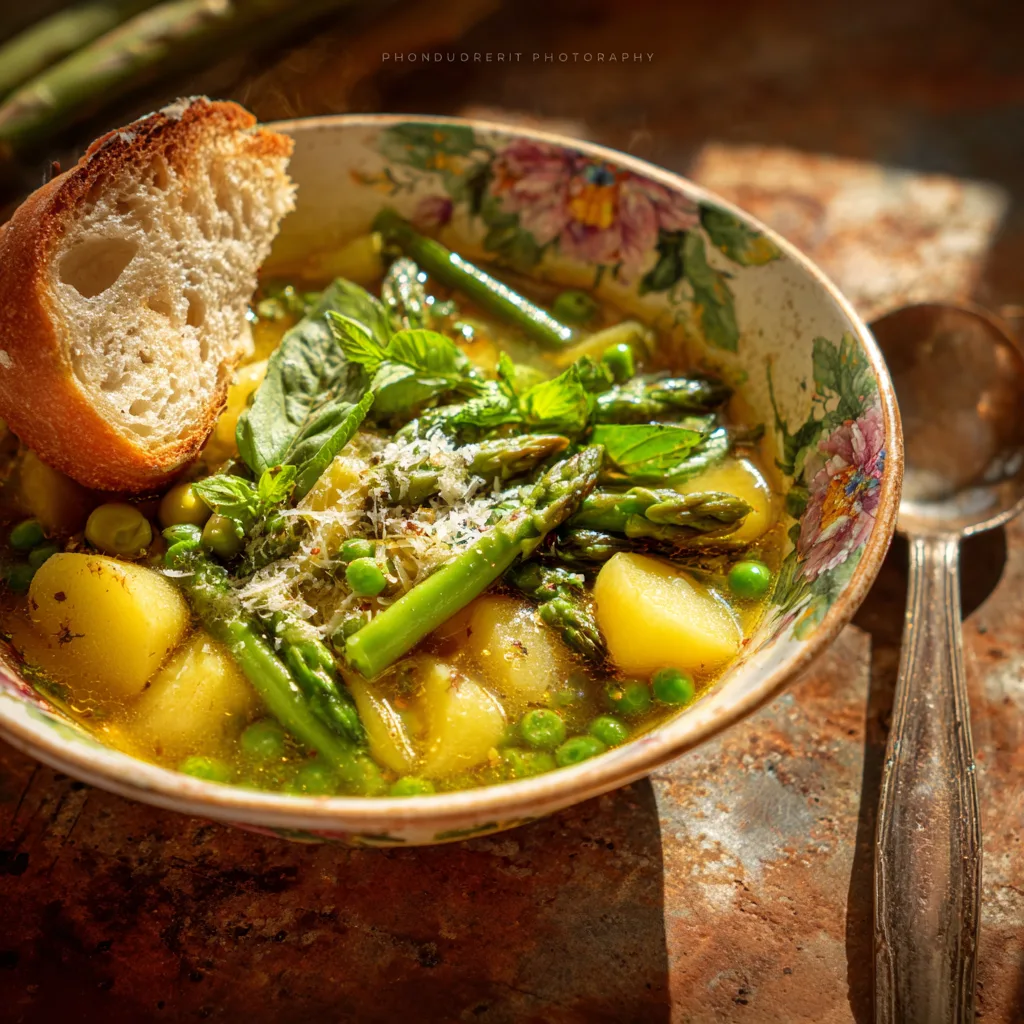
Imagine a bowl sitting on your table, bathed in warm, dappled sunlight. Inside an antique, floral-patterned dish rests a clear, golden broth swimming with tender baby yellow potatoes, crisp-tender asparagus spears, and sweet bursts of bright green peas. Fresh mint and parsley float delicately throughout, releasing an intoxicating, earthy aroma that instantly transports you to a rustic countryside kitchen. This is not just a soup; it is a celebration of the spring harvest, an homage to farm-to-table cooking, and a testament to the beauty of simple, wholesome ingredients.
In this comprehensive guide, we will explore every facet of this magnificent spring stew. We will delve into the nutritional magic of its ingredients, share secrets for selecting the best seasonal produce, and walk you through the mindful process of crafting this rustic masterpiece in your own kitchen. Whether you are a dedicated vegan, a plant-based enthusiast, or simply someone looking to incorporate more wholesome vegetables into your diet, this recipe is destined to become a beloved staple in your home.
The Magic of Seasonal Spring Harvesting 🌱
There is a profound, almost primal joy in eating food that aligns with the seasons. For months, the earth slumbers, and our plates are dominated by root vegetables, hearty squashes, and preserved goods. But as the ground thaws and the days lengthen, a miraculous transformation occurs. The first tender shoots of asparagus pierce the soil. Pea vines begin to climb, promising sweet, emerald-green pearls within their pods. New potatoes, with their delicate, paper-thin skins, are unearthed.
Cooking with these ingredients at the peak of their seasonality ensures two things: optimal flavor and maximum nutritional value. When vegetables are allowed to ripen naturally and are consumed shortly after harvesting, their natural sugars are more pronounced, their textures are firmer, and their colors are remarkably vibrant. This stew is designed to highlight these qualities. We don’t mask the vegetables in heavy creams or overpowering spices; instead, we coax out their natural brilliance with a light, savory broth and a handful of fresh, aromatic herbs.
Embracing seasonal cooking also connects us to our local environment and supports sustainable agricultural practices. Visiting a local farmers’ market to source the ingredients for this stew turns a simple trip to the grocery store into an engaging, community-driven experience. You can speak with the farmers who grew the asparagus, ask about the specific variety of baby potatoes, and select the most fragrant bunches of mint and parsley available.
Nutritional Powerhouses in Your Bowl 🥣
Beyond its stunning visual appeal and mouthwatering flavor, this Rustic Spring Vegetable Stew is an absolute powerhouse of nutrition. Let’s break down the incredible health benefits hiding within each spoonful.
Baby Yellow Potatoes: Often unfairly maligned in diet culture, potatoes are an incredible source of whole-food carbohydrates, providing sustained energy. Baby yellow potatoes, in particular, have a buttery texture and are packed with potassium (even more than a banana!), vitamin C, and vitamin B6. Because we leave the delicate skins on in this recipe, you are also getting an excellent dose of dietary fiber, which aids in digestion and promotes a healthy gut microbiome.
Asparagus: This elegant spring vegetable is a nutritional superstar. It is incredibly low in calories but exceptionally high in essential vitamins and minerals. Asparagus is one of the best natural sources of folate, a B-vitamin crucial for cell growth and DNA formation. It is also rich in vitamin K, which is vital for bone health and blood clotting, and contains a wealth of antioxidants, including glutathione, which helps protect cells from free radical damage.
Green Peas: Don’t let their small size fool you; green peas are mighty. They are a fantastic source of plant-based protein, making this stew surprisingly satiating. Peas are also loaded with fiber, vitamins A, C, and K, and various B vitamins. Their natural sweetness provides a beautiful flavor contrast to the earthy potatoes and savory broth.
Fresh Herbs (Mint and Parsley): The herbs in this stew do more than just make it look pretty. Parsley is highly concentrated with vitamin K and boasts potent antibacterial and antioxidant properties. Mint is known for its ability to soothe the digestive system and add a refreshing, cooling element to warm dishes. Together, they elevate the nutritional profile and the flavor dynamics of the stew.
Selecting the Perfect Produce at the Farmers Market 🧺
The success of a minimalist, rustic dish like this relies entirely on the quality of its components. Here is how to ensure you are picking the absolute best ingredients for your spring stew.
When selecting asparagus, look for firm, straight stalks with tight, closed tips. The color should be a vibrant, rich green (or sometimes tinged with purple). Avoid asparagus with limp, rubbery stalks or tips that look mushy or spread open. The thickness of the stalk doesn’t necessarily indicate tenderness—both thick and thin spears can be delicious—but thinner spears generally cook faster and are lovely in a delicate soup like this.
For the potatoes, seek out baby yellow or gold potatoes. They should feel heavy for their size, with smooth, unblemished skin. Avoid any potatoes that have green spots, soft patches, or have begun to sprout. Their waxy texture is perfect for stews because they hold their shape beautifully even after simmering, unlike starchy russet potatoes which tend to disintegrate into the broth.
If you have access to fresh spring peas in the pod, by all means, use them! Look for pods that are bright green, firm, and plump. However, if fresh peas are not available or you are short on time, high-quality frozen peas are an excellent substitute. Frozen peas are flash-frozen at the peak of freshness, locking in their sweetness and nutritional value.
Finally, your herbs should look incredibly lively. The parsley should be a deep, dark green with crisp leaves, and the mint should be fragrant with no signs of wilting, blackening, or sliminess.
The Art of the Perfect Broth 🧅
While you can absolutely use a high-quality store-bought vegetable broth for this recipe, crafting your own simple broth can elevate the dish to extraordinary new heights. Because this is a clear stew, the broth is the canvas upon which all other flavors are painted.
A great homemade vegetable stock utilizes the scraps you might otherwise throw away. Onion skins, carrot peels, the tough, woody ends of your asparagus spears, parsley stems, and a few cloves of smashed garlic can be simmered in water for 45 minutes to create a deeply flavorful, golden liquid. This zero-waste approach not only enhances the flavor of your stew but also honors the rustic, farm-to-table philosophy of the dish.
If using store-bought broth, aim for a low-sodium organic variety. This allows you to control the seasoning of the final dish, ensuring that the delicate flavors of the spring vegetables are not overpowered by an overly salty liquid base.
Ingredients: The Bounty of the Garden 🥕
Here is what you will need to gather to create this delightful spring meal.
- – 1 tablespoon high-quality extra virgin olive oil
- – 1 medium yellow onion, finely diced
- – 3 cloves garlic, minced
- – 1 pound (about 450g) baby yellow potatoes, halved (or quartered if large)
- – 4 cups low-sodium vegetable broth (homemade or high-quality store-bought)
- – 1 bunch of fresh asparagus (about 1/2 pound), woody ends trimmed and cut into 2-inch pieces
- – 1 cup fresh or frozen green peas
- – 2 cups chopped seasonal greens (such as spinach, young Swiss chard, or baby kale)
- – 1/4 cup fresh parsley, roughly chopped
- – 2 tablespoons fresh mint leaves, roughly chopped
- – 1 tablespoon freshly squeezed lemon juice (optional, but highly recommended for brightness)
- – Sea salt and freshly cracked black pepper, to taste
- – Extra virgin olive oil, for drizzling to finish
Instructions: Crafting Your Rustic Stew 🥄
Spring Potato and Asparagus Stew
Ingredients
Equipment
Method
- Heat the olive oil in a large pot or Dutch oven over medium heat. Add the diced onion and sauté for 5-7 minutes until soft and translucent.
- Add the minced garlic and cook for 1 minute until fragrant.
- Add the halved baby potatoes to the pot, then pour in the vegetable broth. Season with salt and pepper.
- Bring the broth to a gentle boil, then reduce heat to low, cover, and simmer for 12-15 minutes until potatoes are fork-tender.
- Remove the lid and add the asparagus pieces and green peas. Simmer uncovered for 3-4 minutes until asparagus is tender but still bright green.
- Turn off the heat. Stir in the chopped greens, fresh parsley, fresh mint, and lemon juice. The residual heat will wilt the greens perfectly.
- Taste and adjust seasoning if necessary. Ladle into warm bowls, drizzle with extra virgin olive oil, and serve immediately.
Notes
The cooking process for this stew is meditative and straightforward. It requires minimal equipment—just one heavy-bottomed pot or Dutch oven—and the gentle layering of flavors.
- Place a large, heavy-bottomed pot or Dutch oven over medium heat. Add the extra virgin olive oil and let it warm for a few moments until shimmering.
- Add the finely diced yellow onion to the pot. Sauté gently for about 5 to 7 minutes, stirring frequently. You want the onions to become translucent, soft, and fragrant without taking on any brown color. This gentle sweating builds a sweet, aromatic foundation for the broth.
- Stir in the minced garlic and cook for just 1 minute more, until highly fragrant. Be careful not to let the garlic burn, as this will introduce a bitter taste to the stew.
- Add the halved baby yellow potatoes to the pot, tossing them in the onion and garlic mixture. Pour in the vegetable broth. Season generously with a pinch of sea salt and a few grinds of freshly cracked black pepper.
- Increase the heat slightly to bring the broth to a gentle boil. Once boiling, immediately reduce the heat to low, cover the pot with a tight-fitting lid, and let it simmer gently for about 12 to 15 minutes. You want the potatoes to be tender when pierced with a fork, but not falling apart.
- Once the potatoes are tender, remove the lid. Add the chopped asparagus pieces and the green peas to the simmering broth. Cook uncovered for 3 to 4 minutes. The asparagus should turn a brilliant, vibrant green and become crisp-tender. Do not overcook them, or they will become mushy and lose their gorgeous color.
- Turn off the heat entirely. The residual heat of the broth will finish the cooking process. Gently stir in the chopped seasonal greens (spinach, chard, or kale), the fresh parsley, and the fresh mint. The greens will wilt beautifully into the hot broth within seconds.
- Stir in the freshly squeezed lemon juice, if using. This hit of acid awakens all the flavors and brightens the earthiness of the vegetables. Taste the broth and adjust the seasoning, adding more salt or pepper if necessary.
- Ladle the hot stew into rustic, shallow bowls (like the beautiful vintage floral bowl in our inspiration image). Make sure each bowl gets a generous portion of potatoes, asparagus, peas, and broth.
- Finish each bowl with a light drizzle of your highest quality extra virgin olive oil, an extra crack of black pepper, and a few more fresh mint leaves for a stunning visual presentation. Serve immediately while piping hot.
Elevating the Dish: Herb Variations and Add-ins 🍃
One of the greatest joys of rustic cooking is its inherent flexibility. This recipe is more of a wonderful template than a strict set of rules. Depending on what is thriving in your garden or what looks best at the market, you can easily adapt this stew to suit your tastes.
Herb Variations: If mint is not your favorite, you can easily omit it and double down on the parsley. Alternatively, fresh dill is an absolute revelation when paired with potatoes and peas, offering a grassy, slightly anise-like flavor. Fresh tarragon is another magnificent spring herb; its subtle licorice notes pair beautifully with asparagus. A spoonful of homemade basil pesto swirled into the broth right before serving can also transform the dish into an Italian-inspired masterpiece.
Protein Add-ins: While this stew is wonderfully light, you might want to bulk it up for a hardier dinner. Stirring in a can of rinsed and drained cannellini beans or butter beans during the last five minutes of simmering adds a creamy texture and a massive boost of plant-based protein. For non-vegans, shredded rotisserie chicken or tiny, savory meatballs make excellent additions.
Richness and Creaminess: If you prefer a creamier soup over a clear broth, you can easily achieve this without losing the spring essence. Stir in a quarter cup of heavy cream, half-and-half, or a high-quality full-fat coconut milk right at the end of cooking. Alternatively, for a dairy-free creamy texture, you can blend one cup of the soup (make sure to scoop up some potatoes) in a blender until smooth, then stir it back into the pot to thicken the broth naturally.
What to Serve Alongside Your Spring Stew 🥖
To turn this stew into a complete, deeply satisfying meal, accompaniments are key. Because the broth is so flavorful and the vegetables are so light, you need something to soak up every last drop of goodness at the bottom of the bowl.
A thick slice of artisanal, crusty sourdough bread is the ultimate pairing. You can serve it plain, lightly toasted and rubbed with a raw clove of garlic, or generously slathered with good salted butter. For a slightly more sophisticated side, bake a batch of savory cheese and herb scones.
If you want to add a fresh, raw element to the meal, a simple side salad is perfect. Toss some peppery baby arugula or tender butter lettuce with a light lemon vinaigrette, shaved radishes, and toasted pine nuts. The crispness of the salad provides a beautiful textural contrast to the comforting warmth of the stew.
Storage, Freezing, and Reheating Secrets 🧊
This stew is fantastic for meal prep, as the flavors often deepen and meld together beautifully after a night in the refrigerator.
Refrigeration: Allow the stew to cool completely to room temperature before transferring it to an airtight container. It will keep beautifully in the refrigerator for 3 to 4 days. When reheating, do so gently over medium-low heat on the stovetop. Avoid boiling it vigorously, as this can cause the asparagus to turn to mush and the peas to lose their bright color. You may want to add a tiny splash of vegetable broth or water when reheating if the potatoes have absorbed a lot of the liquid.
Freezing: While you can freeze this stew, it is important to note that the texture of the potatoes and the asparagus will change. Potatoes tend to become slightly grainy and soft when frozen and thawed in a clear broth. If you do plan to freeze it, I recommend undercooking the potatoes and asparagus slightly during the initial preparation. Freeze in an airtight, freezer-safe container for up to 2 months. Thaw overnight in the refrigerator before reheating gently on the stove.
A Beautiful Conclusion to Your Spring Cooking Journey 🌸
Cooking this Rustic Spring Vegetable Potato and Asparagus Stew is an invitation to slow down and appreciate the changing of the seasons. It is a reminder that the most deeply satisfying meals are often the simplest ones, relying on the natural perfection of fresh, whole ingredients.
When you sit down to enjoy this dish—hopefully from a beautiful vintage bowl, with the sun streaming through your window—take a moment to savor the textures and aromas. Taste the earthy comfort of the baby potatoes, the crisp snap of the fresh asparagus, the sweet pop of the spring peas, and the refreshing, aromatic lift of the mint and parsley. This is more than just dinner; it is a bowl full of springtime vitality, crafted with love and mindfulness.
We hope this recipe brings warmth, health, and a touch of rustic beauty to your table. Gather your ingredients, embrace the joy of seasonal cooking, and let every spoonful nourish your body and your soul. Happy cooking!