Creamy Thai Red Curry Chicken Pasta: The Ultimate 30-Minute Fusion Dinner 🍜
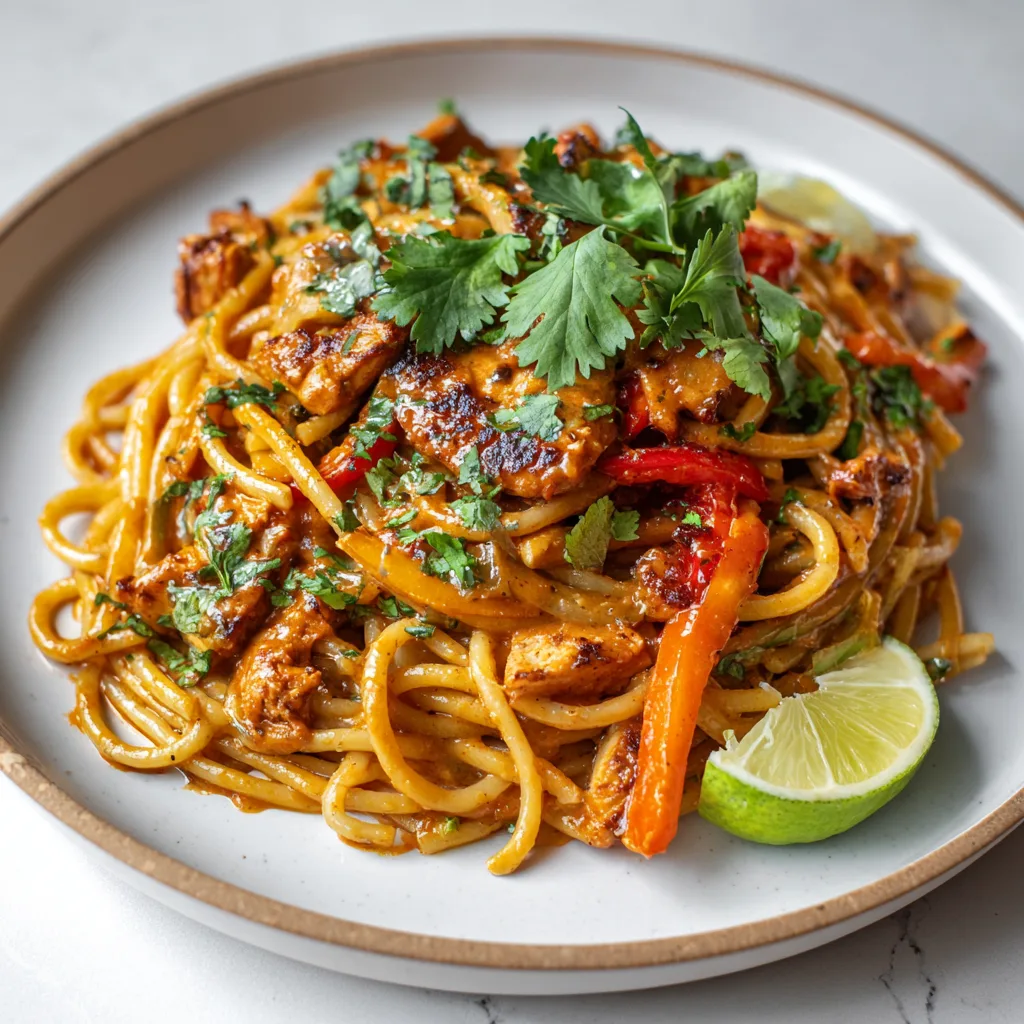
If there is one dish that perfectly bridges the gap between the comforting carb-heavy hug of Italian cuisine and the vibrant, zesty punch of Southeast Asian flavors, it is this Creamy Thai Red Curry Chicken Pasta. Imagine al dente spaghetti twirled through a luxurious, velvety sauce made from coconut milk and aromatic red curry paste, studded with tender bites of seared chicken and sweet red peppers. Finished with a squeeze of lime and fresh cilantro, this dish is not just a meal; it is an experience.
In the world of weeknight dinners, we often fall into a rut. Tuesday becomes Taco night, Wednesday is for standard marinara spaghetti. But what if you could elevate that pasta night into something restaurant-quality with barely any extra effort? This recipe is designed for the home cook who wants maximum flavor payoff with minimal cleanup. It is spicy, savory, slightly sweet, and incredibly creamy—without a drop of dairy.
Below, we will dive deep into why this fusion works, the science behind the perfect emulsion sauce, and exactly how to make it step-by-step. Get your forks ready.
Why This Fusion Recipe Works So Well 🌶️
Fusion cuisine often gets a bad reputation for being “confused,” but when done right, it highlights the best properties of different culinary traditions. In this case, pasta acts as the perfect vehicle for the sauce. Italian pasta, specifically long shapes like spaghetti, linguine, or bucatini, is designed to hold onto sauces.
Typically, Thai curries are served over jasmine rice. While delicious, rice absorbs the sauce completely. Pasta, however, allows the sauce to coat the exterior, providing a different textural experience. The starch released from the boiling pasta also helps thicken the coconut milk reduction, creating a glossier, more cohesive sauce than you might get with a traditional watery curry.
Furthermore, the flavor profile of Thai Red Curry—which involves galangal, lemongrass, dried red chilies, garlic, and shallots—cuts through the heaviness of a creamy pasta dish. Where a traditional Alfredo might feel heavy after a few bites, the acidity of the lime and the heat of the chili paste in this recipe keep your palate engaged and refreshed.
Choosing the Right Ingredients for Success 🥥
Before we fire up the stove, let’s talk about the grocery list. The simplicity of this recipe means that the quality of your ingredients will dictate the final taste. Here is what you need to know to shop smart.
The Curry Paste
Not all red curry pastes are created equal. You can make your own, but for a 30-minute meal, store-bought is the way to go. Look for brands that list natural ingredients without too many preservatives. Mae Ploy or Maesri are gold standards in the Asian aisle; they are potent and salty, so you won’t need to add much extra salt to the dish. If you use a westernized supermarket brand (like Thai Kitchen), you might need to use the whole jar to get the same flavor punch.
The Coconut Milk
You must use full-fat coconut milk from a can. Do not use the coconut milk found in the refrigerated dairy aisle meant for cereal; that is too watered down. For the creamiest result, shake the can before opening. If you want it even richer, you can use coconut cream, but full-fat milk offers the best balance for a pasta sauce.
The Protein
We are using chicken breast for this recipe because it cooks quickly and acts as a lean canvas for the bold sauce. However, boneless skinless chicken thighs are a fantastic alternative if you prefer darker, juicier meat. They are more forgiving if you accidentally overcook them.
Ingredients 📝
Here is everything you will need to bring this dish to life. Ensure all your vegetables are chopped and ready before you start cooking, as the process moves quickly once the heat is on.
Creamy Thai Red Curry Chicken Pasta
Ingredients
Equipment
Method
- Bring a large pot of salted water to a boil. Cook pasta according to package instructions until al dente. Reserve 1/2 cup pasta water, then drain.
- While water heats, cut chicken into cubes and season with salt and pepper.
- Heat 1 tbsp oil in a large skillet over medium-high heat. Sear chicken for 5-6 minutes until golden and cooked through. Remove to a plate.
- Add remaining 1 tbsp oil to the skillet. Sauté onion and bell pepper for 3-4 minutes until softened.
- Add garlic and ginger, cooking for 1 minute until fragrant. Add curry paste and stir constantly for 2 minutes to bloom spices.
- Pour in coconut milk, stirring to scrape up browned bits. Simmer for 3-5 minutes until sauce slightly thickens.
- Stir in fish sauce and brown sugar. Taste and adjust seasoning if needed.
- Add cooked chicken and drained pasta to the sauce. Toss well to coat, adding reserved pasta water if the sauce is too thick.
- Remove from heat. Squeeze fresh lime juice over the top and garnish with chopped cilantro before serving.
Notes
- 8 oz (225g) – Spaghetti or Linguine pasta
- 1 lb (450g) – Boneless, skinless chicken breast, cut into bite-sized cubes
- 2 tbsp – Vegetable oil or Coconut oil, divided
- 3 tbsp – Thai Red Curry Paste (adjust based on spice preference)
- 1 can (13.5 oz) – Full-fat unsalted coconut milk
- 1 large – Red bell pepper, thinly sliced
- 1 medium – Onion, finely chopped
- 3 cloves – Garlic, minced
- 1 tbsp – Fresh ginger, grated
- 1 tbsp – Fish sauce (optional, but highly recommended for umami)
- 1 tbsp – Brown sugar (to balance the heat)
- 1/2 cup – Fresh cilantro, chopped (plus more for garnish)
- 1 whole – Lime, cut into wedges
- Salt and Black Pepper – To taste
Instructions 🍳
Follow these numbered steps for a foolproof dinner. The key is timing the pasta so it finishes cooking right as your sauce thickens.
- Prep the Pasta Water: Bring a large pot of salted water to a rolling boil. Add the pasta and cook according to package directions until al dente. Reserve 1/2 cup of the starchy pasta water before draining. Set the drained pasta aside.
- Sear the Chicken: While the water heats, heat 1 tablespoon of oil in a large skillet or wok over medium-high heat. Season the chicken cubes with salt and pepper. Add chicken to the pan in a single layer. Cook for 5-6 minutes until golden brown and cooked through. Remove chicken from the pan and set aside on a plate.
- Sauté Aromatics and Veggies: In the same pan, add the remaining 1 tablespoon of oil. Add the chopped onion and red bell pepper slices. Sauté for 3-4 minutes until softened and the onions are translucent. Add the minced garlic and grated ginger, cooking for another 1 minute until fragrant.
- Bloom the Curry Paste: Push the vegetables to the side of the pan. Add the red curry paste to the center. Stir the paste against the hot pan for 1-2 minutes. This step is crucial—it “blooms” the spices, releasing the oils and deepening the flavor, preventing a raw spice taste.
- Build the Sauce: Pour in the coconut milk and scrape the bottom of the pan to release any browned bits (fond). Stir well to combine the curry paste with the milk. Bring the mixture to a gentle simmer.
- Season and Thicken: Stir in the fish sauce and brown sugar. Let the sauce simmer for 3-5 minutes until it reduces slightly and thickens. It should coat the back of a spoon. Taste the sauce; if it’s too spicy, add a pinch more sugar. If it needs more salt, add a dash more fish sauce or salt.
- Combine Elements: Return the cooked chicken (and any juices on the plate) to the pan. Add the drained pasta. Toss everything together vigorously. If the sauce looks too thick, add a splash of the reserved pasta water to loosen it up and make it glossy.
- Final Touches: Remove the pan from the heat. Squeeze half a lime over the pasta and toss in the fresh cilantro.
- Serve: Plate immediately, garnished with extra cilantro and lime wedges on the side.
Mastering the Sauce: Tips for the Perfect Consistency 🥣
The sauce is the heart of this dish. A common issue with coconut milk-based sauces is that they can either be too runny or they can “break” (where the oil separates from the solids). Here is how to avoid that.
Don’t Boil vigorously: Once you add the coconut milk, keep the heat at a gentle simmer. Boiling coconut milk too hard can cause it to curdle or separate, resulting in a grainy texture rather than a smooth, creamy one.
The Pasta Water Magic: Never skip saving the pasta water. The starch in that water acts as a binder. When you toss the pasta with the sauce, adding a splash of that water helps emulsify the oils and liquids, ensuring the sauce clings to the noodles rather than sliding off to the bottom of the bowl.
Adjusting Spice Levels: Thai curry paste varies wildly in heat. If you are cooking for kids or those sensitive to spice, start with 1 tablespoon of paste. You can always whisk in more later, but you can’t take it out. Conversely, if you love heat, you can add fresh sliced Thai chilies along with the garlic.
Variations and Substitutions 🔄
This recipe is incredibly versatile. Here are a few ways to customize it based on your dietary needs or what you have in your pantry.
- Make it Vegetarian/Vegan: Swap the chicken for firm tofu cubes or chickpeas. Ensure your red curry paste does not contain shrimp paste (some authentic brands do) and use soy sauce instead of fish sauce.
- Seafood Lovers: Shrimp is an excellent substitute for chicken. Sear the shrimp quickly (2 minutes per side) and remove them, adding them back in at the very end so they don’t become rubbery.
- Vegetable Overload: Want more greens? Add snap peas, baby spinach, or broccoli florets during the last few minutes of the sauce simmering. Spinach can be stirred in right at the end until wilted.
- Noodle Swap: While spaghetti is standard, this is delicious with Fettuccine, Rice Noodles (for a gluten-free Pad Thai vibe), or even Udon noodles for a chewy texture.
Storage and Reheating 🥡
Ideally, creamy pasta dishes are best eaten fresh. However, this dish holds up surprisingly well for meal prep thanks to the fat content in the coconut milk.
Refrigerator: Store leftovers in an airtight container for up to 3 days. The pasta will absorb some of the sauce as it sits.
Reheating: When reheating in the microwave or on the stovetop, the sauce will appear thick. Add a splash of water or a teaspoon of water to the pasta before heating. Stir gently halfway through heating to revive the creamy texture.
Freezing: It is not recommended to freeze this dish once the pasta is mixed in, as the noodles will become mushy upon thawing. However, you can make the sauce and chicken mixture ahead of time, freeze that, and boil fresh pasta when you are ready to eat.
Conclusion
This Creamy Thai Red Curry Chicken Pasta is a testament to the fact that dinner doesn’t have to be complicated to be exciting. It breaks the monotony of the weekly menu, introducing bright, aromatic flavors that wake up the palate. Whether you are cooking for a date night, a family dinner, or just treating yourself, this dish delivers comfort and zest in equal measure.
So, grab that can of coconut milk and that jar of curry paste. Your new favorite pasta dish is only 30 minutes away. Happy cooking!