The Ultimate Lemon Meringue Cheesecake: Sunshine on a Plate 🍋
If you are looking for a dessert that screams “celebration,” look no further. This Lemon Meringue Cheesecake is the culinary equivalent of a sunny spring day. It combines three of the world’s most beloved dessert elements into one spectacular showstopper: a buttery, crunch graham cracker crust, a dense and velvety New York-style cheesecake, and the zesty, bright punch of a classic lemon meringue pie.
There is something magical about the contrast in this dish. You have the heavy, rich creaminess of the cheese filling playing against the sharp, acidic tang of the lemon curd, all crowned with clouds of light, sweet toasted meringue. It is a texture lover’s dream and a flavor profile that dances on the palate. Whether you are baking for Easter, a summer barbecue, or just to impress your dinner guests, this cheesecake is guaranteed to be the highlight of the meal.
In this extensive guide, we are going to break down every layer. We will demystify the water bath, teach you how to get that perfect “drip” on the lemon curd, and show you how to torch your meringue without melting your masterpiece. Let’s get baking!
Why This Recipe is Worth the Effort
Let’s be honest: a cheesecake with three distinct components takes time. But here is why this specific recipe is worth every minute:
- The Perfect Balance: Many lemon cheesecakes are just plain cheesecakes with a bit of lemon juice mixed in. This recipe uses a layer of pure lemon curd on top, ensuring you get that pucker-inducing tartness in every bite.
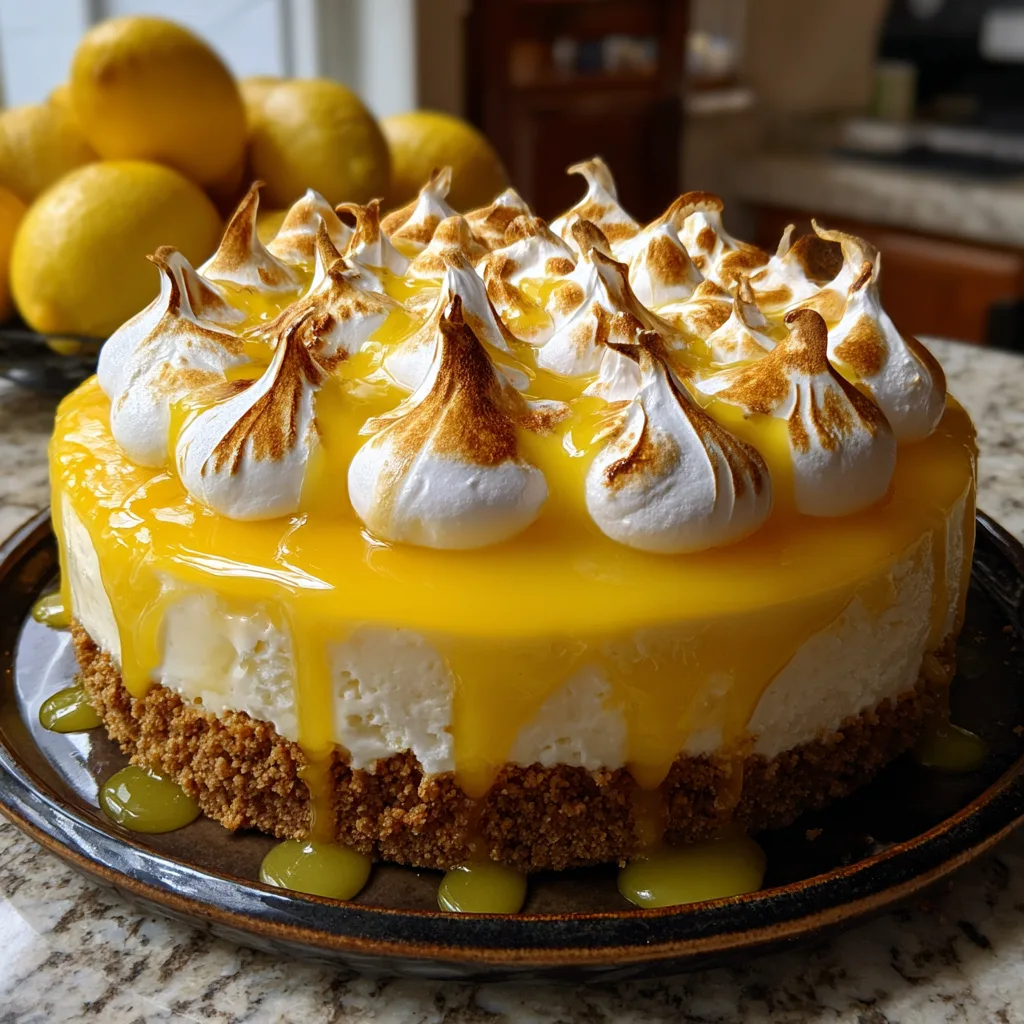
- Visual Impact: The glossy yellow curd dripping down the white sides, topped with golden-browned meringue peaks, makes this cake look like it came straight from a high-end patisserie window.
- Make-Ahead Magic: Because cheesecake needs to set and chill, this is the ultimate make-ahead dessert. You can bake the base a day in advance and simply assemble the toppings before serving.
The Foundation: The Graham Cracker Crust
A great house needs a solid foundation, and a great cheesecake needs a sturdy crust. We aren’t just dusting the bottom of the pan here; we want a crust that travels up the sides to hold all that creamy goodness in.
The secret to a crust that doesn’t crumble when you cut it is the ratio of butter to crumbs and the “pre-bake.” By baking the crust alone for 10 minutes before adding the filling, you set the structure, ensuring it stays crunchy even after sitting under the wet cheesecake batter for days.
The Heart: The Creamy Cheesecake Filling
This is a classic New York-style base. It relies on full-fat cream cheese (do not use the tub spread!), sugar, eggs, and sour cream. The sour cream is crucial—it adds a slight tang that bridges the gap between the rich cheese and the tart lemon, and it softens the texture so the cheesecake melts in your mouth rather than feeling rubbery.
The Water Bath Strategy
To prevent cracks and ensure an even bake, we use a water bath (bain-marie). This creates a humid environment in the oven, cooking the custard gently. If you skip this, the edges will overcook before the center is set, and you’ll likely end up with the Grand Canyon running through the middle of your cake.
Ingredients
Prepare your mise en place for a stress-free baking experience
Lemon Meringue Cheesecake
Ingredients
Equipment
Method
- Preheat oven to 350°F (175°C). Mix crust ingredients and press into a 9-inch springform pan. Bake 10 mins.
- Reduce oven to 325°F (160°C). Beat cream cheese and sugar until smooth. Add sour cream, vanilla, and zest.
- Add eggs one at a time, mixing gently. Pour batter over crust.
- Place pan in a water bath and bake for 60-70 minutes until center is slightly jiggly. Cool in oven for 1 hour.
- Chill cheesecake for 6+ hours.
- Make lemon curd on stovetop by whisking juice, yolks, and sugar over heat until thickened. Stir in butter. Cool.
- Make meringue by heating whites and sugar over double boiler to 160°F, then whipping to stiff peaks.
- Top chilled cheesecake with curd and meringue. Torch meringue before serving.
Notes
Instructions
Follow these steps for a bakery-quality result.
- Prepare the Crust: Preheat your oven to 350°F (175°C). Mix the graham cracker crumbs, melted butter, sugar, and salt in a bowl until it resembles wet sand. Press this mixture firmly into the bottom and slightly up the sides of a 9-inch springform pan. Bake for 10 minutes, then remove and let cool. Reduce oven temperature to 325°F (160°C).
- Make the Filling: In a large mixer, beat the room-temperature cream cheese and sugar on medium-low speed until smooth and creamy (about 3 minutes). Scrape down the bowl. Add sour cream, vanilla, and lemon zest. Mix until combined. Add the eggs one at a time, mixing on low just until incorporated after each addition. Do not overmix, or you will whip air into the batter, causing cracks.
- The Water Bath: Wrap the bottom of your springform pan in 2-3 layers of heavy-duty aluminum foil to ensure no water seeps in. Place the springform pan inside a large roasting pan. Pour the cheesecake batter over the crust. Fill the roasting pan with boiling water until it reaches halfway up the side of the springform pan.
- Bake: Bake at 325°F (160°C) for 60-70 minutes. The center should still be slightly jiggly (like Jell-O) while the edges are set. Turn off the oven, crack the door open slightly, and leave the cheesecake inside for 1 hour to cool gradually. Remove from the water bath and chill in the refrigerator for at least 6 hours or overnight.
- The Lemon Curd: While the cake chills, make the curd. Whisk lemon juice, zest, sugar, and egg yolks in a small saucepan over medium-low heat. Cook, stirring constantly, until the mixture thickens enough to coat the back of a spoon (about 8-10 minutes). Remove from heat and whisk in the cold butter one cube at a time until smooth. Strain through a mesh sieve and let cool completely.
- The Meringue: In a heatproof bowl over a pot of simmering water, whisk egg whites and sugar. Heat until the sugar is dissolved and the mixture is hot to the touch (160°F). Remove from heat, add cream of tartar, and beat with a hand mixer on high until stiff, glossy peaks form.
- Assembly: Remove the chilled cheesecake from the ring. Pour the lemon curd over the top, letting it drip down the sides slightly. Pipe or dollop the meringue on top. Using a kitchen torch, carefully brown the meringue peaks until golden. Serve immediately or chill for up to 2 hours.
Mastering the Meringue: Swiss vs. French
For this recipe, we use a Swiss Meringue method (cooking the whites and sugar over a double boiler). Why not just whip raw whites (French method)?
1. Safety: Heating the whites to 160°F pasteurizes them, making them safe to eat without baking the whole cake again.
2. Stability: Swiss meringue is much more stable. It won’t “weep” (release liquid) onto your beautiful lemon curd as quickly as a French meringue would. It holds those sharp, defined peaks perfectly for torching.
Troubleshooting: Avoiding the Dreaded Crack
Nothing breaks a baker’s heart like a giant fissure running across a cheesecake. Here is how to avoid it:
Temperature Shock: This is the enemy. If you pull a hot cheesecake out of the oven into a cool kitchen, it contracts too fast and cracks. The “oven door crack” method mentioned in the instructions is non-negotiable.
Overmixing: Once you add the eggs, mix on the lowest speed possible. We want a dense custard, not a soufflé.
The Release: Run a thin knife around the edge of the pan right after you take it out of the oven (before chilling). As the cake cools, it shrinks; if it’s stuck to the sides, it will tear itself apart in the middle.
Storage and Serving Suggestions
This cheesecake is best served cold, but the meringue is best fresh. If you are prepping ahead:
- Make the cheesecake up to 2 days in advance.
- Make the lemon curd up to 1 week in advance (store in a jar).
- Make the meringue and assemble the *day of serving*. Humidity can make meringue sticky or “weepy” after 24 hours in the fridge.
Slice this cake with a hot knife (dip it in hot water and wipe dry) for clean, professional-looking cuts that show off those distinct layers.
Conclusion
The Lemon Meringue Cheesecake is a labor of love, but the result is a masterpiece of texture and flavor. It captures the essence of spring with its bright citrus notes while providing the comfort of a classic creamy dessert. Don’t be intimidated by the steps; take them one at a time, and you will be rewarded with a dessert that looks like it cost a fortune but tastes like pure homemade joy. Happy Baking!