
🍣 The Ultimate Spicy Salmon Sushi Bake: A Deconstructed Feast
In the ever-evolving world of culinary fusion, few dishes have taken the internet by storm quite like the Sushi Bake. Imagine all the crave-worthy flavors of your favorite spicy salmon roll—the vinegared rice, the creamy, spicy fish, the savory unagi sauce, and the crunch of seaweed—deconstructed into a warm, comforting casserole that is perfect for sharing. This recipe for Spicy Salmon Sushi Bake is not just a meal; it is an experience. It transforms the solitary act of eating sushi into a communal feast, inviting everyone to dig in with a spoon and make their own mini-wraps.
This dish is the answer to the home cook’s dilemma: “I crave sushi, but I lack the patience (and skill) to roll it.” By layering the ingredients in a baking dish, you achieve the same flavor profile with a fraction of the effort. The result is a rectangular block of pure umami—creamy, savory, sweet, and spicy all at once. The rice gets slightly crisp at the bottom, the salmon mixture becomes molten and rich, and the fresh toppings cut through the richness to provide balance.
🌟 Why This Recipe Took the World by Storm
The Sushi Bake phenomenon is more than just a viral trend; it is a practical solution to enjoying Japanese flavors at home. Traditional sushi making is an art form that requires years of training to perfect. The rice must be fanned to the right temperature, the fish sliced with surgical precision, and the rolls tightened just so. The Sushi Bake throws those rules out the window in favor of accessibility and comfort.
Texture and Temperature: Unlike traditional sushi, which is served cool or at room temperature, a sushi bake is served hot. This changes the experience entirely. The heat activates the fats in the mayonnaise and the salmon, creating a luxurious mouthfeel that cold sushi cannot replicate. The contrast between the warm, creamy filling and the crisp, cool roasted seaweed (nori) you use to scoop it up is a textural delight.
Crowd-Pleasing Potential: This is arguably the ultimate potluck dish. It travels well, retains its heat, and looks stunning when garnished with bright orange tobiko and green scallions. It invites interaction—guests grabbing sheets of nori and scooping up their own portions creates a fun, social dining atmosphere.
🐟 Selecting the Perfect Salmon
Since the salmon will be baked, you do not need strictly “sushi-grade” raw fish, but quality still matters. You have a few options depending on your budget and availability:
Fresh Atlantic or Sockeye Salmon: This is the gold standard. Poaching or baking fresh salmon fillets and then flaking them ensures the best texture and moisture. Sockeye offers a robust flavor and deep red color, while Atlantic salmon is buttery and mild.
Canned Salmon: In a pinch, high-quality canned salmon works surprisingly well. Just be sure to drain it thoroughly and remove any skin or bones. The creamy sauce covers the texture difference well, making this a very budget-friendly option.
Leftover Grilled Salmon: This recipe is a fantastic way to repurpose leftovers. The spicy mayo mixture will revive even slightly dry cooked salmon, giving it a second life as the star of the show.
🍚 The Foundation: Perfect Sushi Rice
The base of this casserole is seasoned sushi rice. Do not skip the seasoning step! Plain white rice will get lost under the flavorful toppings. You need that tangy, sweet, salty profile to cut through the richness of the mayo and cheese.
Washing is Non-Negotiable: You must wash your short-grain rice until the water runs clear. Excess starch leads to a gummy, gluey layer rather than distinct, fluffy grains. Rinse, swirl, drain, and repeat at least 3-4 times.
The Seasoning Ratio: A classic sushi vinegar (su) is made of rice vinegar, sugar, and salt. As the hot rice absorbs this mixture, each grain becomes glossy and flavorful. If you don’t have rice vinegar, apple cider vinegar is a passable substitute, though less traditional.
🛒 Ingredients
To construct this savory block of deliciousness, you will need the following:
Spicy Salmon Sushi Bake
Ingredients
Equipment
Method
- Preheat oven to 400°F (200°C).
- In a small bowl, mix rice vinegar, sugar, and salt until dissolved. Fold into the hot cooked rice.
- Press the seasoned rice firmly into the bottom of a baking dish to create an even layer.
- Sprinkle furikake seasoning evenly over the rice layer.
- In a medium bowl, mix flaked cooked salmon, softened cream cheese, mayonnaise, Sriracha, and soy sauce until creamy.
- Spread the salmon mixture evenly over the rice.
- Bake for 15 minutes until the top is golden and bubbly.
- Remove from oven. Drizzle with unagi sauce and garnish with tobiko, green onions, and sesame seeds.
- Serve warm with roasted seaweed sheets for wrapping.
Notes
The Rice Layer:
- – 3 cups cooked Sushi Rice (short-grain rice)
- – 3 tablespoons Rice Vinegar
- – 1 tablespoon Sugar
- – 1 teaspoon Salt
- – 2 tablespoons Furikake (Japanese rice seasoning with seaweed and sesame)
The Salmon Layer:
- – 1 lb (450g) Salmon fillets, cooked and flaked
- – 4 oz (115g) Cream Cheese, softened to room temperature
- – 1/2 cup Kewpie Mayonnaise (Japanese mayo is richer and creamier than American styles)
- – 2 tablespoons Sriracha (adjust to spice preference)
- – 1 teaspoon Soy Sauce
The Toppings:
- – Unagi Sauce (Eel Sauce) for drizzling
- – 2 tablespoons Tobiko or Masago (fish roe)
- – 2 stalks Green Onions, thinly sliced
- – 1 teaspoon Toasted Sesame Seeds
- – Roasted Seaweed Sheets (Nori) for serving
🔥 Instructions
Creating this masterpiece is all about layering. Think of it like a lasagna, but with Japanese ingredients.
- Prepare the Rice: Cook the short-grain rice according to package instructions. While it is still hot, transfer it to a large bowl. Mix the rice vinegar, sugar, and salt in a small cup until dissolved, then fold this mixture gently into the rice. Fan the rice to cool it slightly.
- Prepare the Filling: If using raw salmon, season it with salt and pepper and bake at 400°F (200°C) for 12-15 minutes until fully cooked. Let it cool, then flake it apart with a fork. In a mixing bowl, combine the flaked salmon, softened cream cheese, Kewpie mayo, Sriracha, and soy sauce. Mix until you have a creamy, uniform paste.
- Preheat Oven: Preheat your oven to 400°F (200°C).
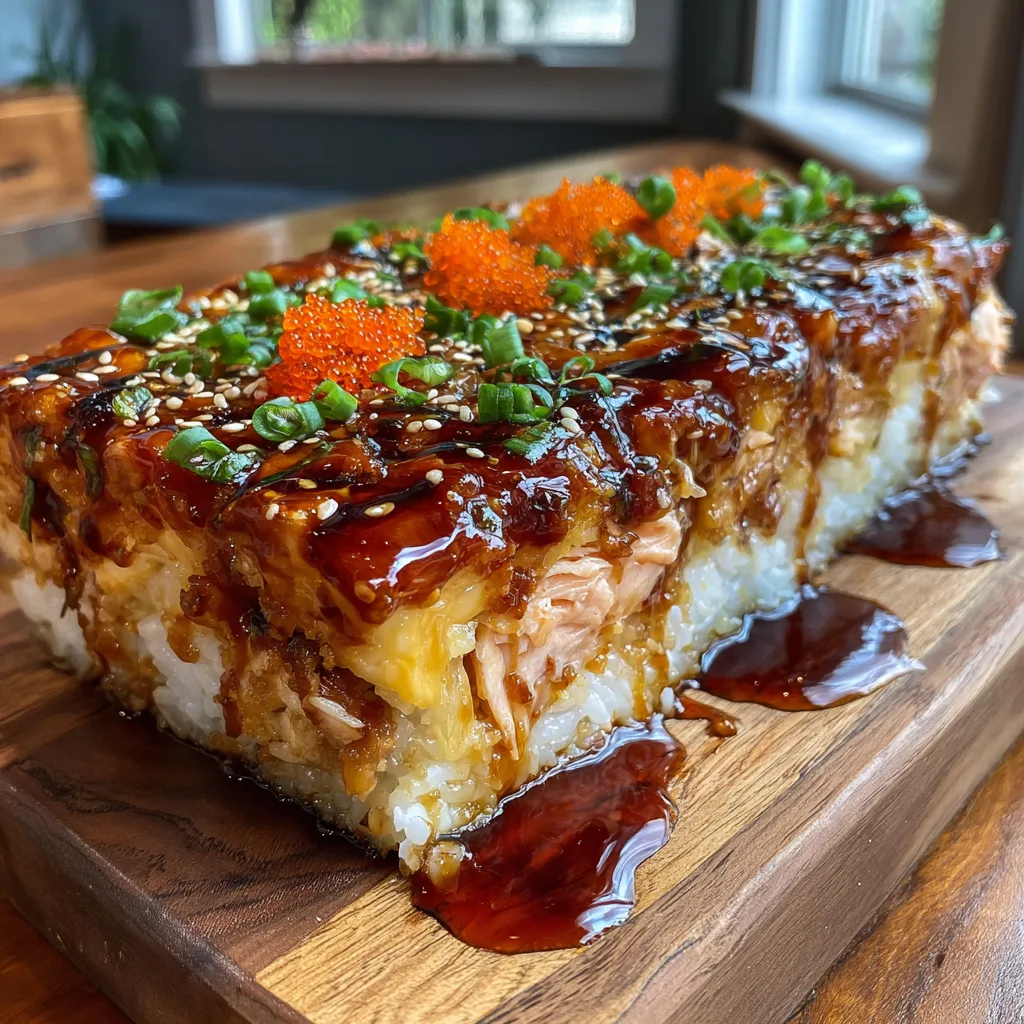
- Layer 1: Rice: Press the seasoned sushi rice into the bottom of a 9×13 baking dish (or a smaller brownie pan for a thicker block like the image). Wet your hands or a spatula to prevent sticking and press it down firmly to create a solid base.
- The Secret Crunch: Sprinkle an even layer of Furikake seasoning over the pressed rice. This adds a hidden layer of crunch and umami seaweed flavor between the rice and the fish.
- Layer 2: Salmon: Spread the creamy salmon mixture evenly over the rice layer. Use the back of a spoon to smooth it out to the edges.
- Bake: Place the dish in the oven and bake for 10-15 minutes. You want the top to be heated through and slightly bubbling. If you want a caramelized top, switch the oven to broil for the last 2 minutes, but watch it closely to prevent burning.
- Garnish: Remove from the oven. Immediately drizzle generously with Unagi sauce. Sprinkle with the toasted sesame seeds, chopped green onions, and spoon the bright orange tobiko over the center.
- Serve: Scoop portions out while hot and serve with small rectangles of roasted nori. To eat, place a spoonful of the bake onto a piece of nori, fold it like a taco, and enjoy.
💡 Expert Tips for Success
The Mayo Matters
If you can, source Kewpie Mayonnaise. Unlike American mayonnaise which uses whole eggs and white vinegar, Kewpie uses only egg yolks and rice or apple vinegar. This results in a much richer, custard-like texture and a savory depth that is essential for the authentic “sushi bake” flavor.
Handling the Cream Cheese
Ensure your cream cheese is completely softened before mixing. If it is cold, you will end up with lumps of plain cheese in your salmon mixture rather than a smooth, cohesive sauce. You can microwave it for 15-20 seconds to soften it quickly.
Presentation
To achieve the “block” look seen in the photo, allow the bake to cool for about 10 minutes after removing it from the oven. This allows the rice starches to firm up slightly and the creamy layer to set. Run a knife around the edge and slice it into rectangles before lifting it out with a spatula.
🥡 Storage and Reheating
Storage: Sushi bake is best enjoyed fresh, but leftovers can be stored in an airtight container in the refrigerator for up to 3 days.
Reheating: Do not microwave the garnish if possible (the lettuce/onions will wilt). It is best to reheat portions in the microwave or oven until warm. Note that the texture of the mayo may separate slightly upon reheating, but a quick stir brings it back.
🥗 Variations to Try
California Roll Style: Add imitation crab (surimi) instead of salmon, and mix in diced cucumber after baking (to keep it crunch) and avocado slices on top.
Scallop Dynamite: Swap the salmon for bay scallops. The sweetness of the scallops pairs beautifully with the spicy mayo.
Vegetarian: Use crumbled tofu or chopped king oyster mushrooms mixed with the spicy mayo sauce as your protein layer.
✨ Conclusion
The Spicy Salmon Sushi Bake is a testament to the fun of modern cooking. It breaks rules, mixes cultures, and prioritizes flavor above all else. It is rich, indulgent, and incredibly satisfying—a perfect centerpiece for your next dinner party or a cozy night in. Once you try this warm, deconstructed sushi experience, you might find yourself craving it even more than the traditional rolls. Gather your ingredients, invite some friends, and get ready to roll (or rather, scoop)!


