🍷 The Ultimate Red Wine Braised Short Ribs over Creamy Risotto
There are meals you cook to feed yourself, and then there are meals you cook to feed your soul. This recipe for Red Wine Braised Short Ribs served over a bed of velvety Parmesan Risotto falls squarely into the latter category. It is the culinary equivalent of a warm hug on a cold night—rich, decadent, and effortlessly impressive.
If you have ever been intimidated by the idea of making “restaurant-quality” food at home, let this dish change your mind. While the final result looks and tastes like something from a high-end bistro, the process is surprisingly forgiving. It relies on the magic of time and low heat to transform tough cuts of meat into tender, melt-in-your-mouth bites that fall apart at the touch of a fork.
The Magic of Braising: Low and Slow
Braising is a two-step cooking method that involves searing meat at a high temperature and then finishing it covered in liquid at a lower temperature. This technique is perfect for short ribs, a cut of beef derived from the brisket, chuck, or plate areas of the cow. These cuts are laden with connective tissue (collagen).
When you cook short ribs quickly, they are tough and chewy. But when you braise them slowly in liquid, that collagen breaks down into gelatin. This gelatin enriches the sauce, giving it a luxurious, sticky mouthfeel, and baste the meat from the inside out, ensuring it remains juicy. The result? Beef that is so tender you don’t even need a knife.
Choosing the Right Wine
Since red wine forms the base of our braising liquid, the wine you choose matters. However, you do not need to break the bank. The golden rule of cooking with wine is: Don’t cook with wine you wouldn’t drink.
For this recipe, you want a dry, full-bodied red wine. The tannins and acidity in the wine help tenderize the meat and balance the richness of the fat.
- Best Options: Cabernet Sauvignon, Merlot, Chianti, or a Côtes du Rhône.
- Avoid: Sweet wines (like Port or sweet blends) or “Cooking Wine” from the grocery store, which is often loaded with salt and preservatives.
The Perfect Pair: Creamy Parmesan Risotto
While the short ribs are the star, the risotto is the supporting actor that steals the show. A good risotto should be creamy, not because of added cream, but because of the starch released from the rice grains during the cooking process.
To achieve this, we use Arborio or Carnaroli rice. These short-grain varieties have a high starch content. As you slowly stir in hot broth, the grains rub against each other, releasing starch into the liquid to create a natural, velvety sauce. We finish it with the “mantecatura” step—vigorously stirring in cold butter and parmesan cheese at the very end to emulsify the mixture.
💡 Pro Tip: Make Ahead Magic
Braised meats actually taste better the next day. As the dish cools, the meat relaxes and reabsorbs the flavorful juices. If you are hosting a dinner party, braise the ribs the day before, refrigerate them in the sauce, and simply reheat them gently while you make the risotto fresh.
Ingredients
Gather all your ingredients before starting. This mise-en-place makes the cooking process smooth and enjoyable.
For the Braised Short Ribs
- 3-4 lbs Bone-in beef short ribs (about 6-8 ribs)
- Salt and freshly cracked black pepper
- 2 tbsp Vegetable oil or grapeseed oil
- 1 large Yellow onion, chopped
- 2 large Carrots, chopped
- 2 stalks Celery, chopped
- 4 cloves Garlic, smashed
- 2 tbsp Tomato paste
- 2 cups Dry red wine (Cabernet or Merlot)
- 2 cups Beef broth (low sodium preferred)
- 1 bunch Fresh herbs (thyme sprigs, rosemary, bay leaves)
For the Parmesan Risotto
- 4 cups Chicken or beef stock, kept warm
- 2 tbsp Unsalted butter, divided
- 1 tbsp Olive oil
- 1 small Shallot, minced
- 1.5 cups Arborio rice
- 1/2 cup Dry white wine (Pinot Grigio or Sauvignon Blanc)
- 1/2 cup Freshly grated Parmesan cheese
- Salt to taste
- Optional: Fresh parsley or Gremolata for garnish
Instructions
Pour yourself a glass of wine (you have the open bottle, after all!) and let’s get cooking.
Red Wine Braised Short Ribs with Risotto
Ingredients
Equipment
Method
- Preheat oven to 325°F (163°C). Season ribs with salt and pepper.
- Sear ribs in oil in a Dutch oven over high heat until browned. Remove ribs.
- Add onions, carrots, and celery to the pot. Sauté until soft. Stir in tomato paste and garlic.
- Deglaze with red wine, scraping up browned bits. Simmer for 5 minutes.
- Return ribs to pot. Add broth and herbs. Cover and bake for 2.5 – 3 hours until tender.
- For Risotto: Sauté shallots in butter. Add rice and toast. Deglaze with white wine.
- Gradually add warm stock to rice, ladle by ladle, stirring constantly until absorbed and rice is creamy.
- Finish risotto with butter and parmesan. Serve ribs and sauce over the risotto.
Notes
1. Sear the Ribs
Preheat your oven to 325°F (163°C). Pat the short ribs dry with paper towels—moisture is the enemy of a good sear. Season them generously on all sides with salt and pepper. Heat the oil in a large Dutch oven over medium-high heat. Sear the ribs in batches, browning them deeply on all sides (about 2-3 minutes per side). Remove and set aside on a plate.
2. Build the Flavor Base
Lower the heat to medium. Add the onions, carrots, and celery to the pot (add a little more oil if the pot is dry). Sauté for 5-7 minutes until the vegetables are softened and browned. Add the garlic and tomato paste, stirring constantly for 2 minutes to cook out the raw tomato flavor.
3. Deglaze and Simmer
Pour in the red wine to deglaze the pot. Use a wooden spoon to scrape up the “fond”—those delicious brown bits stuck to the bottom of the pot. Bring the wine to a simmer and let it reduce by half (about 5-8 minutes).
4. The Long Braise
Return the short ribs (and any accumulated juices) to the pot. Add the beef broth and the herb bundle. The liquid should come about 3/4 of the way up the sides of the meat; the ribs should not be fully submerged. Cover tightly with the lid and transfer to the oven. Braise for 2.5 to 3 hours, or until the meat is falling off the bone.
5. Start the Risotto (Wait until 30 mins before serving)
In a separate saucepan, keep your stock warm. In a large skillet or wide pot, heat 1 tbsp butter and olive oil over medium heat. Add the minced shallot and sauté until translucent. Add the Arborio rice and toast it for 1-2 minutes, stirring until the edges of the grains are translucent.
6. The Risotto Method
Pour in the white wine and stir until fully absorbed. Begin adding the warm stock, one ladle at a time, stirring frequently. Wait until the liquid is almost fully absorbed before adding the next ladle. Continue this process for about 18-20 minutes until the rice is tender but still has a slight bite (al dente).
7. Finish the Sauce
While the risotto finishes, remove the ribs from the oven. Transfer the meat to a platter and cover with foil to keep warm. Strain the sauce through a fine-mesh sieve, discarding the vegetables and herbs. Skim off excess fat from the top. If the sauce is too thin, simmer it on the stove for 10 minutes to reduce and thicken.
8. Plate and Serve
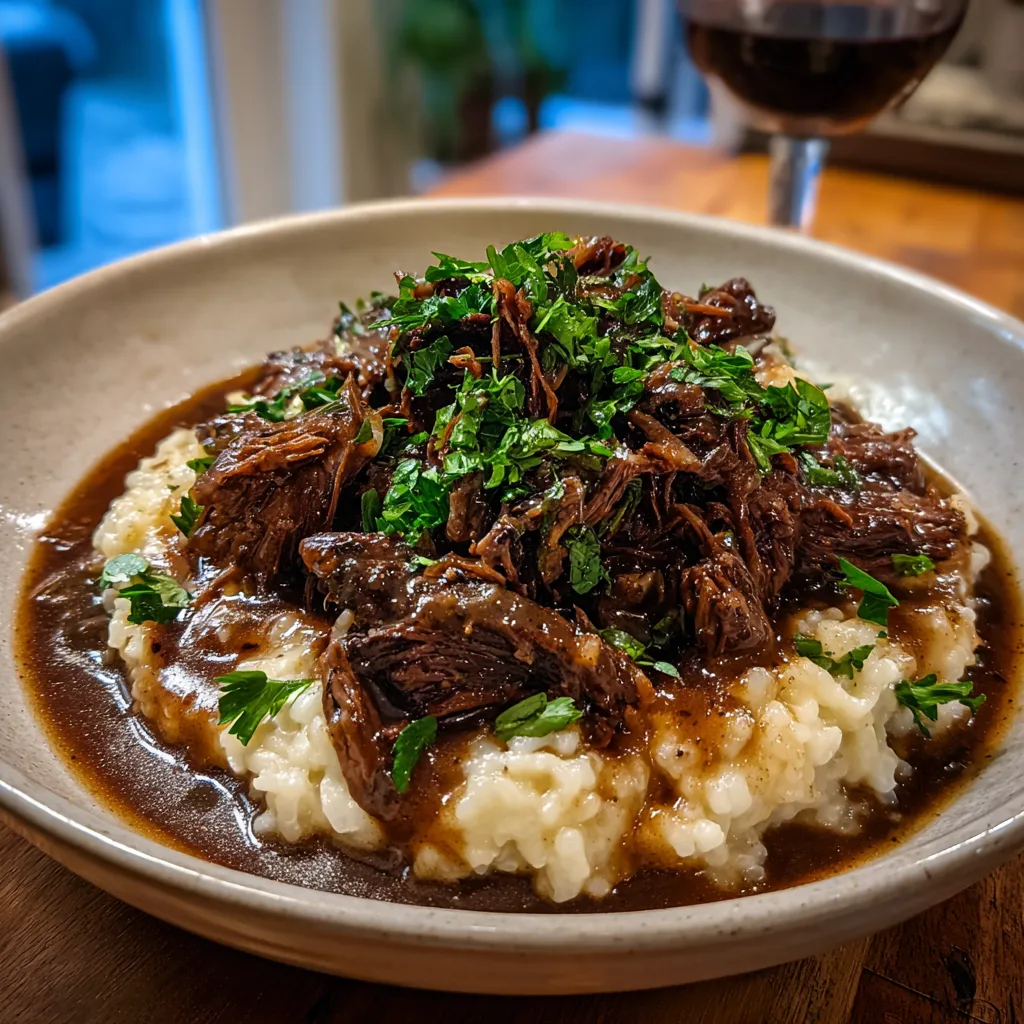
Remove the risotto from heat. Stir in the remaining 1 tablespoon of butter and the Parmesan cheese vigorously to make it creamy. Spoon a generous mound of risotto into bowls. Top with the short ribs (either bone-in or shredded off the bone). Ladle the rich red wine reduction over the meat. Garnish with fresh herbs or gremolata.
Troubleshooting Your Braise
The meat is tough: It simply hasn’t cooked long enough. Put the lid back on and return it to the oven. Check it every 30 minutes. Collagen needs time to break down; you cannot rush it.
The sauce is greasy: Short ribs are a fatty cut. It is normal for a layer of oil to form on top of the sauce. Use a ladle to skim it off, or use a fat separator. If making ahead, refrigerate the sauce; the fat will solidify on top and can be easily removed.
Conclusion
This Red Wine Braised Short Ribs recipe is more than just dinner; it is a celebration of flavor. The contrast between the intense, savory beef and the creamy, mild risotto is perfectly balanced. Whether you are cooking for a romantic date night or a cozy family Sunday dinner, this dish promises to impress. The best part? The oven does most of the work, leaving you time to enjoy the company—and the rest of that bottle of wine.