Golden Custard-Filled Donut Holes: The Ultimate Creamy, Crispy Teatime Treat 🍩
There are few things in the culinary world that rival the simple, unadulterated joy of biting into a fresh, warm donut. But when that donut is bite-sized, rolled in a snow-white dusting of powdered sugar, and bursting with a cool, rich vanilla custard, it transcends “snack” status and becomes an event. Meet the Golden Custard-Filled Donut Hole—a rustic, homemade answer to the bakery shop window.
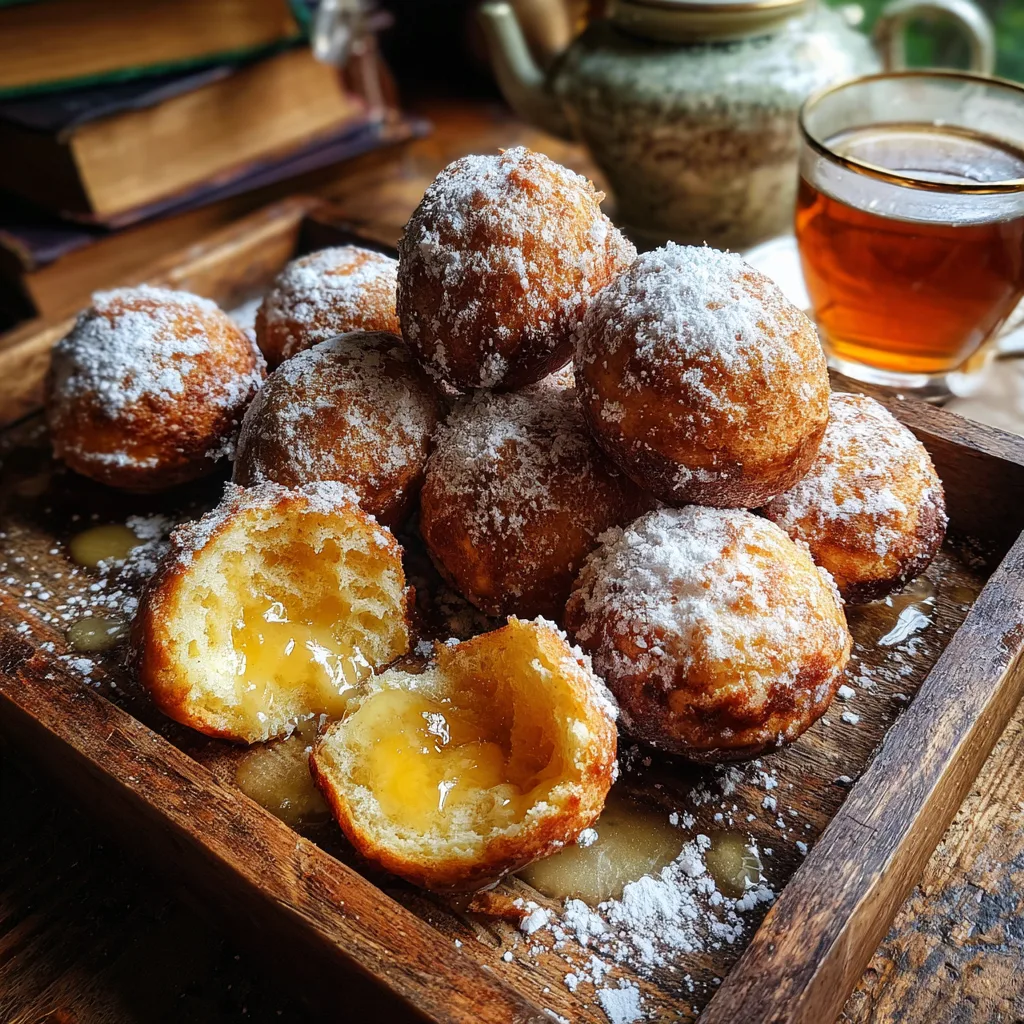
Reminiscent of Italian Bomboloni or German Krapfen, these miniature pastries are designed for cozy afternoons. The image above captures the essence of this treat: the contrast between the deep golden-brown fried exterior and the vibrant yellow, silky cream inside. It is comfort food at its finest, pairing perfectly with a hot cup of tea or strong coffee.
In this extensive guide, we are going to demystify the art of frying dough at home. We will break down the science of yeast, the secret to a lump-free pastry cream, and the technique for filling these delicate spheres without bursting them. Whether you are a seasoned baker or a novice looking to impress, this recipe will guide you to sweet success.
Why This Recipe is Worth the Effort
Making donuts from scratch can seem intimidating, especially when dealing with hot oil and yeast. However, this recipe is specifically designed to be forgiving and rewarding. Here is why you need to make these this weekend:
- Texture Contrast: The magic lies in the triad of textures: the slight crunch of the fried shell, the pillowy softness of the interior dough, and the velvet smoothness of the custard.
- Portion Control (Sort of): Because they are “holes” rather than full-sized rings, you can convince yourself that having three (or four) is perfectly reasonable.
- Customizable Filling: While we are using a classic vanilla custard (Crème Pâtissière) today, this base dough is a canvas for chocolate ganache, lemon curd, or raspberry jam.
- The Fresh Factor: Store-bought donuts simply cannot compete with the aroma and taste of dough that has been fried fresh in your own kitchen.
The History of the Filled Donut
The concept of frying dough is ancient, appearing in various forms across Roman, Greek, and Middle Eastern history. However, the filled donut as we know it has strong European roots. The Berliner in Germany, the Pączki in Poland, and the Bomboloni in Italy all share the same DNA: a rich, egg-based yeast dough, deep-fried and filled with jams or creams.
Our version takes inspiration from these European classics but shrinks them down into a snackable size. The goal is to achieve a high filling-to-dough ratio, ensuring that every bite contains that crucial burst of cream.
Ingredients
To create these golden beauties, we need to split our ingredient list into two main components: the Dough and the Filling.
Golden Custard-Filled Donut Holes
Ingredients
Equipment
Method
- Mix warm milk, sugar, and yeast in a bowl. Let sit 5 mins until foamy.
- Add butter, egg, vanilla, and flour. Knead until smooth and elastic (5-7 mins).
- Let dough rise in a warm place for 1-1.5 hours until doubled.
- Meanwhile, whisk yolks, sugar, and cornstarch. Heat milk, then temper egg mixture. Cook until thickened. Cool completely.
- Punch down dough, form into small balls, and let rise again for 30 mins.
- Heat oil to 350°F (175°C). Fry donuts for 2 mins per side until golden.
- Fill cooled donuts with custard using a piping bag.
- Dust generously with powdered sugar before serving.
Notes
The Brioche-Style Dough
We use an enriched dough (meaning it has fats like butter, milk, and eggs) to ensure the donut stays soft even after cooling.
– Dry Ingredients –
- 2 ½ cups All-Purpose Flour – Strong enough to hold structure, soft enough for a tender crumb.
- ¼ cup Granulated Sugar – Just enough to feed the yeast and brown the crust.
- 1 tsp Salt – Crucial for balancing flavor.
- 2 ¼ tsp Instant Yeast – One standard packet.
– Wet Ingredients –
- ¾ cup Whole Milk – Warmed to about 110°F (43°C).
- 3 tbsp Unsalted Butter – Melted and slightly cooled.
- 1 Large Egg – Room temperature.
- 1 tsp Vanilla Extract.
The Rich Vanilla Custard (Crème Pâtissière)
This isn’t pudding from a box. This is a true pastry cream thickened with egg yolks and cornstarch.
– Custard Base –
- 4 Large Egg Yolks – Save the whites for an omelet! The yolks provide that rich yellow color.
- ½ cup Granulated Sugar.
- 3 tbsp Cornstarch – The thickening agent.
- 1 ½ cups Whole Milk.
- 2 tsp Vanilla Bean Paste or Extract – Use paste if you want those lovely black specks.
- 2 tbsp Unsalted Butter – Added at the end for glossiness.
For Frying and Dusting
- Vegetable or Canola Oil – For deep frying (about 1 quart).
- ½ cup Powdered Sugar – For the final snowfall finish.
Instructions
Baking requires patience. Read through all the steps before you begin.
- Activate the Yeast: In the bowl of a stand mixer, combine the warm milk and 1 teaspoon of the sugar. Sprinkle the yeast on top and let it sit for 5-10 minutes until it becomes foamy. (If it doesn’t foam, your yeast is dead; start over!).
- Mix the Dough: Add the remaining sugar, melted butter, egg, vanilla, and salt to the yeast mixture. Whisk to combine. Add half the flour and mix with the dough hook. Gradually add the remaining flour until a soft, slightly sticky dough forms.
- Knead: Knead on medium speed for 5-7 minutes. The dough should be smooth, elastic, and pull away from the sides of the bowl.
- First Rise: Transfer the dough to a lightly oiled bowl. Cover with plastic wrap or a warm towel. Place in a draft-free warm spot and let rise for 1 to 1.5 hours, or until doubled in size.
- Make the Custard (While Dough Rises): In a medium bowl, whisk egg yolks, sugar, and cornstarch until pale and thick. In a saucepan, heat the milk until it just begins to simmer.
- Temper the Eggs: Slowly pour about half of the hot milk into the egg mixture while whisking constantly (this prevents scrambling). Pour the egg-milk mixture back into the saucepan with the remaining milk.
- Thicken: Cook over medium heat, whisking constantly, until the mixture thickens into a pudding consistency and bubbles. Remove from heat immediately. Stir in vanilla and butter.
- Cool the Custard: Transfer to a clean bowl. Press plastic wrap directly onto the surface of the custard (to prevent a skin from forming) and refrigerate until completely cold.
- Shape the Donuts: Punch down the risen dough. Turn it out onto a lightly floured surface. Divide the dough into small pieces (about 30g each) and roll them into tight, smooth balls. Place them on a baking sheet lined with parchment paper.
- Second Rise: Cover the balls loosely with a towel and let them rise again for 30-45 minutes. They should look puffy and airy.
- Fry: Heat the oil in a deep pot to 350°F (175°C). Carefully drop 4-5 donut holes into the oil at a time. Do not overcrowd the pot. Fry for about 2 minutes per side until deep golden brown.
- Drain and Cool: Remove with a slotted spoon and drain on a wire rack or paper towels. Let them cool slightly (but they should still be warm).
- Fill: Transfer the chilled custard to a piping bag fitted with a small round tip or a specialized bismarck tip. Poke a hole in the side of each donut hole with a chopstick. Insert the piping tip and squeeze until you feel the donut expand and become heavy.
- Dust: Generously dust the filled donuts with powdered sugar. Serve immediately.
The Science of Frying: Oil Temperature is Key
The biggest mistake home cooks make with donuts is improper oil temperature.
Too Cold (< 340°F): The dough will soak up the oil like a sponge before it cooks through. You will end up with greasy, heavy lead balloons.
Too Hot (> 370°F): The outside will burn to a crisp before the inside is cooked. You will have a raw, doughy center.
The Fix: Use a candy thermometer. It is a cheap tool that guarantees professional results. Between batches, wait for the oil to return to 350°F before adding the next round.
Troubleshooting the Custard
Custard can be temperamental. Here is how to save it if things go wrong:
It’s too runny!
You likely didn’t cook it long enough after adding the starch. The cornstarch needs to reach a boil to fully activate. If your custard is soup, put it back on the stove and whisk vigorously until it bubbles.
It’s lumpy!
This happens if you stop whisking or if the heat is too high. Don’t worry! simply push the finished custard through a fine-mesh sieve to catch the lumps. No one will know.
Variations to Explore
Once you have mastered the vanilla custard, try these flavor swaps:
Chocolate Lover’s: Add ½ cup of chopped dark chocolate to the hot custard immediately after removing it from the stove. Stir until melted.
Lemon Burst: Fold ¼ cup of lemon curd into the cooled vanilla custard for a bright, tangy filling.
Coffee Cream: Dissolve 1 tablespoon of instant espresso powder into the hot milk before tempering the eggs.
Cinnamon Sugar: Instead of powdered sugar, roll the hot donuts in a mix of granulated sugar and cinnamon for a churro-like exterior.
Storage and Shelf Life
Let’s be honest: fried dough is best eaten within hours of being made. However, if you have leftovers:
Room Temperature: Unfilled donuts can be stored in an airtight container for 1 day.
Refrigerator: Because of the dairy in the custard, filled donuts must be refrigerated. They will keep for up to 2 days, though the dough will firm up slightly. You can microwave them for 10 seconds to soften them before eating.
Conclusion
The Golden Custard-Filled Donut Hole is a labor of love that pays off in dividends of happiness. There is a primal satisfaction in creating something so delicate and delicious from simple sacks of flour and sugar. Whether you are serving them on a rustic wooden board for a holiday brunch or enjoying them solo with a book and a cup of tea, these little pastries are sure to bring a smile to your face.
So, dust off that rolling pin, separate those eggs, and get ready to create a bakery-worthy treat right in your own kitchen. Happy frying!