🦞 The Height of Home Dining: Creamy Butter-Poached Lobster Risotto 🍚
There are certain dishes that scream “special occasion.” They are the meals we reserve for anniversaries, birthdays, or those nights when we simply want to treat ourselves to something spectacular. At the very top of that list sits Lobster Risotto. It is the culinary equivalent of a cashmere sweater: luxurious, comforting, and undeniably elegant.
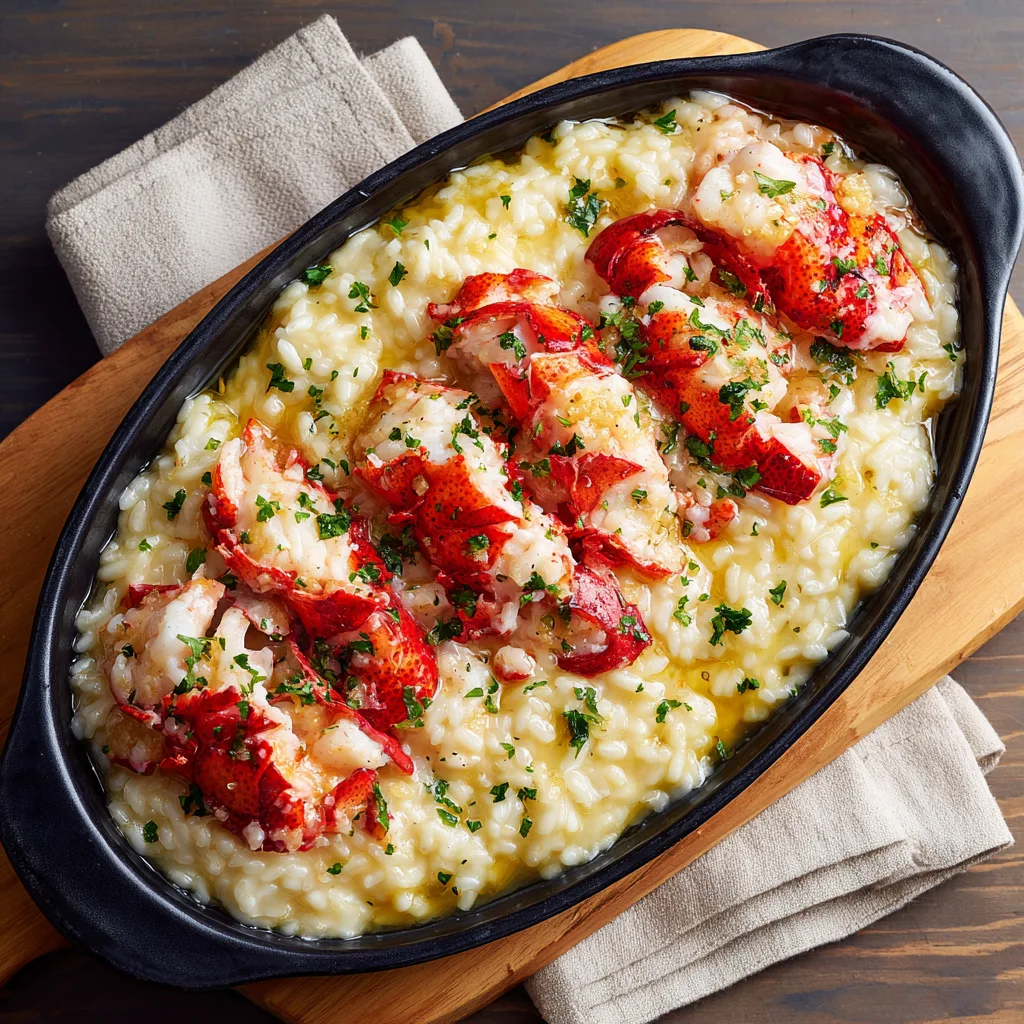
Looking at the image above, you can almost taste the richness. The glossy, starchy rice that slowly spreads on the plate, the vibrant red pops of tender lobster meat, and the verdant sprinkle of parsley—it’s a masterpiece. But here is the secret that restaurants don’t want you to know: making restaurant-quality risotto at home is not actually difficult. It just requires patience and a bit of love.
In this guide, we are going to demystify the process of making the perfect risotto and show you how to crown it with succulent, butter-poached lobster tails. Forget the reservations; the best table in town is in your dining room.
The Mythology of Risotto: Why It Scares People (And Why It Shouldn’t) 🥄
Risotto has a reputation for being high-maintenance. We’ve all seen the cooking competition shows where a chef screams about the risotto being “crunchy” or “gluey.” This has created a fear factor around the dish. The truth is, risotto is just rice cooked in a very specific way to release its starch.
The Rice Choice Matters
You cannot make risotto with long-grain rice or jasmine rice. You need a short-grain, high-starch variety. Arborio is the most common and yields a slightly softer grain. Carnaroli is often called the “king of rice” by Italian chefs because it keeps its shape better and creates an even creamier texture. Either will work for this recipe, but ensure it is specifically labeled for risotto.
The “Stirring” Myth
You do not need to be chained to the stove, stirring maniacally for 40 minutes. You do need to stir frequently to agitate the grains and release starch (which creates the creaminess), but you can step away for a minute here and there. It’s a rhythmic, relaxing process, not a marathon.
The Crown Jewel: The Lobster 🦞
The image features large, distinct chunks of lobster sitting proudly on top of the rice. This is a crucial stylistic choice. Many seafood risottos chop the meat finely and mix it in, where it tends to get overcooked and lost in the cheese.
For this recipe, we are preparing the lobster separately. By poaching the lobster tails in butter (or gently steaming them) and placing them on top at the very end, we ensure two things:
- Texture: The lobster remains tender and plump, never rubbery.
- Flavor: The sweet, oceanic flavor of the meat stands out against the rich, cheesy rice rather than blending into it.
You can use fresh lobster tails from the fishmonger, or frozen tails that have been thawed. Even pre-cooked lobster meat works in a pinch, though gentle warming in butter is essential to bring it back to life.
Buttery Lobster Risotto
Ingredients
Equipment
Method
- Bring stock to a simmer in a saucepan and keep warm over low heat.
- In a heavy pot, sauté shallots in olive oil and 1 tbsp butter until soft (3-4 mins).
- Add Arborio rice and toast for 2 minutes, stirring constantly until edges are translucent.
- Pour in white wine and stir until fully evaporated.
- Add hot stock one ladle at a time, stirring frequently and waiting for liquid to absorb before adding more. Repeat for 18-20 minutes.
- Meanwhile, in a skillet, melt 3 tbsp butter. Add lobster chunks and cook gently for 3-4 minutes until opaque.
- Remove risotto from heat. Stir in remaining cold butter, Parmesan, and lemon zest vigorously to create a creamy sauce.
- Top risotto with cooked lobster and drizzle with pan butter. Garnish with parsley and serve immediately.
Notes
Ingredients 🛒
To achieve that golden, creamy consistency, you need quality ingredients.
- The Stock Base
- — 6 cups Seafood stock or high-quality low-sodium chicken broth
- — 1 cup Water (keep handy in case you need more liquid)
- The Aromatics & Rice
- — 2 Tbsp Olive oil
- — 2 Shallots, finely minced
- — 2 cloves Garlic, minced
- — 1 ½ cups Arborio or Carnaroli rice
- — ½ cup Dry white wine (Pinot Grigio or Sauvignon Blanc)
- The Lobster
- — 3-4 Lobster tails (about 4-6 oz each), shells removed and meat chopped into large chunks
- — 4 Tbsp Unsalted butter, divided
- — 1 clove Garlic, smashed
- The Finish
- — 3 Tbsp Cold unsalted butter, cubed
- — ½ cup Freshly grated Parmesan cheese (Reggiano is best)
- — 1 Tbsp Mascarpone cheese (optional, for extra luxury)
- — 1 tsp Lemon zest
- — 2 Tbsp Fresh parsley, chopped
- — Salt and white pepper to taste
Instructions 📝
Follow this step-by-step guide to build flavors layer by layer.
- Warm the Stock: Pour your seafood stock (or chicken broth) into a saucepan and place it over medium-low heat. Bring it to a gentle simmer and keep it there. Crucial Step: Adding cold stock to hot rice seizes the grain and stops the cooking process. The stock must be hot.
- Prepare the Base: In a large, heavy-bottomed pot or Dutch oven, heat the olive oil and 1 tablespoon of butter over medium heat. Add the minced shallots and cook gently for 3-4 minutes until translucent and soft. Do not let them brown. Add the minced garlic and cook for another 30 seconds until fragrant.
- Toast the Rice: Add the Arborio rice to the pot. Stir well to coat every grain in the fat. Cook for 2-3 minutes, stirring constantly. You are looking for the edges of the rice grains to become translucent while the center remains white (the “pearl”). You might hear a faint clicking sound as they toast. This step adds a nutty flavor and helps the rice hold its structure.
- Deglaze with Wine: Pour in the white wine. It will hiss and steam aggressively. Stir constantly until the wine has fully evaporated and the smell of alcohol has dissipated. This adds necessary acidity to cut through the richness.
- The Ladle Process: Begin adding the hot stock, one ladle (about 1/2 cup) at a time. Stir the rice gently. Wait until the liquid is almost completely absorbed before adding the next ladle. Adjust your heat so the mixture is at a steady, bubbling simmer—not a boil, not a stagnant pool.
- Cook the Rice: Continue this process for about 18-22 minutes. Taste the rice frequently after the 15-minute mark. You are looking for “al dente”—tender but with a slight bite in the center, not mushy. The texture of the dish should be fluid and wavy (all’onda), not a stiff pile.
- Cook the Lobster: While the risotto is in its final few minutes, heat a separate skillet over medium heat. Add 3 tablespoons of butter and the smashed garlic clove. Once foaming, add the lobster chunks. Cook gently for 3-4 minutes, spooning the butter over the meat, until opaque and white/red. Do not overcook. Remove from heat.
- The “Mantecatura”: Remove the risotto pot from the heat. This is the most important step. Add the cold cubed butter, the Parmesan cheese, and the mascarpone (if using). Stir vigorously. This emulsion creates the signature creamy sauce. Stir in the lemon zest. Taste and season with salt and white pepper.
- Assemble: Pour the creamy risotto into a warmed serving dish. Arrange the butter-poached lobster chunks in a line down the center. Drizzle the remaining garlic butter from the lobster pan over the top.
- Garnish: Sprinkle generously with fresh parsley and serve immediately.
Troubleshooting Common Risotto Mistakes ⚠️
Even experienced cooks can stumble. Here is how to avoid common pitfalls.
The Rice is Crunchy: This means you didn’t cook it long enough or your heat was too high, evaporating the liquid before it penetrated the grain. Add a splash more stock and keep cooking on low.
The Rice is Mushy: You cooked it too long. There is no real fix for this other than to call it “rice pudding” or make arancini (fried rice balls) the next day. Next time, taste earlier and often.
The Dish is Gluey: This usually happens if you stir too aggressively throughout the entire cooking process, breaking the grains. Stir just enough to keep it moving, not to beat it into submission.
It’s Bland: Risotto swallows salt. If it tastes flat, it likely needs more salt and definitely a hit of acid. A squeeze of fresh lemon juice right at the end can wake up all the flavors.
What to Drink with Lobster Risotto 🍷
This is a rich, heavy dish, so your wine pairing needs to stand up to it without being overwhelmed.
Chardonnay: A buttery, oaked Chardonnay is the classic pairing. The buttery notes in the wine mirror the dish, while the acidity cuts the fat.
Champagne or Sparkling Wine: Bubbles are a fantastic palate cleanser for creamy dishes. The effervescence lifts the heaviness of the cheese and butter.
Vermentino: If you prefer something lighter, an Italian Vermentino offers crisp, citrusy notes that pair beautifully with seafood.
Conclusion: A Meal to Remember 🕯️
There is a profound satisfaction in placing a dish like this on the table. It looks impressive, smells divine, and tastes like a hug from the ocean. Whether you are cooking for a partner on Valentine’s Day or hosting a sophisticated dinner party, this Lobster Risotto delivers on every front.
The contrast of the al dente rice, the creamy sauce, and the tender, sweet lobster is a textural triumph. So, open a bottle of white wine (pour a little for the pot, a little for yourself), and enjoy the slow, meditative process of creating something truly gourmet. Bon appétit!